Product Description
Aluminum Alloy GFC-40X66 Coupling Shaft Flexible Rubber Flexible Coupling
Aluminum Alloy GFC-40X66 Coupling Shaft Flexible Rubber Flexible Coupling
| model parameter | common bore diameter d1,d2 | ΦD | L | LF | LP | F | M | tightening screw torque (N.M) |
| GFC-14X22 | 3,4,5,6,6.35 | 14 | 22 | 14.3 | 6.6 | 5.0 | M2.5 | 1.0 |
| GFC-20×25 | 3,4,5,6,6.35,7,8,9,9.525,10 | 20 | 25 | 16.7 | 8.6 | 5.9 | M3 | 1.5 |
| GFC-20X30 | 3,4,5,6,6.35,7,8,9,9.525,10 | 20 | 30 | 19.25 | 8.6 | 5.9 | M3 | 1.5 |
| GFC-25X30 | 4,5,6,6.35,7,8,9,9.525,10,11,12 | 25 | 30 | 20.82 | 11.6 | 8.5 | M4 | 2.5 |
| GFC-25X34 | 4,5,6,6.35,7,8,9,9.525,10,11,12 | 25 | 34 | 22.82 | 11.6 | 8.5 | M4 | 2.5 |
| GFC-30×35 | 5,6,6.35,7,8,9,10,11,12,12.7,14,15,16 | 30 | 35 | 23 | 11.5 | 10 | M4 | 2.5 |
| GFC-30X40 | 5,6,6.35,7,8,9,10,11,12,12.7,14,15,16 | 30 | 40 | 25 | 11.5 | 10 | M4 | 2.5 |
| GFC-40X50 | 6,8,9,10,11,12,12.7,14,15,16,17,18,19,20,22,24 | 40 | 50 | 32.1 | 14.5 | 14 | M5 | 7 |
| GFC-40X55 | 6,8,9,10,11,12,12.7,14,15,16,17,18,19,20,22,24 | 40 | 55 | 34.5 | 14.5 | 14 | M5 | 7 |
| GFC-40X66 | 6,8,910,11,12,12.7,14,15,16,17,18,19,20,22,24 | 40 | 66 | 40 | 14.5 | 14 | M5 | 7 |
| GFC-55X49 | 10,11,12,12.7,14,15,16,17,18,19,20,22,24,25,28,30,32 | 55 | 49 | 32 | 16.1 | 13.5 | M6 | 12 |
| GFC-55X78 | 8,10,12,12.7,14,15,16,17,18,19,20,22,24,25,28,30,32 | 55 | 78 | 46.4 | 16.1 | 19 | M6 | 12 |
| GFC-65X80 | 14,15,16,17,18,19,20,22,24,25,28,30,32,35,38,40 | 65 | 80 | 48.5 | 17.3 | 14 | M8 | 20 |
| GFC-65X90 | 14,15,16,17,18,19,20,22,24,25,28,30,32,35,38,40 | 65 | 90 | 53.5 | 17.3 | 22.5 | M8 | 20 |
| GFC-80X114 | 19,20,22,24,25,28,30,32,35,38,40,42,45 | 80 | 114 | 68 | 22.5 | 16 | M8 | 20 |
| GFC-95X126 | 19,20,22,24,25,28,30,32,35,38,40,42,45,50,55 | 95 | 126 | 74.5 | 24 | 18 | M10 | 30 |
| model parameter | Rated torque (N.M)* |
allowable eccentricity (mm)* |
allowable deflection angle (°)* |
allowable axial deviation (mm)* |
maximum speed rpm |
static torsional stiffness (N.M/rad) |
moment of inertia (Kg.M2) |
Material of shaft sleeve | Material of shrapnel | surface treatment | weight (g) |
| GFC-14X22 | 5.0 | 0.1 | 1 | ±02 | 10000 | 50 | 1.0×10⁻⁶ | High strength aluminum alloy | Polyurethane imported from Germany | Anodizing treatment | 10 |
| GFC-20X25 | 5.0 | 0.1 | 1 | ±02 | 10000 | 50 | 1.0×10⁻⁶ | 15 | |||
| GFC-20X30 | 5.0 | 0.1 | 1 | ^02 | 10000 | 53 | 1.1×10⁻⁶ | 19 | |||
| GFC-25X30 | 10 | 0.1 | 1 | 10000 | 90 | 5.2X10⁻⁶ | 33 | ||||
| GFC-25X34 | 10 | 0.1 | 1 | £)2 | 10000 | 90 | 5.2×10⁻⁶ | 42 | |||
| GFC-30X35 | 12.5 | 0.1 | 1 | ±02 | 10000 | 123 | 6.2×10⁻⁶ | 50 | |||
| GFC-30×40 | 12.5 | 0.1 | 1 | 102 | 10000 | 123 | 6.2×10⁻⁶ | 60 | |||
| GFC-40X50 | 17 | 0.1 | 1 | 8000 | 1100 | 3.8×10⁻⁵ | 115 | ||||
| GFC-40X55 | 17 | 0.1 | 1 | ±02 | 8000 | 1100 | 3.8×10⁻⁵ | 127 | |||
| GFC-40X66 | 17 | 0.1 | 1 | 7000 | 1140 | 3.9×10⁻⁵ | 154 | ||||
| GFC-55X49 | 45 | 0.1 | 1 | ±02 | 6500 | 2350 | 1.6×10⁻³ | 241 | |||
| GFC-55X78 | 45 | 0.1 | 1 | 102 | 6000 | 2500 | 1.6×10⁻³ | 341 | |||
| GFC-65X80 | 108 | 0.1 | 1 | ±02 | 5500 | 4500 | 3.8×10⁻³ | 433 | |||
| GFC-65X90 | 108 | 0.1 | 1 | ±02 | 5500 | 4800 | 3.8×10⁻³ | 583 | |||
| GFC-80X114 | 145 | 0.1 | 1 | £)2 | 4500 | 5000 | 1.8×10⁻³ | 1650 | |||
| GFC-95X126 | 250 | 0.1 | 1 | ±02 | 4000 | 5000 | 2.0×10⁻³ | 1000 |
/* January 22, 2571 19:08:37 */!function(){function s(e,r){var a,o={};try{e&&e.split(“,”).forEach(function(e,t){e&&(a=e.match(/(.*?):(.*)$/))&&1
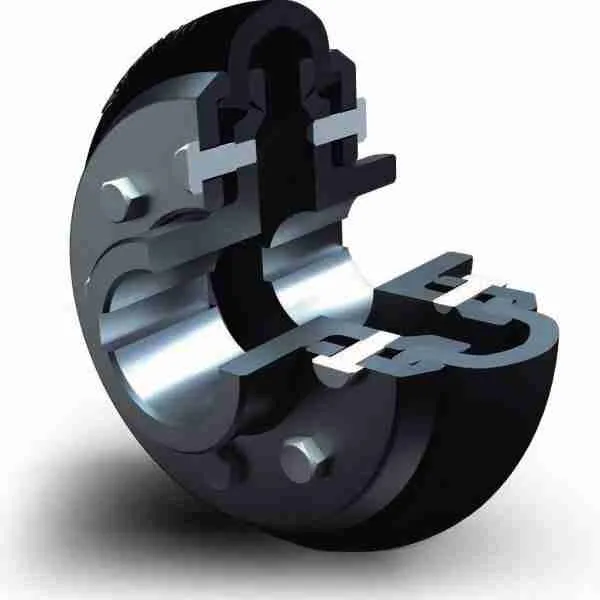
Durometer Hardness in Rubber Coupling Materials
Durometer hardness is a measure of the material’s resistance to indentation or penetration by a specified indenter. In rubber couplings, durometer hardness is a critical characteristic that influences their performance. It is typically measured using a durometer instrument.
The durometer hardness scale commonly used for rubber materials is the Shore durometer scale, indicated by a letter followed by a numerical value (e.g., Shore A, Shore D). Lower durometer values indicate softer and more flexible rubber, while higher values indicate harder and less flexible rubber.
In relation to rubber couplings:
- Higher Durometer (Harder Rubber): Couplings made from harder rubber materials have better torque transmission capabilities and higher load-bearing capacity. However, they may offer less vibration isolation and misalignment compensation.
- Lower Durometer (Softer Rubber): Couplings made from softer rubber materials provide greater flexibility, vibration damping, and misalignment compensation. They are suitable for applications where vibration reduction is crucial.
The choice of durometer hardness depends on the specific requirements of the application, including torque levels, vibration, misalignment, and desired performance characteristics.
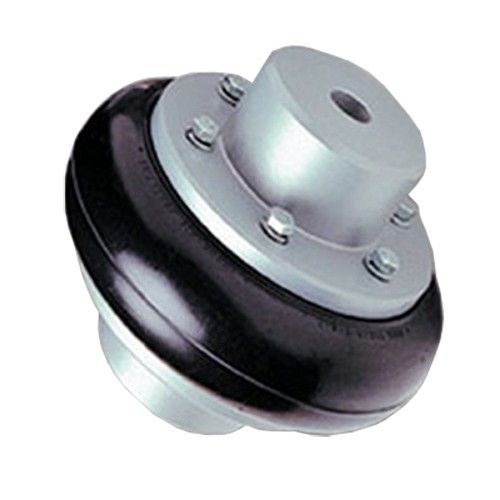
Comparison of Rubber Couplings with Other Flexible Coupling Types
Rubber couplings, elastomeric couplings, and disc couplings are all flexible coupling options used in various mechanical systems. Here’s a comparison of rubber couplings with these alternatives:
Rubber Couplings:
- Transmit torque while damping vibrations through the flexibility of rubber elements.
- Provide good misalignment compensation and shock absorption.
- Relatively simple construction and cost-effective.
- Effective in reducing noise and vibration in applications.
- Suitable for moderate to high torque applications with moderate misalignment.
Elastomeric Couplings:
- Similar to rubber couplings, utilize elastomeric materials for flexibility and vibration damping.
- Offer higher torque capacity and stiffness compared to rubber couplings.
- Provide better misalignment compensation and torsional stiffness.
- Wider range of sizes and configurations for various applications.
- Commonly used in pumps, compressors, and other machinery.
Disc Couplings:
- Use a series of metal discs to transmit torque and accommodate misalignment.
- Offer high torsional stiffness and accuracy in torque transmission.
- Can handle higher speeds and torque compared to rubber or elastomeric couplings.
- Require precision in manufacturing and installation.
- Used in applications requiring high precision and minimal backlash.
When choosing between these flexible coupling types, considerations such as torque requirements, misalignment compensation, torsional stiffness, and application-specific needs play a significant role in making the appropriate selection. Each type has its advantages and limitations, making it important to assess the specific requirements of the machinery system.
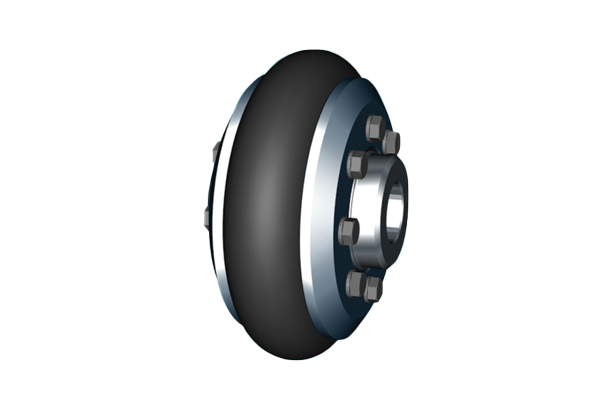
Types of Rubber Couplings Designed for Specific Uses
There are several types of rubber couplings, each designed with specific characteristics to suit various applications:
- Flexible Jaw Couplings: These couplings consist of two hubs connected by a flexible rubber element. They are commonly used in applications where misalignment, vibrations, and shocks need to be dampened, such as in pumps, fans, and compressors.
- Oldham Couplings: Oldham couplings use a rubber disk as the intermediate element between two hubs. They provide compensation for misalignment while maintaining a constant velocity between input and output shafts, often used in printing, packaging, and CNC machinery.
- Tyre Couplings: These couplings have a high degree of torsional flexibility and are suitable for applications with substantial misalignment and shock absorption requirements, like in heavy-duty machinery and construction equipment.
- Pin and Bush Couplings: These couplings use rubber bushes to provide vibration isolation and accommodate misalignment. They are used in various industrial applications, including conveyors, mixers, and crushers.
- Diaphragm Couplings: Diaphragm couplings use a flexible rubber diaphragm to transmit torque and compensate for misalignment. They are commonly found in precision equipment like servo motors and robotics.
Each type of rubber coupling is designed to address specific needs in different applications. The choice of coupling depends on factors such as the degree of misalignment, torque requirements, shock absorption, and the level of precision needed.


editor by CX 2024-05-02
China Good quality Aluminum Alloy Gfc-55X49 Type Shaft Coupler Rubber Flexible Coupling
Product Description
Aluminum Alloy GFC-55X49 Type Shaft Coupler Rubber Flexible Coupling
Aluminum Alloy GFC-55X49 Type Shaft Coupler Rubber Flexible Coupling
| model parameter | common bore diameter d1,d2 | ΦD | L | LF | LP | F | M | tightening screw torque (N.M) |
| GFC-14X22 | 3,4,5,6,6.35 | 14 | 22 | 14.3 | 6.6 | 5.0 | M2.5 | 1.0 |
| GFC-20×25 | 3,4,5,6,6.35,7,8,9,9.525,10 | 20 | 25 | 16.7 | 8.6 | 5.9 | M3 | 1.5 |
| GFC-20X30 | 3,4,5,6,6.35,7,8,9,9.525,10 | 20 | 30 | 19.25 | 8.6 | 5.9 | M3 | 1.5 |
| GFC-25X30 | 4,5,6,6.35,7,8,9,9.525,10,11,12 | 25 | 30 | 20.82 | 11.6 | 8.5 | M4 | 2.5 |
| GFC-25X34 | 4,5,6,6.35,7,8,9,9.525,10,11,12 | 25 | 34 | 22.82 | 11.6 | 8.5 | M4 | 2.5 |
| GFC-30×35 | 5,6,6.35,7,8,9,10,11,12,12.7,14,15,16 | 30 | 35 | 23 | 11.5 | 10 | M4 | 2.5 |
| GFC-30X40 | 5,6,6.35,7,8,9,10,11,12,12.7,14,15,16 | 30 | 40 | 25 | 11.5 | 10 | M4 | 2.5 |
| GFC-40X50 | 6,8,9,10,11,12,12.7,14,15,16,17,18,19,20,22,24 | 40 | 50 | 32.1 | 14.5 | 14 | M5 | 7 |
| GFC-40X55 | 6,8,9,10,11,12,12.7,14,15,16,17,18,19,20,22,24 | 40 | 55 | 34.5 | 14.5 | 14 | M5 | 7 |
| GFC-40X66 | 6,8,910,11,12,12.7,14,15,16,17,18,19,20,22,24 | 40 | 66 | 40 | 14.5 | 14 | M5 | 7 |
| GFC-55X49 | 10,11,12,12.7,14,15,16,17,18,19,20,22,24,25,28,30,32 | 55 | 49 | 32 | 16.1 | 13.5 | M6 | 12 |
| GFC-55X78 | 8,10,12,12.7,14,15,16,17,18,19,20,22,24,25,28,30,32 | 55 | 78 | 46.4 | 16.1 | 19 | M6 | 12 |
| GFC-65X80 | 14,15,16,17,18,19,20,22,24,25,28,30,32,35,38,40 | 65 | 80 | 48.5 | 17.3 | 14 | M8 | 20 |
| GFC-65X90 | 14,15,16,17,18,19,20,22,24,25,28,30,32,35,38,40 | 65 | 90 | 53.5 | 17.3 | 22.5 | M8 | 20 |
| GFC-80X114 | 19,20,22,24,25,28,30,32,35,38,40,42,45 | 80 | 114 | 68 | 22.5 | 16 | M8 | 20 |
| GFC-95X126 | 19,20,22,24,25,28,30,32,35,38,40,42,45,50,55 | 95 | 126 | 74.5 | 24 | 18 | M10 | 30 |
| model parameter | Rated torque (N.M)* |
allowable eccentricity (mm)* |
allowable deflection angle (°)* |
allowable axial deviation (mm)* |
maximum speed rpm |
static torsional stiffness (N.M/rad) |
moment of inertia (Kg.M2) |
Material of shaft sleeve | Material of shrapnel | surface treatment | weight (g) |
| GFC-14X22 | 5.0 | 0.1 | 1 | ±02 | 10000 | 50 | 1.0×10⁻⁶ | High strength aluminum alloy | Polyurethane imported from Germany | Anodizing treatment | 10 |
| GFC-20X25 | 5.0 | 0.1 | 1 | ±02 | 10000 | 50 | 1.0×10⁻⁶ | 15 | |||
| GFC-20X30 | 5.0 | 0.1 | 1 | ^02 | 10000 | 53 | 1.1×10⁻⁶ | 19 | |||
| GFC-25X30 | 10 | 0.1 | 1 | 10000 | 90 | 5.2X10⁻⁶ | 33 | ||||
| GFC-25X34 | 10 | 0.1 | 1 | £)2 | 10000 | 90 | 5.2×10⁻⁶ | 42 | |||
| GFC-30X35 | 12.5 | 0.1 | 1 | ±02 | 10000 | 123 | 6.2×10⁻⁶ | 50 | |||
| GFC-30×40 | 12.5 | 0.1 | 1 | 102 | 10000 | 123 | 6.2×10⁻⁶ | 60 | |||
| GFC-40X50 | 17 | 0.1 | 1 | 8000 | 1100 | 3.8×10⁻⁵ | 115 | ||||
| GFC-40X55 | 17 | 0.1 | 1 | ±02 | 8000 | 1100 | 3.8×10⁻⁵ | 127 | |||
| GFC-40X66 | 17 | 0.1 | 1 | 7000 | 1140 | 3.9×10⁻⁵ | 154 | ||||
| GFC-55X49 | 45 | 0.1 | 1 | ±02 | 6500 | 2350 | 1.6×10⁻³ | 241 | |||
| GFC-55X78 | 45 | 0.1 | 1 | 102 | 6000 | 2500 | 1.6×10⁻³ | 341 | |||
| GFC-65X80 | 108 | 0.1 | 1 | ±02 | 5500 | 4500 | 3.8×10⁻³ | 433 | |||
| GFC-65X90 | 108 | 0.1 | 1 | ±02 | 5500 | 4800 | 3.8×10⁻³ | 583 | |||
| GFC-80X114 | 145 | 0.1 | 1 | £)2 | 4500 | 5000 | 1.8×10⁻³ | 1650 |
/* January 22, 2571 19:08:37 */!function(){function s(e,r){var a,o={};try{e&&e.split(“,”).forEach(function(e,t){e&&(a=e.match(/(.*?):(.*)$/))&&1
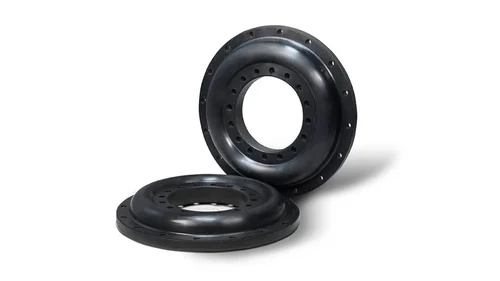
Suitability of Rubber Couplings for High-Speed Rotation and Varying Loads
Rubber couplings are generally well-suited for applications involving high-speed rotation and varying loads, thanks to their unique properties and design features.
High-Speed Rotation: Rubber couplings can effectively handle high-speed rotation due to their inherent flexibility and damping characteristics. The elastomeric material used in rubber couplings helps absorb and dissipate vibrations that can occur at high speeds, contributing to smoother operation and reduced wear on connected machinery components.
Varying Loads: Rubber couplings are capable of accommodating varying loads due to their ability to deform under stress. The flexibility of rubber allows it to absorb shocks and impacts caused by changes in load, preventing damage to connected equipment. This feature is particularly beneficial in applications where sudden changes in load can occur, such as in industrial machinery.
However, it’s important to consider the specific requirements of the application. While rubber couplings provide excellent vibration isolation and misalignment compensation, they may not offer the same level of torsional rigidity as some other coupling types. In cases where precise torque transmission is crucial, and minimal torsional deflection is required, other coupling options might be more suitable.
Overall, rubber couplings can provide reliable performance in applications involving high-speed rotation and varying loads, especially when the benefits of vibration damping and misalignment compensation are essential.
Comparison of Rubber Couplings with Other Flexible Coupling Types
Rubber couplings, elastomeric couplings, and disc couplings are all flexible coupling options used in various mechanical systems. Here’s a comparison of rubber couplings with these alternatives:
Rubber Couplings:
- Transmit torque while damping vibrations through the flexibility of rubber elements.
- Provide good misalignment compensation and shock absorption.
- Relatively simple construction and cost-effective.
- Effective in reducing noise and vibration in applications.
- Suitable for moderate to high torque applications with moderate misalignment.
Elastomeric Couplings:
- Similar to rubber couplings, utilize elastomeric materials for flexibility and vibration damping.
- Offer higher torque capacity and stiffness compared to rubber couplings.
- Provide better misalignment compensation and torsional stiffness.
- Wider range of sizes and configurations for various applications.
- Commonly used in pumps, compressors, and other machinery.
Disc Couplings:
- Use a series of metal discs to transmit torque and accommodate misalignment.
- Offer high torsional stiffness and accuracy in torque transmission.
- Can handle higher speeds and torque compared to rubber or elastomeric couplings.
- Require precision in manufacturing and installation.
- Used in applications requiring high precision and minimal backlash.
When choosing between these flexible coupling types, considerations such as torque requirements, misalignment compensation, torsional stiffness, and application-specific needs play a significant role in making the appropriate selection. Each type has its advantages and limitations, making it important to assess the specific requirements of the machinery system.
Utilization of Rubber Couplings in Mechanical Systems
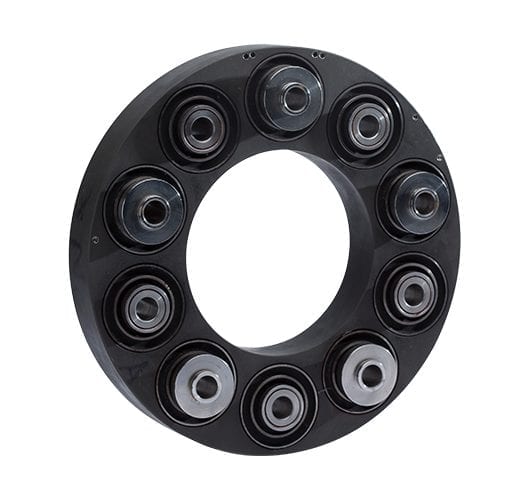
A rubber coupling is a type of flexible coupling that utilizes rubber elements to connect two shafts while allowing a certain degree of misalignment and vibration damping. It is commonly used in mechanical systems to transmit torque, accommodate misalignment, and reduce shock and vibration. Here’s how rubber couplings are utilized:
- Torque Transmission: Rubber couplings transmit torque from one shaft to another, enabling the transfer of power between components while allowing for slight angular, parallel, and axial misalignments.
- Misalignment Compensation: These couplings can accommodate both angular and axial misalignments, which can occur due to manufacturing tolerances, thermal expansion, or other factors. The flexibility of the rubber element helps prevent excessive loads on connected equipment.
- Vibration Damping: The elastic properties of rubber help dampen vibrations and shocks generated during the operation of rotating machinery. This prevents the transmission of harmful vibrations to other parts of the system and reduces wear and fatigue.
- Noise Reduction: Rubber couplings help reduce noise by absorbing vibrations and minimizing the transmission of sound waves through the system.
- Equipment Protection: By absorbing shocks and vibrations, rubber couplings protect sensitive equipment and components from damage, thereby extending their lifespan.
- Simple Installation: Rubber couplings are relatively easy to install and require minimal maintenance, making them a convenient choice for various applications.
- Wide Range of Applications: Rubber couplings find applications in various industries, including automotive, industrial machinery, pumps, compressors, and more.
In summary, rubber couplings are utilized in mechanical systems to transmit torque, accommodate misalignment, reduce vibration and shock, protect equipment, and enhance the overall performance and reliability of rotating machinery.
editor by CX 2024-04-04
China supplier Aluminum Alloy Gfc-55X49 Type Shaft Coupler Rubber Flexible Coupling
Product Description
Aluminum Alloy GFC-55X49 Type Shaft Coupler Rubber Flexible Coupling
Aluminum Alloy GFC-55X49 Type Shaft Coupler Rubber Flexible Coupling
| model parameter | common bore diameter d1,d2 | ΦD | L | LF | LP | F | M | tightening screw torque (N.M) |
| GFC-14X22 | 3,4,5,6,6.35 | 14 | 22 | 14.3 | 6.6 | 5.0 | M2.5 | 1.0 |
| GFC-20×25 | 3,4,5,6,6.35,7,8,9,9.525,10 | 20 | 25 | 16.7 | 8.6 | 5.9 | M3 | 1.5 |
| GFC-20X30 | 3,4,5,6,6.35,7,8,9,9.525,10 | 20 | 30 | 19.25 | 8.6 | 5.9 | M3 | 1.5 |
| GFC-25X30 | 4,5,6,6.35,7,8,9,9.525,10,11,12 | 25 | 30 | 20.82 | 11.6 | 8.5 | M4 | 2.5 |
| GFC-25X34 | 4,5,6,6.35,7,8,9,9.525,10,11,12 | 25 | 34 | 22.82 | 11.6 | 8.5 | M4 | 2.5 |
| GFC-30×35 | 5,6,6.35,7,8,9,10,11,12,12.7,14,15,16 | 30 | 35 | 23 | 11.5 | 10 | M4 | 2.5 |
| GFC-30X40 | 5,6,6.35,7,8,9,10,11,12,12.7,14,15,16 | 30 | 40 | 25 | 11.5 | 10 | M4 | 2.5 |
| GFC-40X50 | 6,8,9,10,11,12,12.7,14,15,16,17,18,19,20,22,24 | 40 | 50 | 32.1 | 14.5 | 14 | M5 | 7 |
| GFC-40X55 | 6,8,9,10,11,12,12.7,14,15,16,17,18,19,20,22,24 | 40 | 55 | 34.5 | 14.5 | 14 | M5 | 7 |
| GFC-40X66 | 6,8,910,11,12,12.7,14,15,16,17,18,19,20,22,24 | 40 | 66 | 40 | 14.5 | 14 | M5 | 7 |
| GFC-55X49 | 10,11,12,12.7,14,15,16,17,18,19,20,22,24,25,28,30,32 | 55 | 49 | 32 | 16.1 | 13.5 | M6 | 12 |
| GFC-55X78 | 8,10,12,12.7,14,15,16,17,18,19,20,22,24,25,28,30,32 | 55 | 78 | 46.4 | 16.1 | 19 | M6 | 12 |
| GFC-65X80 | 14,15,16,17,18,19,20,22,24,25,28,30,32,35,38,40 | 65 | 80 | 48.5 | 17.3 | 14 | M8 | 20 |
| GFC-65X90 | 14,15,16,17,18,19,20,22,24,25,28,30,32,35,38,40 | 65 | 90 | 53.5 | 17.3 | 22.5 | M8 | 20 |
| GFC-80X114 | 19,20,22,24,25,28,30,32,35,38,40,42,45 | 80 | 114 | 68 | 22.5 | 16 | M8 | 20 |
| GFC-95X126 | 19,20,22,24,25,28,30,32,35,38,40,42,45,50,55 | 95 | 126 | 74.5 | 24 | 18 | M10 | 30 |
| model parameter | Rated torque (N.M)* |
allowable eccentricity (mm)* |
allowable deflection angle (°)* |
allowable axial deviation (mm)* |
maximum speed rpm |
static torsional stiffness (N.M/rad) |
moment of inertia (Kg.M2) |
Material of shaft sleeve | Material of shrapnel | surface treatment | weight (g) |
| GFC-14X22 | 5.0 | 0.1 | 1 | ±02 | 10000 | 50 | 1.0×10⁻⁶ | High strength aluminum alloy | Polyurethane imported from Germany | Anodizing treatment | 10 |
| GFC-20X25 | 5.0 | 0.1 | 1 | ±02 | 10000 | 50 | 1.0×10⁻⁶ | 15 | |||
| GFC-20X30 | 5.0 | 0.1 | 1 | ^02 | 10000 | 53 | 1.1×10⁻⁶ | 19 | |||
| GFC-25X30 | 10 | 0.1 | 1 | 10000 | 90 | 5.2X10⁻⁶ | 33 | ||||
| GFC-25X34 | 10 | 0.1 | 1 | £)2 | 10000 | 90 | 5.2×10⁻⁶ | 42 | |||
| GFC-30X35 | 12.5 | 0.1 | 1 | ±02 | 10000 | 123 | 6.2×10⁻⁶ | 50 | |||
| GFC-30×40 | 12.5 | 0.1 | 1 | 102 | 10000 | 123 | 6.2×10⁻⁶ | 60 | |||
| GFC-40X50 | 17 | 0.1 | 1 | 8000 | 1100 | 3.8×10⁻⁵ | 115 | ||||
| GFC-40X55 | 17 | 0.1 | 1 | ±02 | 8000 | 1100 | 3.8×10⁻⁵ | 127 | |||
| GFC-40X66 | 17 | 0.1 | 1 | 7000 | 1140 | 3.9×10⁻⁵ | 154 | ||||
| GFC-55X49 | 45 | 0.1 | 1 | ±02 | 6500 | 2350 | 1.6×10⁻³ | 241 | |||
| GFC-55X78 | 45 | 0.1 | 1 | 102 | 6000 | 2500 | 1.6×10⁻³ | 341 | |||
| GFC-65X80 | 108 | 0.1 | 1 | ±02 | 5500 | 4500 | 3.8×10⁻³ | 433 | |||
| GFC-65X90 | 108 | 0.1 | 1 | ±02 | 5500 | 4800 | 3.8×10⁻³ | 583 | |||
| GFC-80X114 | 145 | 0.1 | 1 | £)2 | 4500 | 5000 | 1.8×10⁻³ | 1650 |
Suitability of Rubber Couplings for High-Speed Rotation and Varying Loads
Rubber couplings are generally well-suited for applications involving high-speed rotation and varying loads, thanks to their unique properties and design features.
High-Speed Rotation: Rubber couplings can effectively handle high-speed rotation due to their inherent flexibility and damping characteristics. The elastomeric material used in rubber couplings helps absorb and dissipate vibrations that can occur at high speeds, contributing to smoother operation and reduced wear on connected machinery components.
Varying Loads: Rubber couplings are capable of accommodating varying loads due to their ability to deform under stress. The flexibility of rubber allows it to absorb shocks and impacts caused by changes in load, preventing damage to connected equipment. This feature is particularly beneficial in applications where sudden changes in load can occur, such as in industrial machinery.
However, it’s important to consider the specific requirements of the application. While rubber couplings provide excellent vibration isolation and misalignment compensation, they may not offer the same level of torsional rigidity as some other coupling types. In cases where precise torque transmission is crucial, and minimal torsional deflection is required, other coupling options might be more suitable.
Overall, rubber couplings can provide reliable performance in applications involving high-speed rotation and varying loads, especially when the benefits of vibration damping and misalignment compensation are essential.
Comparison of Rubber Couplings with Other Flexible Coupling Types
Rubber couplings, elastomeric couplings, and disc couplings are all flexible coupling options used in various mechanical systems. Here’s a comparison of rubber couplings with these alternatives:
Rubber Couplings:
- Transmit torque while damping vibrations through the flexibility of rubber elements.
- Provide good misalignment compensation and shock absorption.
- Relatively simple construction and cost-effective.
- Effective in reducing noise and vibration in applications.
- Suitable for moderate to high torque applications with moderate misalignment.
Elastomeric Couplings:
- Similar to rubber couplings, utilize elastomeric materials for flexibility and vibration damping.
- Offer higher torque capacity and stiffness compared to rubber couplings.
- Provide better misalignment compensation and torsional stiffness.
- Wider range of sizes and configurations for various applications.
- Commonly used in pumps, compressors, and other machinery.
Disc Couplings:
- Use a series of metal discs to transmit torque and accommodate misalignment.
- Offer high torsional stiffness and accuracy in torque transmission.
- Can handle higher speeds and torque compared to rubber or elastomeric couplings.
- Require precision in manufacturing and installation.
- Used in applications requiring high precision and minimal backlash.
When choosing between these flexible coupling types, considerations such as torque requirements, misalignment compensation, torsional stiffness, and application-specific needs play a significant role in making the appropriate selection. Each type has its advantages and limitations, making it important to assess the specific requirements of the machinery system.
Role of Rubber Flexibility in Accommodating Misalignment
Rubber couplings are designed with a flexible element, usually made of elastomers, that plays a crucial role in accommodating misalignment between connected shafts. The flexibility of the rubber element allows it to deform and absorb angular, axial, and radial misalignments, providing several benefits:
1. Angular Misalignment: When the input and output shafts are not perfectly aligned in terms of angle, the rubber element can flex and twist, allowing the coupling to transmit torque even when the axes are not parallel.
2. Axial Misalignment: Axial misalignment occurs when the shafts move closer together or farther apart along their axis. The rubber element can compress or extend, adjusting the distance between the shafts without hindering torque transfer.
3. Radial Misalignment: Radial misalignment refers to the offset between the centers of the shafts. The rubber element can bend in response to radial displacement, ensuring that the coupling remains operational while accommodating the offset.
This flexibility not only enables the rubber coupling to handle misalignment but also helps prevent excessive stress on the connected machinery. By absorbing shock loads and distributing forces, the rubber element reduces wear and tear on components and minimizes the risk of premature failure.
In essence, the rubber’s flexibility in the coupling acts as a buffer against misalignment-induced stresses, contributing to smoother operation, improved longevity, and reduced maintenance in mechanical systems.
editor by CX 2023-11-09
China OEM Alloy Motor Shaft Coupler Flexible Rubber Electric Motor Jaw Flexible Shaft Couplings Jm20c D20 L30mm
Product Description
Product Description
Flexible couplings are used to transmit torque from 1 shaft to another when the 2 shafts are slightly misaligned. It can accommodate varying degrees of misalignment up to 3°. In addition to allowing for misalignment, it can also be used for vibration damping or noise reduction.
Encoder couplings, flexible coupling, couplings working with Encoder & all kinds of motors (servo motor, DC motor, AC motor, gear motors).
|
MODEL |
OD(mm) |
Length(mm) |
Bore range(mm) |
|
JM14 |
14 |
22 |
3-7 |
|
JM14C |
14 |
22 |
3-6 |
|
JM16 |
16 |
22 |
3-7 |
|
JM16C |
16 |
22 |
3-7 |
|
JM20 |
20 |
30 |
4-10 |
|
JM20C |
20 |
30 |
4-10 |
|
JM25 |
25 |
34 |
4-12 |
|
JM25C |
25 |
34 |
4-12 |
|
JM30 |
30 |
35 |
5-16 |
|
JM30C |
30 |
35 |
5-16 |
|
JM40 |
40 |
66 |
8-24 |
|
JM40C |
40 |
66 |
8-24 |
|
JM55 |
55 |
78 |
10-28 |
|
JM55C |
55 |
78 |
10-28 |
|
JM65 |
65 |
90 |
12-38 |
|
JM65C |
65 |
90 |
12-38 |
|
JM80 |
80 |
114 |
16-45 |
|
JM80C |
80 |
114 |
16-45 |
|
JM95 |
95 |
126 |
20-55 |
|
JM95C |
95 |
126 |
20-55 |
|
JM105 |
105 |
140 |
20-62 |
|
JM105C |
105 |
140 |
20-62 |
|
JM120 |
120 |
160 |
20-74 |
|
JM120C |
120 |
160 |
20-74 |
|
JM135 |
135 |
185 |
22-80 |
|
JM135C |
135 |
185 |
22-80 |
|
“C” means clamp type jaw coupling Without “C” means setscrew type jaw coupling |
|||
application
Packaging & Shipping
Company Profile
Related product
Durometer Hardness in Rubber Coupling Materials
Durometer hardness is a measure of the material’s resistance to indentation or penetration by a specified indenter. In rubber couplings, durometer hardness is a critical characteristic that influences their performance. It is typically measured using a durometer instrument.
The durometer hardness scale commonly used for rubber materials is the Shore durometer scale, indicated by a letter followed by a numerical value (e.g., Shore A, Shore D). Lower durometer values indicate softer and more flexible rubber, while higher values indicate harder and less flexible rubber.
In relation to rubber couplings:
- Higher Durometer (Harder Rubber): Couplings made from harder rubber materials have better torque transmission capabilities and higher load-bearing capacity. However, they may offer less vibration isolation and misalignment compensation.
- Lower Durometer (Softer Rubber): Couplings made from softer rubber materials provide greater flexibility, vibration damping, and misalignment compensation. They are suitable for applications where vibration reduction is crucial.
The choice of durometer hardness depends on the specific requirements of the application, including torque levels, vibration, misalignment, and desired performance characteristics.
Industry Standards and Guidelines for Rubber Couplings
There are no specific industry standards or guidelines that exclusively govern the design and application of rubber couplings. However, various general standards and engineering practices apply to flexible couplings, including rubber couplings:
- ISO 14691: This standard provides guidelines for the installation, use, and maintenance of industrial flexible couplings, which include rubber couplings.
- AGMA 9005: The American Gear Manufacturers Association (AGMA) standard provides information on selecting lubricants and lubrication methods for flexible couplings, ensuring proper performance and longevity.
- API 671: This API standard specifies the requirements for special-purpose couplings used in petroleum, chemical, and gas industry services, which can include rubber couplings for specific applications.
- Manufacturer Recommendations: Many rubber coupling manufacturers provide guidelines, specifications, and installation instructions for their products, helping users select the right coupling and use it correctly.
Since rubber couplings fall under the category of flexible couplings, engineers and designers can follow these broader standards and best practices while considering the specific characteristics and performance requirements of rubber couplings for their applications.
Factors to Consider When Selecting a Rubber Coupling
Choosing the right rubber coupling for a specific application involves considering various factors:
1. Torque Requirements: Evaluate the torque that needs to be transmitted between the input and output shafts. Select a coupling with a rubber element that can handle the required torque without exceeding its limits.
2. Misalignment Compensation: Determine the degree of misalignment (angular, axial, and radial) present in the system. Choose a rubber coupling with appropriate flexibility to accommodate the expected misalignment while maintaining efficient torque transmission.
3. Vibration Damping: Assess the level of vibrations and shocks in the application. Opt for a rubber coupling with effective vibration-damping properties to protect the machinery and enhance its reliability.
4. Service Environment: Consider the operating conditions, including temperature, humidity, exposure to chemicals, and potential contaminants. Select a rubber material that can withstand the environment without deteriorating.
5. Shaft Sizes: Ensure that the coupling’s bore sizes match the shaft diameters of the connected equipment. Proper shaft fitment is crucial for efficient torque transmission.
6. Maintenance Requirements: Evaluate the maintenance practices of the system. Some rubber couplings may require periodic inspection and replacement due to wear over time.
7. Cost and Budget: Factor in the budget constraints while choosing a suitable rubber coupling. Balancing performance and cost is essential for an optimal solution.
8. Application Type: Different industries and applications have unique requirements. Choose a coupling type (spider, jaw, tire, etc.) based on the specific needs of the application.
By carefully considering these factors, you can select a rubber coupling that provides efficient torque transmission, vibration isolation, and durability in your mechanical system.
editor by CX 2023-10-20
China best Alloy Motor Shaft Coupler Flexible Rubber Electric Motor Jaw Flexible Shaft Couplings Jm20c D20 L30mm
Product Description
Product Description
Flexible couplings are used to transmit torque from 1 shaft to another when the 2 shafts are slightly misaligned. It can accommodate varying degrees of misalignment up to 3°. In addition to allowing for misalignment, it can also be used for vibration damping or noise reduction.
Encoder couplings, flexible coupling, couplings working with Encoder & all kinds of motors (servo motor, DC motor, AC motor, gear motors).
|
MODEL |
OD(mm) |
Length(mm) |
Bore range(mm) |
|
JM14 |
14 |
22 |
3-7 |
|
JM14C |
14 |
22 |
3-6 |
|
JM16 |
16 |
22 |
3-7 |
|
JM16C |
16 |
22 |
3-7 |
|
JM20 |
20 |
30 |
4-10 |
|
JM20C |
20 |
30 |
4-10 |
|
JM25 |
25 |
34 |
4-12 |
|
JM25C |
25 |
34 |
4-12 |
|
JM30 |
30 |
35 |
5-16 |
|
JM30C |
30 |
35 |
5-16 |
|
JM40 |
40 |
66 |
8-24 |
|
JM40C |
40 |
66 |
8-24 |
|
JM55 |
55 |
78 |
10-28 |
|
JM55C |
55 |
78 |
10-28 |
|
JM65 |
65 |
90 |
12-38 |
|
JM65C |
65 |
90 |
12-38 |
|
JM80 |
80 |
114 |
16-45 |
|
JM80C |
80 |
114 |
16-45 |
|
JM95 |
95 |
126 |
20-55 |
|
JM95C |
95 |
126 |
20-55 |
|
JM105 |
105 |
140 |
20-62 |
|
JM105C |
105 |
140 |
20-62 |
|
JM120 |
120 |
160 |
20-74 |
|
JM120C |
120 |
160 |
20-74 |
|
JM135 |
135 |
185 |
22-80 |
|
JM135C |
135 |
185 |
22-80 |
|
“C” means clamp type jaw coupling Without “C” means setscrew type jaw coupling |
|||
application
Packaging & Shipping
Company Profile
Related product
Diagnosing and Troubleshooting Rubber Coupling Issues
Diagnosing and troubleshooting problems with rubber couplings in machinery systems involves a systematic approach:
- Visual Inspection: Check for signs of wear, cracking, or deformation in the rubber elements.
- Vibration Analysis: Monitor vibration levels using sensors to identify excessive vibrations or irregular patterns.
- Noise Assessment: Listen for unusual noises during operation, which could indicate misalignment or worn components.
- Temperature Check: Monitor the operating temperature of the coupling, as overheating might indicate issues.
- Alignment Check: Ensure proper alignment between connected shafts to prevent excessive stress on the coupling.
- Torque Measurement: Measure the transmitted torque to identify any discrepancies from the expected values.
- Dynamic Testing: Conduct dynamic tests with load variations to identify performance issues.
- Comparative Analysis: Compare coupling behavior to baseline performance data.
If any issues are identified, they should be promptly addressed through proper maintenance, realignment, or replacement of damaged components.
Signs of Wear or Deterioration in Rubber Couplings
Rubber couplings can show signs of wear and deterioration over time due to factors like torque, temperature, and environmental conditions. To identify potential issues, watch out for the following signs:
- Visible Cracks or Damage: Inspect the rubber element for visible cracks, tears, or physical damage. Such issues can weaken the coupling’s torque transmission and vibration damping capabilities.
- Reduced Flexibility: Stiff or less flexible rubber indicates material degradation, which can impact the coupling’s ability to accommodate misalignment and absorb vibrations.
- Increased Vibrations: Excessive machinery vibrations may suggest worn-out rubber couplings. Deterioration of the rubber diminishes its vibration dampening properties.
- Unusual Noises: Any unusual sounds like squeaking or knocking might point to improper rubber coupling function and the need for inspection.
- Altered Performance: Decline in machinery performance, such as reduced torque transmission or higher energy consumption, can indicate coupling wear.
Regular inspections, visual checks, vibration analysis, and performance monitoring can help detect wear and deterioration early. This enables timely replacement and avoids operational problems.
Transmitting Torque and Damping Vibrations with a Rubber Coupling
A rubber coupling utilizes its flexible rubber element to achieve both torque transmission and vibration damping:
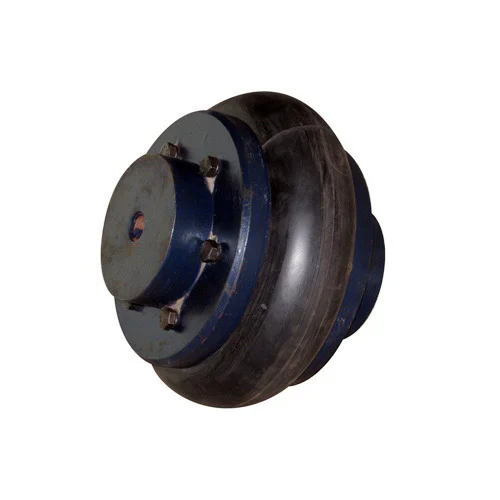
1. Torque Transmission: The rubber element connects two hubs, which are attached to the input and output shafts. As the input shaft rotates, it causes the rubber element to deform due to the applied torque. This deformation creates a shearing action within the rubber material, transmitting torque from the input to the output shaft.
2. Vibration Damping: The flexible rubber element of the coupling acts as a vibration isolator. When the coupling experiences external vibrations or shocks, the rubber absorbs the energy and dampens the vibrations before they reach the output shaft. The rubber’s elasticity and damping properties help mitigate vibrations and reduce the impact on the connected machinery, enhancing overall system performance and longevity.
This combination of torque transmission and vibration damping makes rubber couplings suitable for applications where misalignment compensation, shock absorption, and dampening of vibrations are essential, such as in pumps, compressors, HVAC systems, and various industrial machinery.
editor by CX 2023-09-22
China wholesaler Alloy Motor Shaft Coupler Flexible Rubber Electric Motor Jaw Flexible Shaft Couplings Jm20c D20 L30mm
Product Description
Product Description
Flexible couplings are used to transmit torque from 1 shaft to another when the 2 shafts are slightly misaligned. It can accommodate varying degrees of misalignment up to 3°. In addition to allowing for misalignment, it can also be used for vibration damping or noise reduction.
Encoder couplings, flexible coupling, couplings working with Encoder & all kinds of motors (servo motor, DC motor, AC motor, gear motors).
|
MODEL |
OD(mm) |
Length(mm) |
Bore range(mm) |
|
JM14 |
14 |
22 |
3-7 |
|
JM14C |
14 |
22 |
3-6 |
|
JM16 |
16 |
22 |
3-7 |
|
JM16C |
16 |
22 |
3-7 |
|
JM20 |
20 |
30 |
4-10 |
|
JM20C |
20 |
30 |
4-10 |
|
JM25 |
25 |
34 |
4-12 |
|
JM25C |
25 |
34 |
4-12 |
|
JM30 |
30 |
35 |
5-16 |
|
JM30C |
30 |
35 |
5-16 |
|
JM40 |
40 |
66 |
8-24 |
|
JM40C |
40 |
66 |
8-24 |
|
JM55 |
55 |
78 |
10-28 |
|
JM55C |
55 |
78 |
10-28 |
|
JM65 |
65 |
90 |
12-38 |
|
JM65C |
65 |
90 |
12-38 |
|
JM80 |
80 |
114 |
16-45 |
|
JM80C |
80 |
114 |
16-45 |
|
JM95 |
95 |
126 |
20-55 |
|
JM95C |
95 |
126 |
20-55 |
|
JM105 |
105 |
140 |
20-62 |
|
JM105C |
105 |
140 |
20-62 |
|
JM120 |
120 |
160 |
20-74 |
|
JM120C |
120 |
160 |
20-74 |
|
JM135 |
135 |
185 |
22-80 |
|
JM135C |
135 |
185 |
22-80 |
|
“C” means clamp type jaw coupling Without “C” means setscrew type jaw coupling |
|||
application
Packaging & Shipping
Company Profile
Related product
Recent Advancements in Rubber Coupling Technology
In recent years, rubber coupling technology has seen several advancements aimed at improving performance, durability, and overall efficiency:
- Enhanced Rubber Compounds: Development of advanced rubber compounds with improved resistance to wear, heat, chemicals, and environmental conditions.
- Advanced Manufacturing Techniques: Utilization of innovative manufacturing processes like injection molding and vulcanization to create couplings with consistent quality and higher precision.
- Improved Design: Integration of advanced design techniques and computer simulations to optimize the shape and characteristics of rubber elements, resulting in enhanced flexibility and damping properties.
- Customization: Increasing focus on offering customizable rubber couplings to meet specific application requirements and environmental conditions.
- Smart Couplings: Incorporation of sensors and monitoring systems into rubber couplings, allowing real-time tracking of coupling performance and condition.
These advancements have led to rubber couplings that offer better torque transmission, improved vibration isolation, longer service life, and reduced maintenance needs.
Common Rubber Materials Used in Manufacturing Rubber Couplings
Various rubber materials are used in the manufacturing of rubber couplings, each chosen based on its specific properties and the intended application:
- Neoprene: Known for its oil and chemical resistance, neoprene rubber is used in couplings that require durability and resistance to harsh environments.
- Nitrile: Nitrile rubber offers excellent oil and fuel resistance, making it suitable for applications in machinery that involve contact with lubricants.
- Natural Rubber: Natural rubber provides good elasticity and flexibility, making it suitable for couplings requiring high levels of shock and vibration absorption.
- EPDM: Ethylene Propylene Diene Monomer (EPDM) rubber offers good resistance to weather, ozone, and aging, making it suitable for outdoor or high-temperature applications.
- Polyurethane: Polyurethane rubber offers high abrasion resistance and can handle higher load capacities, making it suitable for heavy-duty applications.
The choice of rubber material depends on factors such as the operating environment, chemical exposure, temperature range, flexibility requirements, and load conditions. Engineers select the appropriate rubber material to ensure the coupling’s performance and longevity in specific applications.
Main Advantages of Using Rubber Couplings in Industrial Applications
Rubber couplings offer several key advantages when used in industrial applications. These advantages make them a popular choice for various industries and mechanical systems:
- Misalignment Tolerance: Rubber couplings can accommodate angular, parallel, and axial misalignments between connected shafts, reducing the need for precise alignment during installation and operation.
- Vibration Damping: The rubber elements of these couplings absorb and dampen vibrations, minimizing the transmission of vibrations and shocks to other components. This helps prevent damage, wear, and noise generation.
- Shock Absorption: In systems where sudden shocks or impacts occur, rubber couplings absorb and cushion the impact, protecting connected components from damage.
- Noise Reduction: The ability to dampen vibrations also contributes to noise reduction, creating quieter operation environments for machinery and equipment.
- Equipment Protection: Rubber couplings protect sensitive equipment from excessive loads, vibrations, and shocks, enhancing the longevity and reliability of the system.
- Cost-Effectiveness: Compared to some other coupling types, rubber couplings are generally cost-effective to manufacture, purchase, and maintain.
- Easy Installation: The flexibility and design of rubber couplings make them relatively easy to install without the need for specialized tools or complex procedures.
- Minimal Maintenance: Rubber couplings require minimal maintenance and lubrication, reducing downtime and maintenance costs.
- Wide Range of Applications: Rubber couplings are versatile and find applications in various industries, including automotive, power generation, pumps, conveyors, and more.
In summary, the main advantages of using rubber couplings in industrial applications include their ability to tolerate misalignment, dampen vibrations, absorb shocks, reduce noise, protect equipment, cost-effectiveness, easy installation, low maintenance requirements, and suitability for a wide range of applications.
editor by CX 2023-08-21