Product Description
Product Description
Flexible couplings are used to transmit torque from 1 shaft to another when the 2 shafts are slightly misaligned. It can accommodate varying degrees of misalignment up to 3°. In addition to allowing for misalignment, it can also be used for vibration damping or noise reduction.
Encoder couplings, flexible coupling, couplings working with Encoder & all kinds of motors (servo motor, DC motor, AC motor, gear motors).
|
MODEL |
OD(mm) |
Length(mm) |
Bore range(mm) |
|
JM14 |
14 |
22 |
3-7 |
|
JM14C |
14 |
22 |
3-6 |
|
JM16 |
16 |
22 |
3-7 |
|
JM16C |
16 |
22 |
3-7 |
|
JM20 |
20 |
30 |
4-10 |
|
JM20C |
20 |
30 |
4-10 |
|
JM25 |
25 |
34 |
4-12 |
|
JM25C |
25 |
34 |
4-12 |
|
JM30 |
30 |
35 |
5-16 |
|
JM30C |
30 |
35 |
5-16 |
|
JM40 |
40 |
66 |
8-24 |
|
JM40C |
40 |
66 |
8-24 |
|
JM55 |
55 |
78 |
10-28 |
|
JM55C |
55 |
78 |
10-28 |
|
JM65 |
65 |
90 |
12-38 |
|
JM65C |
65 |
90 |
12-38 |
|
JM80 |
80 |
114 |
16-45 |
|
JM80C |
80 |
114 |
16-45 |
|
JM95 |
95 |
126 |
20-55 |
|
JM95C |
95 |
126 |
20-55 |
|
JM105 |
105 |
140 |
20-62 |
|
JM105C |
105 |
140 |
20-62 |
|
JM120 |
120 |
160 |
20-74 |
|
JM120C |
120 |
160 |
20-74 |
|
JM135 |
135 |
185 |
22-80 |
|
JM135C |
135 |
185 |
22-80 |
|
“C” means clamp type jaw coupling Without “C” means setscrew type jaw coupling |
|||
application
Packaging & Shipping
Company Profile
Related product
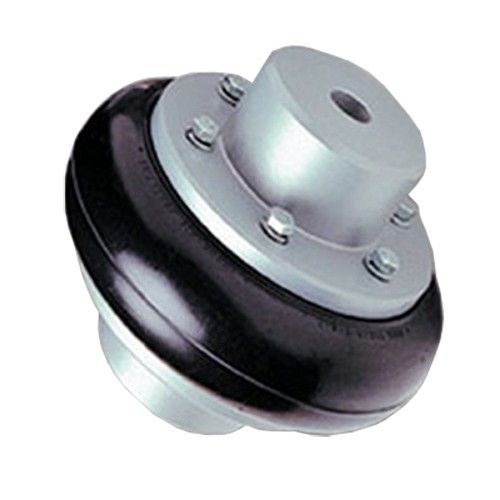
Recent Advancements in Rubber Coupling Technology
In recent years, rubber coupling technology has seen several advancements aimed at improving performance, durability, and overall efficiency:
- Enhanced Rubber Compounds: Development of advanced rubber compounds with improved resistance to wear, heat, chemicals, and environmental conditions.
- Advanced Manufacturing Techniques: Utilization of innovative manufacturing processes like injection molding and vulcanization to create couplings with consistent quality and higher precision.
- Improved Design: Integration of advanced design techniques and computer simulations to optimize the shape and characteristics of rubber elements, resulting in enhanced flexibility and damping properties.
- Customization: Increasing focus on offering customizable rubber couplings to meet specific application requirements and environmental conditions.
- Smart Couplings: Incorporation of sensors and monitoring systems into rubber couplings, allowing real-time tracking of coupling performance and condition.
These advancements have led to rubber couplings that offer better torque transmission, improved vibration isolation, longer service life, and reduced maintenance needs.
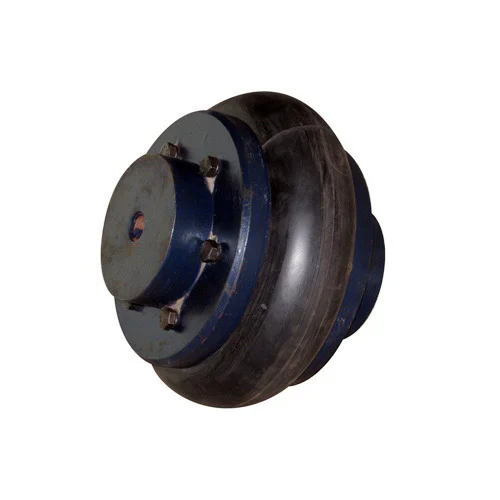
Common Rubber Materials Used in Manufacturing Rubber Couplings
Various rubber materials are used in the manufacturing of rubber couplings, each chosen based on its specific properties and the intended application:
- Neoprene: Known for its oil and chemical resistance, neoprene rubber is used in couplings that require durability and resistance to harsh environments.
- Nitrile: Nitrile rubber offers excellent oil and fuel resistance, making it suitable for applications in machinery that involve contact with lubricants.
- Natural Rubber: Natural rubber provides good elasticity and flexibility, making it suitable for couplings requiring high levels of shock and vibration absorption.
- EPDM: Ethylene Propylene Diene Monomer (EPDM) rubber offers good resistance to weather, ozone, and aging, making it suitable for outdoor or high-temperature applications.
- Polyurethane: Polyurethane rubber offers high abrasion resistance and can handle higher load capacities, making it suitable for heavy-duty applications.
The choice of rubber material depends on factors such as the operating environment, chemical exposure, temperature range, flexibility requirements, and load conditions. Engineers select the appropriate rubber material to ensure the coupling’s performance and longevity in specific applications.
Main Advantages of Using Rubber Couplings in Industrial Applications
Rubber couplings offer several key advantages when used in industrial applications. These advantages make them a popular choice for various industries and mechanical systems:
- Misalignment Tolerance: Rubber couplings can accommodate angular, parallel, and axial misalignments between connected shafts, reducing the need for precise alignment during installation and operation.
- Vibration Damping: The rubber elements of these couplings absorb and dampen vibrations, minimizing the transmission of vibrations and shocks to other components. This helps prevent damage, wear, and noise generation.
- Shock Absorption: In systems where sudden shocks or impacts occur, rubber couplings absorb and cushion the impact, protecting connected components from damage.
- Noise Reduction: The ability to dampen vibrations also contributes to noise reduction, creating quieter operation environments for machinery and equipment.
- Equipment Protection: Rubber couplings protect sensitive equipment from excessive loads, vibrations, and shocks, enhancing the longevity and reliability of the system.
- Cost-Effectiveness: Compared to some other coupling types, rubber couplings are generally cost-effective to manufacture, purchase, and maintain.
- Easy Installation: The flexibility and design of rubber couplings make them relatively easy to install without the need for specialized tools or complex procedures.
- Minimal Maintenance: Rubber couplings require minimal maintenance and lubrication, reducing downtime and maintenance costs.
- Wide Range of Applications: Rubber couplings are versatile and find applications in various industries, including automotive, power generation, pumps, conveyors, and more.
In summary, the main advantages of using rubber couplings in industrial applications include their ability to tolerate misalignment, dampen vibrations, absorb shocks, reduce noise, protect equipment, cost-effectiveness, easy installation, low maintenance requirements, and suitability for a wide range of applications.


editor by CX 2023-08-21
China supplier OEM Natural Rubber and CZPT Rubber Parts and Couplings
Product Description
OEM Natural Rubber and CZPT Rubber Parts and Couplings
Certification:
Why Choose us?
1)Industry leader:
Our Factory has been specilized in Pipeline Products since 2004.With decades of development, we possesses 20 engineers, 200 experienced workers and 25 professional sales team and has supplied pipeline products, solution and services to over 30 countries.Quality is strictly Controlled and gauranteed.
2)Large Productivity
Our Factory’ productivity is large and stock for some of the pipe fittings is also available. so the mass production lead time is short.
3)VIP Service
Professional Technical engineers and sales teams gaurantee the quality and service.
4)OEM is also available
FAQ:
Q1:What certificate do you have?
A: We have ISO 9001, CE certificate.
Q2. Can I get free samples?
A: Yes, The free samples can be offered for free.
Q3. Can I have my own Logo on the product?
A: Yes, Simple logo design is available based on not small order quantity.
Q4: Can I have my own customized product?
A: Yes, your customized requirements for color, size, mark, etc.
Q5: Can you produce the products according to my own drawing?
A: Yes, we can produce the products according to your drawing.
Q6: How long is your delivery time?
A: Generally it is about 30-45days depends on the order quantity.
Q7:What’s your product range?
A:Forged Steel Flanges,Forged Pipe Fitting,Butt welding Pipe Fitting,ISO2531 EN545 EN598 Ductile iron Pipe Fitting, Pipe Clamps,Ductile Iron Groove Pipe Fitting,OEM Parts,Valves
Contact us
HangZhou CZPT Industrial Co., Ltd.
Minimizing Resonance and Improving Machinery Performance with Rubber Couplings
A rubber coupling can play a significant role in minimizing resonance and enhancing the overall performance of machinery by effectively damping vibrations and reducing the risk of resonance-related issues. Resonance is a phenomenon where a mechanical system’s natural frequency matches the frequency of external vibrations, leading to amplified oscillations and potential damage.
The following ways illustrate how rubber couplings contribute to minimizing resonance and improving machinery performance:
- Vibration Damping: Rubber couplings utilize the inherent damping properties of elastomers to absorb and dissipate vibrations generated during operation. These vibrations can include those caused by unbalanced loads, eccentricities, or other disturbances. By damping these vibrations, rubber couplings prevent them from building up and causing resonance.
- Vibration Isolation: Rubber couplings act as isolators by decoupling the connected components from each other. This isolation prevents vibrations from being transmitted directly from one component to another, thereby reducing the potential for resonance to occur.
- Misalignment Compensation: Rubber couplings can accommodate misalignments between shafts, which often contribute to excessive vibrations. By allowing a certain degree of misalignment, the coupling prevents additional forces that could trigger resonance.
- Reduced Stiffness: The flexibility of the elastomer elements in rubber couplings can reduce the overall stiffness of the system. A lower stiffness helps avoid the amplification of resonance by allowing some deformation of the coupling under varying loads and conditions.
- Dynamic Absorption: Rubber couplings are effective at absorbing dynamic loads, including sudden shocks or impacts. These dynamic events can excite resonance, and the coupling’s ability to absorb and disperse such forces helps prevent resonance-related issues.
By effectively dampening vibrations, isolating components, and accommodating misalignments, rubber couplings can help minimize the risk of resonance-related problems. Engineers and designers must carefully select the appropriate rubber coupling type, elastomer material, and design to match the specific machinery and operating conditions, thereby ensuring improved machinery performance and longevity.
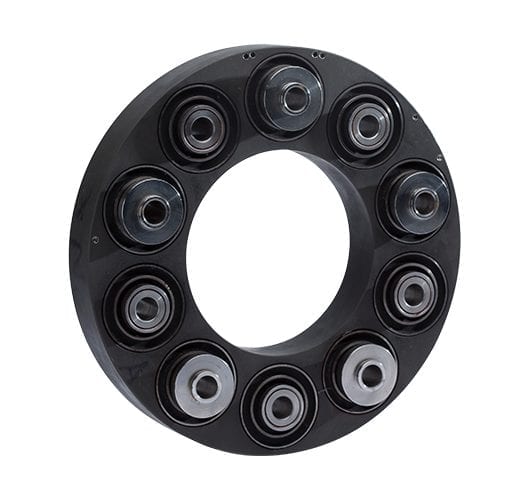
Signs of Wear or Deterioration in Rubber Couplings
Rubber couplings can show signs of wear and deterioration over time due to factors like torque, temperature, and environmental conditions. To identify potential issues, watch out for the following signs:
- Visible Cracks or Damage: Inspect the rubber element for visible cracks, tears, or physical damage. Such issues can weaken the coupling’s torque transmission and vibration damping capabilities.
- Reduced Flexibility: Stiff or less flexible rubber indicates material degradation, which can impact the coupling’s ability to accommodate misalignment and absorb vibrations.
- Increased Vibrations: Excessive machinery vibrations may suggest worn-out rubber couplings. Deterioration of the rubber diminishes its vibration dampening properties.
- Unusual Noises: Any unusual sounds like squeaking or knocking might point to improper rubber coupling function and the need for inspection.
- Altered Performance: Decline in machinery performance, such as reduced torque transmission or higher energy consumption, can indicate coupling wear.
Regular inspections, visual checks, vibration analysis, and performance monitoring can help detect wear and deterioration early. This enables timely replacement and avoids operational problems.
Challenges of Misaligned Rubber Couplings and Their Resolution
Misaligned rubber couplings can lead to several challenges that impact the performance and reliability of machinery. These challenges include:
1. Reduced Efficiency: Misalignment can result in increased friction, causing energy loss and reduced efficiency in power transmission.
2. Increased Wear: Misaligned rubber couplings can cause uneven wear on the coupling’s rubber element and other connected components, leading to premature failure.
3. Vibrations and Noise: Misalignment can cause vibrations and noise, which not only affect the machinery’s operation but also contribute to discomfort for operators.
4. Overloading: Misalignment can lead to uneven loading on the coupling and connected components, potentially causing overloading and damage.
5. Premature Failure: Continuous operation with misaligned couplings can accelerate wear and fatigue, leading to premature failure of the coupling and other components.
To resolve these challenges, proper alignment practices are crucial:
1. Regular Maintenance: Perform routine inspections to identify misalignment and other issues early, allowing for timely adjustments.
2. Precise Installation: Ensure accurate alignment during the installation process to prevent initial misalignment.
3. Laser Alignment: Use laser alignment tools for accurate and reliable alignment between shafts.
4. Corrective Measures: If misalignment is detected, take corrective actions promptly to restore proper alignment.
5. Balancing Loads: Distribute loads evenly across the coupling and connected components to prevent overloading.
By addressing misalignment challenges proactively and adopting appropriate maintenance practices, the longevity and performance of rubber couplings can be significantly improved, minimizing downtime and maintenance costs in industrial applications.
editor by CX 2023-08-15
China best OEM Natural Rubber and CZPT Rubber Parts and Couplings
Product Description
OEM Natural Rubber and CZPT Rubber Parts and Couplings
Certification:
Why Choose us?
1)Industry leader:
Our Factory has been specilized in Pipeline Products since 2004.With decades of development, we possesses 20 engineers, 200 experienced workers and 25 professional sales team and has supplied pipeline products, solution and services to over 30 countries.Quality is strictly Controlled and gauranteed.
2)Large Productivity
Our Factory’ productivity is large and stock for some of the pipe fittings is also available. so the mass production lead time is short.
3)VIP Service
Professional Technical engineers and sales teams gaurantee the quality and service.
4)OEM is also available
FAQ:
Q1:What certificate do you have?
A: We have ISO 9001, CE certificate.
Q2. Can I get free samples?
A: Yes, The free samples can be offered for free.
Q3. Can I have my own Logo on the product?
A: Yes, Simple logo design is available based on not small order quantity.
Q4: Can I have my own customized product?
A: Yes, your customized requirements for color, size, mark, etc.
Q5: Can you produce the products according to my own drawing?
A: Yes, we can produce the products according to your drawing.
Q6: How long is your delivery time?
A: Generally it is about 30-45days depends on the order quantity.
Q7:What’s your product range?
A:Forged Steel Flanges,Forged Pipe Fitting,Butt welding Pipe Fitting,ISO2531 EN545 EN598 Ductile iron Pipe Fitting, Pipe Clamps,Ductile Iron Groove Pipe Fitting,OEM Parts,Valves
Contact us
HangZhou CZPT Industrial Co., Ltd.
Impact of Elastomer Element Design on Rubber Coupling Performance
The design of the elastomer elements in a rubber coupling plays a critical role in determining its overall performance and capabilities. The elastomer elements are the heart of the coupling, responsible for transmitting torque, absorbing vibrations, and accommodating misalignments. The following aspects of elastomer element design significantly impact the coupling’s performance:
- Elastomer Material: The choice of elastomer material influences the coupling’s flexibility, damping characteristics, and resistance to wear. Different elastomers offer varying levels of resilience, chemical resistance, and temperature tolerance. Common elastomers used include natural rubber, synthetic rubber compounds, and polyurethane.
- Elastomer Hardness (Durometer): The durometer hardness of the elastomer affects its flexibility and ability to absorb vibrations. Softer elastomers have higher damping capabilities but may offer less torsional stiffness. Harder elastomers provide better torque transmission but may have reduced vibration isolation.
- Elastomer Shape and Geometry: The shape and geometry of the elastomer elements influence their flexibility and deformation characteristics. Different designs, such as cylindrical, star-shaped, or spider-shaped elements, affect the coupling’s ability to accommodate misalignments and transmit torque smoothly.
- Elastomer Bonding: The way the elastomer is bonded to the coupling’s hubs or inserts impacts the coupling’s overall durability and reliability. Proper bonding ensures that the elastomer effectively transfers torque and maintains its properties over time.
- Elastomer Properties Over Temperature: Elastomers can exhibit changes in performance with temperature fluctuations. Understanding how the chosen elastomer material behaves at different temperatures is essential for applications with varying operating conditions.
The design of the elastomer elements is a delicate balance between providing flexibility for vibration isolation and misalignment compensation while ensuring adequate torque transmission and overall coupling stiffness. Engineers must carefully select elastomer materials and design features based on the specific requirements of the application to achieve optimal coupling performance.
Signs of Wear or Deterioration in Rubber Couplings
Rubber couplings can show signs of wear and deterioration over time due to factors like torque, temperature, and environmental conditions. To identify potential issues, watch out for the following signs:
- Visible Cracks or Damage: Inspect the rubber element for visible cracks, tears, or physical damage. Such issues can weaken the coupling’s torque transmission and vibration damping capabilities.
- Reduced Flexibility: Stiff or less flexible rubber indicates material degradation, which can impact the coupling’s ability to accommodate misalignment and absorb vibrations.
- Increased Vibrations: Excessive machinery vibrations may suggest worn-out rubber couplings. Deterioration of the rubber diminishes its vibration dampening properties.
- Unusual Noises: Any unusual sounds like squeaking or knocking might point to improper rubber coupling function and the need for inspection.
- Altered Performance: Decline in machinery performance, such as reduced torque transmission or higher energy consumption, can indicate coupling wear.
Regular inspections, visual checks, vibration analysis, and performance monitoring can help detect wear and deterioration early. This enables timely replacement and avoids operational problems.
Utilization of Rubber Couplings in Mechanical Systems
A rubber coupling is a type of flexible coupling that utilizes rubber elements to connect two shafts while allowing a certain degree of misalignment and vibration damping. It is commonly used in mechanical systems to transmit torque, accommodate misalignment, and reduce shock and vibration. Here’s how rubber couplings are utilized:
- Torque Transmission: Rubber couplings transmit torque from one shaft to another, enabling the transfer of power between components while allowing for slight angular, parallel, and axial misalignments.
- Misalignment Compensation: These couplings can accommodate both angular and axial misalignments, which can occur due to manufacturing tolerances, thermal expansion, or other factors. The flexibility of the rubber element helps prevent excessive loads on connected equipment.
- Vibration Damping: The elastic properties of rubber help dampen vibrations and shocks generated during the operation of rotating machinery. This prevents the transmission of harmful vibrations to other parts of the system and reduces wear and fatigue.
- Noise Reduction: Rubber couplings help reduce noise by absorbing vibrations and minimizing the transmission of sound waves through the system.
- Equipment Protection: By absorbing shocks and vibrations, rubber couplings protect sensitive equipment and components from damage, thereby extending their lifespan.
- Simple Installation: Rubber couplings are relatively easy to install and require minimal maintenance, making them a convenient choice for various applications.
- Wide Range of Applications: Rubber couplings find applications in various industries, including automotive, industrial machinery, pumps, compressors, and more.
In summary, rubber couplings are utilized in mechanical systems to transmit torque, accommodate misalignment, reduce vibration and shock, protect equipment, and enhance the overall performance and reliability of rotating machinery.
editor by CX 2023-08-14
China manufacturer OEM Natural Rubber and CZPT Rubber Parts and Couplings
Product Description
OEM Natural Rubber and CZPT Rubber Parts and Couplings
Certification:
Why Choose us?
1)Industry leader:
Our Factory has been specilized in Pipeline Products since 2004.With decades of development, we possesses 20 engineers, 200 experienced workers and 25 professional sales team and has supplied pipeline products, solution and services to over 30 countries.Quality is strictly Controlled and gauranteed.
2)Large Productivity
Our Factory’ productivity is large and stock for some of the pipe fittings is also available. so the mass production lead time is short.
3)VIP Service
Professional Technical engineers and sales teams gaurantee the quality and service.
4)OEM is also available
FAQ:
Q1:What certificate do you have?
A: We have ISO 9001, CE certificate.
Q2. Can I get free samples?
A: Yes, The free samples can be offered for free.
Q3. Can I have my own Logo on the product?
A: Yes, Simple logo design is available based on not small order quantity.
Q4: Can I have my own customized product?
A: Yes, your customized requirements for color, size, mark, etc.
Q5: Can you produce the products according to my own drawing?
A: Yes, we can produce the products according to your drawing.
Q6: How long is your delivery time?
A: Generally it is about 30-45days depends on the order quantity.
Q7:What’s your product range?
A:Forged Steel Flanges,Forged Pipe Fitting,Butt welding Pipe Fitting,ISO2531 EN545 EN598 Ductile iron Pipe Fitting, Pipe Clamps,Ductile Iron Groove Pipe Fitting,OEM Parts,Valves
Contact us
HangZhou CZPT Industrial Co., Ltd.
Impact of Elastomer Element Design on Rubber Coupling Performance
The design of the elastomer elements in a rubber coupling plays a critical role in determining its overall performance and capabilities. The elastomer elements are the heart of the coupling, responsible for transmitting torque, absorbing vibrations, and accommodating misalignments. The following aspects of elastomer element design significantly impact the coupling’s performance:
- Elastomer Material: The choice of elastomer material influences the coupling’s flexibility, damping characteristics, and resistance to wear. Different elastomers offer varying levels of resilience, chemical resistance, and temperature tolerance. Common elastomers used include natural rubber, synthetic rubber compounds, and polyurethane.
- Elastomer Hardness (Durometer): The durometer hardness of the elastomer affects its flexibility and ability to absorb vibrations. Softer elastomers have higher damping capabilities but may offer less torsional stiffness. Harder elastomers provide better torque transmission but may have reduced vibration isolation.
- Elastomer Shape and Geometry: The shape and geometry of the elastomer elements influence their flexibility and deformation characteristics. Different designs, such as cylindrical, star-shaped, or spider-shaped elements, affect the coupling’s ability to accommodate misalignments and transmit torque smoothly.
- Elastomer Bonding: The way the elastomer is bonded to the coupling’s hubs or inserts impacts the coupling’s overall durability and reliability. Proper bonding ensures that the elastomer effectively transfers torque and maintains its properties over time.
- Elastomer Properties Over Temperature: Elastomers can exhibit changes in performance with temperature fluctuations. Understanding how the chosen elastomer material behaves at different temperatures is essential for applications with varying operating conditions.
The design of the elastomer elements is a delicate balance between providing flexibility for vibration isolation and misalignment compensation while ensuring adequate torque transmission and overall coupling stiffness. Engineers must carefully select elastomer materials and design features based on the specific requirements of the application to achieve optimal coupling performance.
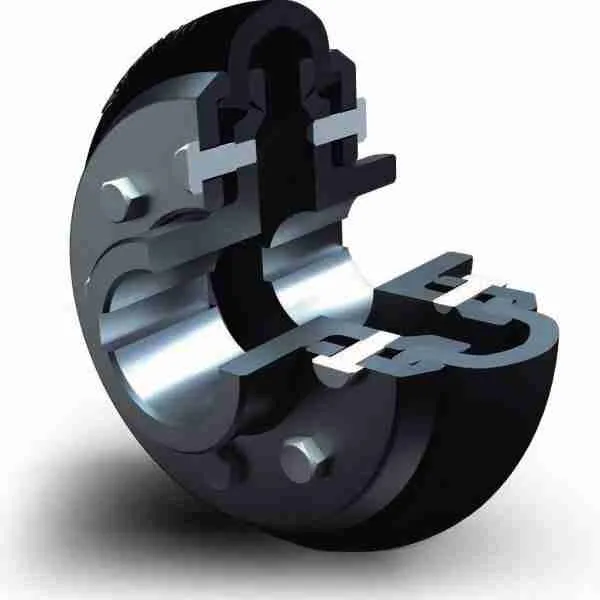
Handling Torque and Vibration Suppression in Rubber Couplings
Rubber couplings are designed to effectively handle both high levels of torque transmission and vibration suppression. The flexibility and damping properties of rubber make it well-suited for these purposes:
- Torque Transmission: Rubber couplings can transmit torque between shafts while accommodating angular misalignment. The rubber element flexes and deforms as torque is applied, allowing the coupling to transmit power even in misaligned conditions.
- Vibration Suppression: Rubber’s inherent damping characteristics help absorb and dissipate vibrations and shocks generated during the operation of machinery. This feature reduces the transfer of vibrations to connected components, minimizing wear and enhancing overall system performance.
Engineers select the appropriate rubber material and coupling design to ensure that the coupling can effectively handle the required torque levels and provide the desired vibration suppression. Rubber couplings find applications in various industries where torque transmission and vibration damping are critical for smooth and reliable machinery operation.
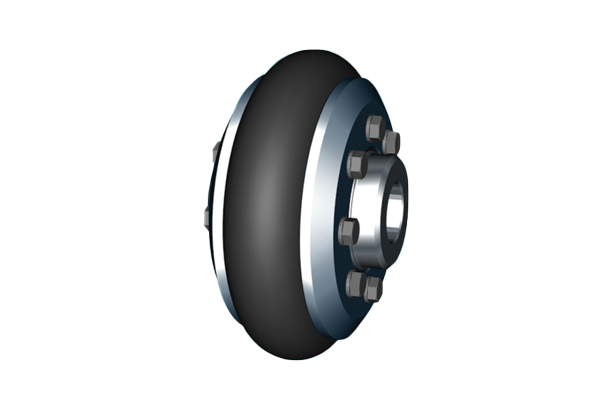
Types of Rubber Couplings Designed for Specific Uses
There are several types of rubber couplings, each designed with specific characteristics to suit various applications:
- Flexible Jaw Couplings: These couplings consist of two hubs connected by a flexible rubber element. They are commonly used in applications where misalignment, vibrations, and shocks need to be dampened, such as in pumps, fans, and compressors.
- Oldham Couplings: Oldham couplings use a rubber disk as the intermediate element between two hubs. They provide compensation for misalignment while maintaining a constant velocity between input and output shafts, often used in printing, packaging, and CNC machinery.
- Tyre Couplings: These couplings have a high degree of torsional flexibility and are suitable for applications with substantial misalignment and shock absorption requirements, like in heavy-duty machinery and construction equipment.
- Pin and Bush Couplings: These couplings use rubber bushes to provide vibration isolation and accommodate misalignment. They are used in various industrial applications, including conveyors, mixers, and crushers.
- Diaphragm Couplings: Diaphragm couplings use a flexible rubber diaphragm to transmit torque and compensate for misalignment. They are commonly found in precision equipment like servo motors and robotics.
Each type of rubber coupling is designed to address specific needs in different applications. The choice of coupling depends on factors such as the degree of misalignment, torque requirements, shock absorption, and the level of precision needed.
editor by CX 2023-08-11
China supplier OEM Natural Rubber and CZPT Rubber Parts and Couplings
Product Description
OEM Natural Rubber and CZPT Rubber Parts and Couplings
Certification:
Why Choose us?
1)Industry leader:
Our Factory has been specilized in Pipeline Products since 2004.With decades of development, we possesses 20 engineers, 200 experienced workers and 25 professional sales team and has supplied pipeline products, solution and services to over 30 countries.Quality is strictly Controlled and gauranteed.
2)Large Productivity
Our Factory’ productivity is large and stock for some of the pipe fittings is also available. so the mass production lead time is short.
3)VIP Service
Professional Technical engineers and sales teams gaurantee the quality and service.
4)OEM is also available
FAQ:
Q1:What certificate do you have?
A: We have ISO 9001, CE certificate.
Q2. Can I get free samples?
A: Yes, The free samples can be offered for free.
Q3. Can I have my own Logo on the product?
A: Yes, Simple logo design is available based on not small order quantity.
Q4: Can I have my own customized product?
A: Yes, your customized requirements for color, size, mark, etc.
Q5: Can you produce the products according to my own drawing?
A: Yes, we can produce the products according to your drawing.
Q6: How long is your delivery time?
A: Generally it is about 30-45days depends on the order quantity.
Q7:What’s your product range?
A:Forged Steel Flanges,Forged Pipe Fitting,Butt welding Pipe Fitting,ISO2531 EN545 EN598 Ductile iron Pipe Fitting, Pipe Clamps,Ductile Iron Groove Pipe Fitting,OEM Parts,Valves
Contact us
HangZhou CZPT Industrial Co., Ltd.
Minimizing Resonance and Improving Machinery Performance with Rubber Couplings
A rubber coupling can play a significant role in minimizing resonance and enhancing the overall performance of machinery by effectively damping vibrations and reducing the risk of resonance-related issues. Resonance is a phenomenon where a mechanical system’s natural frequency matches the frequency of external vibrations, leading to amplified oscillations and potential damage.
The following ways illustrate how rubber couplings contribute to minimizing resonance and improving machinery performance:
- Vibration Damping: Rubber couplings utilize the inherent damping properties of elastomers to absorb and dissipate vibrations generated during operation. These vibrations can include those caused by unbalanced loads, eccentricities, or other disturbances. By damping these vibrations, rubber couplings prevent them from building up and causing resonance.
- Vibration Isolation: Rubber couplings act as isolators by decoupling the connected components from each other. This isolation prevents vibrations from being transmitted directly from one component to another, thereby reducing the potential for resonance to occur.
- Misalignment Compensation: Rubber couplings can accommodate misalignments between shafts, which often contribute to excessive vibrations. By allowing a certain degree of misalignment, the coupling prevents additional forces that could trigger resonance.
- Reduced Stiffness: The flexibility of the elastomer elements in rubber couplings can reduce the overall stiffness of the system. A lower stiffness helps avoid the amplification of resonance by allowing some deformation of the coupling under varying loads and conditions.
- Dynamic Absorption: Rubber couplings are effective at absorbing dynamic loads, including sudden shocks or impacts. These dynamic events can excite resonance, and the coupling’s ability to absorb and disperse such forces helps prevent resonance-related issues.
By effectively dampening vibrations, isolating components, and accommodating misalignments, rubber couplings can help minimize the risk of resonance-related problems. Engineers and designers must carefully select the appropriate rubber coupling type, elastomer material, and design to match the specific machinery and operating conditions, thereby ensuring improved machinery performance and longevity.
editor by CX 2023-08-09