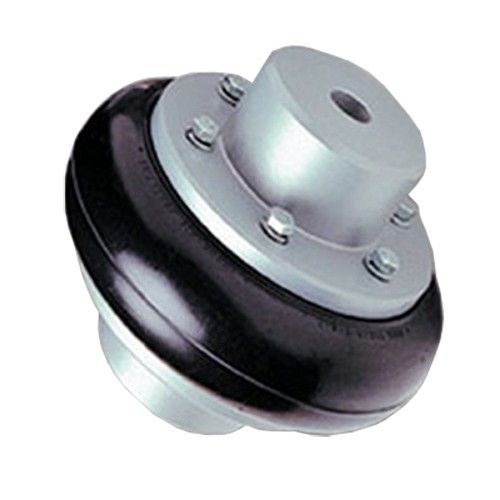
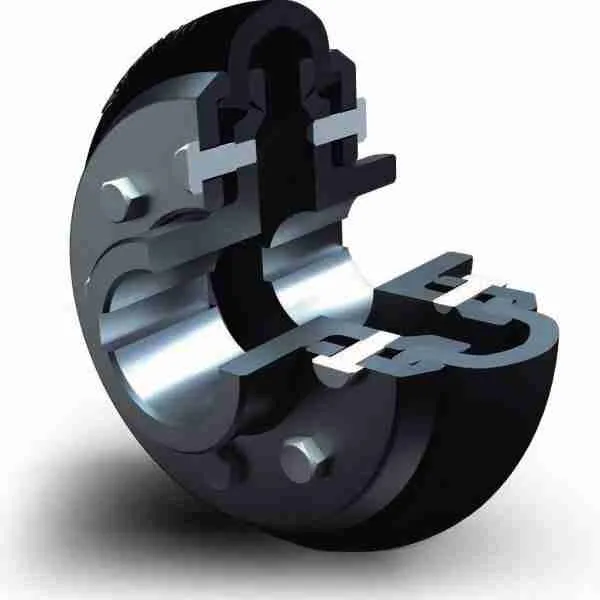
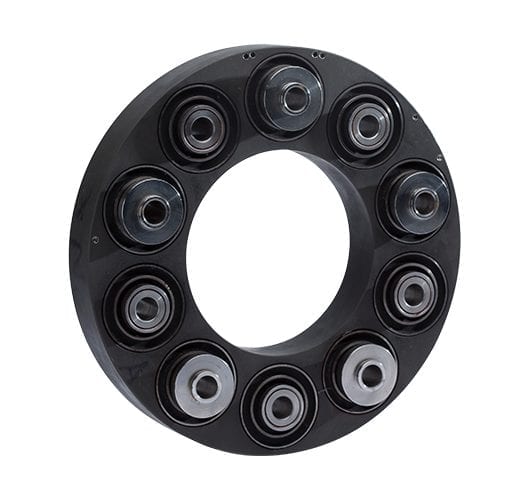
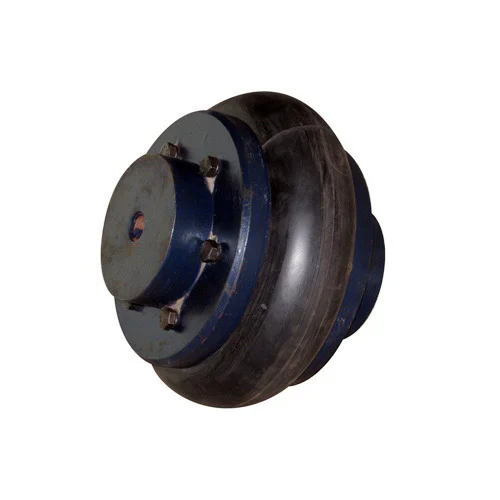
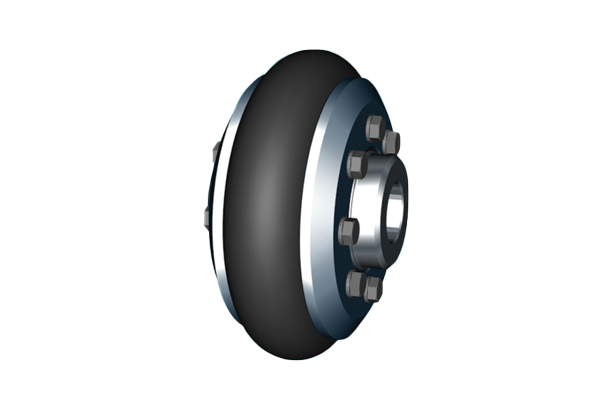
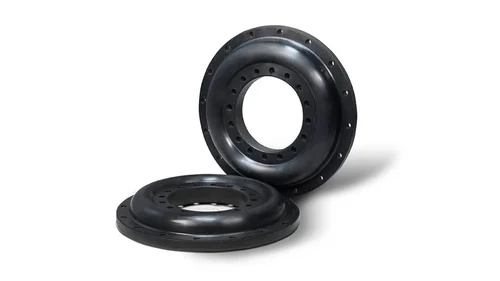
XLD star-shaped flexible coupling is made of aluminum alloy as bushings and engineering plastic as an elastic element, suitable for connecting the 2 coaxial transmission shaft system.
Similar function as of XL type,but the bore dimension and outer dimension is bigger than XL type.
Technical paramters: Star Coupling Model: XLDType Norminal Torque: 34N. M – 35000N. M Connection: Shaft hole Shaft Hole Diameter(d1,d2): 6mm – 220mm Shaft Hole Length (L): 25mm – 195mm The elastomer hardness is 92shA Small dimensions, low weight and low mass moments of inertia yet transmit high torques Running quality and long service life of the coupling are improved by accurate all-over machining Their application is ideal for transmitting torque while damping torsional vibrations and absorbing shocks produced by the uneven operation of certain prime movers Axial plug-in,Maintenance-free, easy assembly, easy to inspect visually Working temperature -35~80ºC Failsafe Same function as CHINAMFG which is made in Germany The bushing is made of aluminum allory or steel, which is especially suitable for heavy-duty transmission,especially suitable for lifts, rolling mills, construction machinery and Metallurgy, mining, transportation, petroleum, chemical, ships, textile, light industry, agricultural machinery, printing machines and pumps, fans, compressors, machine tools and other mechanical equipment and industry shaft transmission. Other customized design.
Packing & shipping: 1 Prevent from damage. 2. As customers’ requirements, in perfect condition. 3. Delivery : As per contract delivery on time 4. Shipping : As per client request. We can accept CIF, Door to Door etc. or client authorized agent we supply all the necessary assistant.
FAQ: Q 1: Are you a trading company or a manufacturer? A: We are a professional manufacturer specializing in manufacturing various series of couplings.
Q 2:Can you do OEM? Yes, we can. We can do OEM & ODM for all the customers with customized artworks in PDF or AI format.
Q 3:How long is your delivery time? Generally, it is 20-30 days if the goods are not in stock. It is according to quantity.
Q 4: How long is your warranty? A: Our Warranty is 12 months under normal circumstances.
Q 5: Do you have inspection procedures for coupling? A:100% self-inspection before packing.
Q 6: Can I have a visit to your factory before the order? A: Sure, welcome to visit our factory. /* January 22, 2571 19:08:37 */!function(){function s(e,r){var a,o={};try{e&&e.split(“,”).forEach(function(e,t){e&&(a=e.match(/(.*?):(.*)$/))&&1
Recent Advancements in Rubber Coupling Technology
In recent years, rubber coupling technology has seen several advancements aimed at improving performance, durability, and overall efficiency:
Enhanced Rubber Compounds: Development of advanced rubber compounds with improved resistance to wear, heat, chemicals, and environmental conditions.
Advanced Manufacturing Techniques: Utilization of innovative manufacturing processes like injection molding and vulcanization to create couplings with consistent quality and higher precision.
Improved Design: Integration of advanced design techniques and computer simulations to optimize the shape and characteristics of rubber elements, resulting in enhanced flexibility and damping properties.
Customization: Increasing focus on offering customizable rubber couplings to meet specific application requirements and environmental conditions.
Smart Couplings: Incorporation of sensors and monitoring systems into rubber couplings, allowing real-time tracking of coupling performance and condition.
These advancements have led to rubber couplings that offer better torque transmission, improved vibration isolation, longer service life, and reduced maintenance needs.
Handling Torque and Vibration Suppression in Rubber Couplings
Rubber couplings are designed to effectively handle both high levels of torque transmission and vibration suppression. The flexibility and damping properties of rubber make it well-suited for these purposes:
Torque Transmission: Rubber couplings can transmit torque between shafts while accommodating angular misalignment. The rubber element flexes and deforms as torque is applied, allowing the coupling to transmit power even in misaligned conditions.
Vibration Suppression: Rubber’s inherent damping characteristics help absorb and dissipate vibrations and shocks generated during the operation of machinery. This feature reduces the transfer of vibrations to connected components, minimizing wear and enhancing overall system performance.
Engineers select the appropriate rubber material and coupling design to ensure that the coupling can effectively handle the required torque levels and provide the desired vibration suppression. Rubber couplings find applications in various industries where torque transmission and vibration damping are critical for smooth and reliable machinery operation.
Challenges of Misaligned Rubber Couplings and Their Resolution
Misaligned rubber couplings can lead to several challenges that impact the performance and reliability of machinery. These challenges include:
1. Reduced Efficiency: Misalignment can result in increased friction, causing energy loss and reduced efficiency in power transmission.
2. Increased Wear: Misaligned rubber couplings can cause uneven wear on the coupling’s rubber element and other connected components, leading to premature failure.
3. Vibrations and Noise: Misalignment can cause vibrations and noise, which not only affect the machinery’s operation but also contribute to discomfort for operators.
4. Overloading: Misalignment can lead to uneven loading on the coupling and connected components, potentially causing overloading and damage.
5. Premature Failure: Continuous operation with misaligned couplings can accelerate wear and fatigue, leading to premature failure of the coupling and other components.
To resolve these challenges, proper alignment practices are crucial:
1. Regular Maintenance: Perform routine inspections to identify misalignment and other issues early, allowing for timely adjustments.
2. Precise Installation: Ensure accurate alignment during the installation process to prevent initial misalignment.
3. Laser Alignment: Use laser alignment tools for accurate and reliable alignment between shafts.
4. Corrective Measures: If misalignment is detected, take corrective actions promptly to restore proper alignment.
5. Balancing Loads: Distribute loads evenly across the coupling and connected components to prevent overloading.
By addressing misalignment challenges proactively and adopting appropriate maintenance practices, the longevity and performance of rubber couplings can be significantly improved, minimizing downtime and maintenance costs in industrial applications.
/* January 22, 2571 19:08:37 */!function(){function s(e,r){var a,o={};try{e&&e.split(“,”).forEach(function(e,t){e&&(a=e.match(/(.*?):(.*)$/))&&1
Durometer Hardness in Rubber Coupling Materials
Durometer hardness is a measure of the material’s resistance to indentation or penetration by a specified indenter. In rubber couplings, durometer hardness is a critical characteristic that influences their performance. It is typically measured using a durometer instrument.
The durometer hardness scale commonly used for rubber materials is the Shore durometer scale, indicated by a letter followed by a numerical value (e.g., Shore A, Shore D). Lower durometer values indicate softer and more flexible rubber, while higher values indicate harder and less flexible rubber.
In relation to rubber couplings:
Higher Durometer (Harder Rubber): Couplings made from harder rubber materials have better torque transmission capabilities and higher load-bearing capacity. However, they may offer less vibration isolation and misalignment compensation.
Lower Durometer (Softer Rubber): Couplings made from softer rubber materials provide greater flexibility, vibration damping, and misalignment compensation. They are suitable for applications where vibration reduction is crucial.
The choice of durometer hardness depends on the specific requirements of the application, including torque levels, vibration, misalignment, and desired performance characteristics.
Handling Torque and Vibration Suppression in Rubber Couplings
Rubber couplings are designed to effectively handle both high levels of torque transmission and vibration suppression. The flexibility and damping properties of rubber make it well-suited for these purposes:
Torque Transmission: Rubber couplings can transmit torque between shafts while accommodating angular misalignment. The rubber element flexes and deforms as torque is applied, allowing the coupling to transmit power even in misaligned conditions.
Vibration Suppression: Rubber’s inherent damping characteristics help absorb and dissipate vibrations and shocks generated during the operation of machinery. This feature reduces the transfer of vibrations to connected components, minimizing wear and enhancing overall system performance.
Engineers select the appropriate rubber material and coupling design to ensure that the coupling can effectively handle the required torque levels and provide the desired vibration suppression. Rubber couplings find applications in various industries where torque transmission and vibration damping are critical for smooth and reliable machinery operation.
Utilization of Rubber Couplings in Mechanical Systems
A rubber coupling is a type of flexible coupling that utilizes rubber elements to connect two shafts while allowing a certain degree of misalignment and vibration damping. It is commonly used in mechanical systems to transmit torque, accommodate misalignment, and reduce shock and vibration. Here’s how rubber couplings are utilized:
Torque Transmission: Rubber couplings transmit torque from one shaft to another, enabling the transfer of power between components while allowing for slight angular, parallel, and axial misalignments.
Misalignment Compensation: These couplings can accommodate both angular and axial misalignments, which can occur due to manufacturing tolerances, thermal expansion, or other factors. The flexibility of the rubber element helps prevent excessive loads on connected equipment.
Vibration Damping: The elastic properties of rubber help dampen vibrations and shocks generated during the operation of rotating machinery. This prevents the transmission of harmful vibrations to other parts of the system and reduces wear and fatigue.
Noise Reduction: Rubber couplings help reduce noise by absorbing vibrations and minimizing the transmission of sound waves through the system.
Equipment Protection: By absorbing shocks and vibrations, rubber couplings protect sensitive equipment and components from damage, thereby extending their lifespan.
Simple Installation: Rubber couplings are relatively easy to install and require minimal maintenance, making them a convenient choice for various applications.
Wide Range of Applications: Rubber couplings find applications in various industries, including automotive, industrial machinery, pumps, compressors, and more.
In summary, rubber couplings are utilized in mechanical systems to transmit torque, accommodate misalignment, reduce vibration and shock, protect equipment, and enhance the overall performance and reliability of rotating machinery.
Hot Sale Spider Coupling Rubber For Flexible Pump Shaft Coupling
HangZhou CHINAMFG Industry Co., Ltd. introduces a new standard polyurethane material for its spiders, offering enhanced performance and durability. The improved material is designed to withstand higher temperatures, ensuring a longer service life compared to the previous polyurethane material.
Our spider couplings are highly customizable, allowing users to tailor the performance to their specific application needs. The spiders are available in 3 durometers, providing options for different levels of dampening and torsional stiffness. Choose from 85 Shore A for maximum dampening, 92 Shore A for a balance of dampening and torsional stiffness, or 98 Shore A for a small amount of dampening and the highest torsional stiffness.
With stand offs on the spider limbs, our couplings make installation easier by maintaining proper spacing between the 2 hubs. This ensures electrical isolation and enables full angular misalignment capabilities.
Designed as the wear element of the coupling, the spiders can be easily replaced, making it a cost-effective solution while restoring the full performance abilities of the coupling.
Plastic film, plastic bag, Bubble bag, Color Box, Blister card…etc
/* January 22, 2571 19:08:37 */!function(){function s(e,r){var a,o={};try{e&&e.split(“,”).forEach(function(e,t){e&&(a=e.match(/(.*?):(.*)$/))&&1
Maintaining and Preserving Rubber Coupling Performance
To ensure the longevity and optimal performance of rubber couplings, the following best practices should be observed:
Regular Inspections: Perform visual inspections for signs of wear, cracks, or damage.
Lubrication: Apply appropriate lubricants to minimize friction and extend rubber life.
Alignment: Maintain proper alignment between connected shafts to prevent undue stress on the coupling.
Temperature Control: Monitor operating temperatures to prevent overheating that can accelerate rubber degradation.
Load Monitoring: Avoid overloading the coupling beyond its rated capacity.
Vibration Analysis: Monitor vibration levels and address excessive vibrations promptly.
Regular Maintenance: Follow manufacturer’s recommendations for maintenance schedules.
Replacement: Replace worn or damaged rubber elements as needed.
By adhering to these practices, the performance and service life of rubber couplings can be effectively preserved.
Industry Standards and Guidelines for Rubber Couplings
There are no specific industry standards or guidelines that exclusively govern the design and application of rubber couplings. However, various general standards and engineering practices apply to flexible couplings, including rubber couplings:
ISO 14691: This standard provides guidelines for the installation, use, and maintenance of industrial flexible couplings, which include rubber couplings.
AGMA 9005: The American Gear Manufacturers Association (AGMA) standard provides information on selecting lubricants and lubrication methods for flexible couplings, ensuring proper performance and longevity.
API 671: This API standard specifies the requirements for special-purpose couplings used in petroleum, chemical, and gas industry services, which can include rubber couplings for specific applications.
Manufacturer Recommendations: Many rubber coupling manufacturers provide guidelines, specifications, and installation instructions for their products, helping users select the right coupling and use it correctly.
Since rubber couplings fall under the category of flexible couplings, engineers and designers can follow these broader standards and best practices while considering the specific characteristics and performance requirements of rubber couplings for their applications.
Role of Rubber Flexibility in Accommodating Misalignment
Rubber couplings are designed with a flexible element, usually made of elastomers, that plays a crucial role in accommodating misalignment between connected shafts. The flexibility of the rubber element allows it to deform and absorb angular, axial, and radial misalignments, providing several benefits:
1. Angular Misalignment: When the input and output shafts are not perfectly aligned in terms of angle, the rubber element can flex and twist, allowing the coupling to transmit torque even when the axes are not parallel.
2. Axial Misalignment: Axial misalignment occurs when the shafts move closer together or farther apart along their axis. The rubber element can compress or extend, adjusting the distance between the shafts without hindering torque transfer.
3. Radial Misalignment: Radial misalignment refers to the offset between the centers of the shafts. The rubber element can bend in response to radial displacement, ensuring that the coupling remains operational while accommodating the offset.
This flexibility not only enables the rubber coupling to handle misalignment but also helps prevent excessive stress on the connected machinery. By absorbing shock loads and distributing forces, the rubber element reduces wear and tear on components and minimizes the risk of premature failure.
In essence, the rubber’s flexibility in the coupling acts as a buffer against misalignment-induced stresses, contributing to smoother operation, improved longevity, and reduced maintenance in mechanical systems.
Name: High precision plum blossom coupling Model: LM-Material: Aviation Aluminum Alloy Working temperature: -40 ° C ~ 100 ° C Support customization: Factory direct sales support customization. Features: 1.Intermediate Elastomer Connection-Absorbs vibration, compensates for radial, angular, and axial 2.misalignment 3.Oil resistance and electrical insulation 4.Clockwise and counterclockwise rotation characteristics are identical-there are 3 different hardness 5.elastomer 6.Fixation by clamping screw.
Model parameter
ΦD
L
LF
LP
F
M
Tightening screw torque
(N.M)
GF-14X22
14
22
14.3
6.6
3.8
M 3
0.7
GF-20X25
20
25
16.7
8.6
4
M 3
0.7
GF-20X30
20
30
19.25
8.6
5.3
M 4
1.7
GF-25X30
25
30
20.82
11.6
5.6
M 4
1.7
GF-25X34
25
34
22.82
11.6
5.6
M 4
1.7
GF-30X35
30
35
23
11.5
5.75
M 4
1.7
GF-30X40
30
40
25.6
11.5
10
M 4
1.7
GF-40X50
40
50
32.1
14.5
10
M 5
4
GF-40X55
40
55
34.5
14.5
10
M 5
4
GF-40X66
40
66
40
14.5
12.75
M 5
4
GF-55X49
55
49
32
16.1
13.5
M 6
8.4
GF-55X78
55
78
46.4
16.1
15.5
M 6
8.4
GF-65X80
65
80
48.5
17.3
18.1
M 8
10.5
GF-65X90
65
90
53.5
17.3
18.1
M 8
10.5
Product Parameters
Detailed Photos
/* January 22, 2571 19:08:37 */!function(){function s(e,r){var a,o={};try{e&&e.split(“,”).forEach(function(e,t){e&&(a=e.match(/(.*?):(.*)$/))&&1
Minimizing Resonance and Improving Machinery Performance with Rubber Couplings
A rubber coupling can play a significant role in minimizing resonance and enhancing the overall performance of machinery by effectively damping vibrations and reducing the risk of resonance-related issues. Resonance is a phenomenon where a mechanical system’s natural frequency matches the frequency of external vibrations, leading to amplified oscillations and potential damage.
The following ways illustrate how rubber couplings contribute to minimizing resonance and improving machinery performance:
Vibration Damping: Rubber couplings utilize the inherent damping properties of elastomers to absorb and dissipate vibrations generated during operation. These vibrations can include those caused by unbalanced loads, eccentricities, or other disturbances. By damping these vibrations, rubber couplings prevent them from building up and causing resonance.
Vibration Isolation: Rubber couplings act as isolators by decoupling the connected components from each other. This isolation prevents vibrations from being transmitted directly from one component to another, thereby reducing the potential for resonance to occur.
Misalignment Compensation: Rubber couplings can accommodate misalignments between shafts, which often contribute to excessive vibrations. By allowing a certain degree of misalignment, the coupling prevents additional forces that could trigger resonance.
Reduced Stiffness: The flexibility of the elastomer elements in rubber couplings can reduce the overall stiffness of the system. A lower stiffness helps avoid the amplification of resonance by allowing some deformation of the coupling under varying loads and conditions.
Dynamic Absorption: Rubber couplings are effective at absorbing dynamic loads, including sudden shocks or impacts. These dynamic events can excite resonance, and the coupling’s ability to absorb and disperse such forces helps prevent resonance-related issues.
By effectively dampening vibrations, isolating components, and accommodating misalignments, rubber couplings can help minimize the risk of resonance-related problems. Engineers and designers must carefully select the appropriate rubber coupling type, elastomer material, and design to match the specific machinery and operating conditions, thereby ensuring improved machinery performance and longevity.
Common Rubber Materials Used in Manufacturing Rubber Couplings
Various rubber materials are used in the manufacturing of rubber couplings, each chosen based on its specific properties and the intended application:
Neoprene: Known for its oil and chemical resistance, neoprene rubber is used in couplings that require durability and resistance to harsh environments.
Nitrile: Nitrile rubber offers excellent oil and fuel resistance, making it suitable for applications in machinery that involve contact with lubricants.
Natural Rubber: Natural rubber provides good elasticity and flexibility, making it suitable for couplings requiring high levels of shock and vibration absorption.
EPDM: Ethylene Propylene Diene Monomer (EPDM) rubber offers good resistance to weather, ozone, and aging, making it suitable for outdoor or high-temperature applications.
Polyurethane: Polyurethane rubber offers high abrasion resistance and can handle higher load capacities, making it suitable for heavy-duty applications.
The choice of rubber material depends on factors such as the operating environment, chemical exposure, temperature range, flexibility requirements, and load conditions. Engineers select the appropriate rubber material to ensure the coupling’s performance and longevity in specific applications.
Role of Rubber Flexibility in Accommodating Misalignment
Rubber couplings are designed with a flexible element, usually made of elastomers, that plays a crucial role in accommodating misalignment between connected shafts. The flexibility of the rubber element allows it to deform and absorb angular, axial, and radial misalignments, providing several benefits:
1. Angular Misalignment: When the input and output shafts are not perfectly aligned in terms of angle, the rubber element can flex and twist, allowing the coupling to transmit torque even when the axes are not parallel.
2. Axial Misalignment: Axial misalignment occurs when the shafts move closer together or farther apart along their axis. The rubber element can compress or extend, adjusting the distance between the shafts without hindering torque transfer.
3. Radial Misalignment: Radial misalignment refers to the offset between the centers of the shafts. The rubber element can bend in response to radial displacement, ensuring that the coupling remains operational while accommodating the offset.
This flexibility not only enables the rubber coupling to handle misalignment but also helps prevent excessive stress on the connected machinery. By absorbing shock loads and distributing forces, the rubber element reduces wear and tear on components and minimizes the risk of premature failure.
In essence, the rubber’s flexibility in the coupling acts as a buffer against misalignment-induced stresses, contributing to smoother operation, improved longevity, and reduced maintenance in mechanical systems.
Please click here>>>>Contact us for more factory price,shipping and discounts
ENGINE CUSHION
NO.
LB NO.
Model
OEM NO.
Name
NO.
LB NO.
Model
OEM NO.
Name
NO.
LB NO.
Model
OEM NO.
Name
1
KLB-Q3001
PC40
105*53*10
ENGINE CUSHION
15
KLB-Q3015
E312 FRONT
95*28*16
ENGINE CUSHION
29
KLB-Q3571
SK230
90*45*21
ENGINE CUSHION
2
KLB-Q3002
PC120-6 4D102
82*46*18
ENGINE CUSHION
16
KLB-Q3016
EX312 REAR
95*29*17
ENGINE CUSHION
30
KLB-Q3030
HD250
59*31*13
ENGINE CUSHION
3
KLB-Q3003
PC200-3
124*68*45 205-01-71111
ENGINE CUSHION
17
KLB-Q3017
ZAX230 FRONT
95*28*16
ENGINE CUSHION
31
KLB-Q3031
HD450 FRONT
97*15*19
ENGINE CUSHION
4
KLB-Q3004
PC200-5/6 FRONT
80*46*19 20Y-01-12210
ENGINE CUSHION
18
KLB-Q3018
E320B
110*40*22
ENGINE CUSHION
32
KLB-Q3032
HD450 REAR
118*36*19
ENGINE CUSHION
5
KLB-Q3005
PC200-5 REAR
130*73*25 20Y-01-12221
ENGINE CUSHION
19
KLB-Q3019
E330B
136*44*25
ENGINE CUSHION
33
KLB-Q3033
LS120
87*42*17
ENGINE CUSHION
6
KLB-Q3006
PC200-6 6D102
20Y-01-12222
ENGINE CUSHION
20
KLB-Q3571
DH220-3 FRONT
68*70*12
ENGINE CUSHION
34
KLB-Q3034
LS280 FRONT
86*23*16
ENGINE CUSHION
7
KLB-Q3007
EX200
ENGINE CUSHION
21
KLB-Q3571
DH220-3 REAR
110*105*14
ENGINE CUSHION
35
KLB-Q3035
LS280 REAR
96*25*16
ENGINE CUSHION
8
KLB-Q3008
EX200-5 REAR
167*110*14
ENGINE CUSHION
22
KLB-Q3571
DH220-5
104*74*19
ENGINE CUSHION
36
KLB-Q3036
SH60 SH65
120*110*12
ENGINE CUSHION
9
KLB-Q3009
EX200-6 REAR
175*135*16
ENGINE CUSHION
23
KLB-Q3571
DH280 FRONT
165*200*16
ENGINE CUSHION
37
KLB-Q3037
6D22 FRONT
70*35*21
ENGINE CUSHION
10
KLB-Q3571
EX200 FRONT
120*155*14
ENGINE CUSHION
24
KLB-Q3571
DH280 REAR
200*110*20
ENGINE CUSHION
38
KLB-Q3038
6D22 REAR
95*41*22
ENGINE CUSHION
11
KLB-Q3011
EX200 REAR
165*105*14
ENGINE CUSHION
25
KLB-Q3571
SK60 FRONT
98*103*12
ENGINE CUSHION
39
KLB-Q3039
DH55 FRONT
100*48*17
ENGINE CUSHION
12
KLB-Q3012
EX200
126*100*11
ENGINE CUSHION
26
KLB-Q3026
SK60 REAR
98*103*16
ENGINE CUSHION
40
KLB-Q3040
SH200A3
137*160*16
ENGINE CUSHION
13
KLB-Q3013
EX300 FRONT
87*35*20
ENGINE CUSHION
27
KLB-Q3571
SK120 FRONT
100*15*19
ENGINE CUSHION
14
KLB-Q3014
EX300 REAR
110*39*22
ENGINE CUSHION
28
KLB-Q3571
SK120 FEAR
100*47*19
ENGINE CUSHION
COUPLING
NO.
LB NO.
Model
OEM NO.
Name
NO.
LB NO.
Model
OEM NO.
Name
NO.
LB NO.
Model
OEM NO.
Name
1
KLB-Q2001
25H 162*92
COUPLING
22
KLB-Q2571
16A
155*76
COUPLING
43
KLB-Q2043
S32S
235*97
COUPLING
2
KLB-Q2002
MS110 DH55
30H 195*105
COUPLING
23
KLB-Q2571
16AS
155*76
COUPLING
44
KLB-Q2044
S25S
163*58
COUPLING
3
KLB-Q2003
30H
195*105
COUPLING ASSY
24
KLB-Q2571
22A
153*76
COUPLING
45
KLB-Q2045
E200B
14T
COUPLING
4
KLB-Q2004
EX200-2
40H 170*90
COUPLING
25
KLB-Q2571
25A
185*102
COUPLING
46
KLB-Q2046
50AC
14T 205*40
COUPLING
5
KLB-Q2005
40H
170*90
COUPLING ASSY
26
KLB-Q2026
25AS
185*102
COUPLING
47
KLB-Q2047
SH280
COUPLING
6
KLB-Q2006
45H
183*92
COUPLING
27
KLB-Q2571
28A
178*93
COUPLING
48
KLB-Q2048
E200B 12T
COUPLING
7
KLB-Q2007
45H
183*92
COUPLING ASSY
28
KLB-Q2571
28AS
178*93
COUPLING
49
KLB-Q2049
50AM 16T
205*45
COUPLING
8
KLB-Q2008
90H
203*107
COUPLING
29
KLB-Q2571
30A
215*118
COUPLING
50
KLB-Q2050
SH200
14T 205*40
COUPLING
9
KLB-Q2009
90H
203*107
COUPLING ASSY
30
KLB-Q2030
30AS
215*118
COUPLING
51
KLB-Q2051
E330C
350*145
COUPLING
10
KLB-Q2571
50H
195*110
COUPLING
31
KLB-Q2031
50A
205*108
COUPLING
52
KLB-Q2052
E330C
COUPLING
11
KLB-Q2011
50H
195*110
COUPLING ASSY
32
KLB-Q2032
50AS
205*108
COUPLING
53
KLB-Q2053
168mm*48m 26T 3H
COUPLING
12
KLB-Q2012
110H
215*110
COUPLING
33
KLB-Q2033
90A
272*140
COUPLING
54
KLB-Q2054
242mm*72mm 50T 8H
COUPLING
13
KLB-Q2013
110H
215*110
COUPLING ASSY
34
KLB-Q2034
90AS
272*140
COUPLING
55
KLB-Q2055
295mm*161mm 48T 12H
COUPLING
14
KLB-Q2014
140H
245*125
COUPLING
35
KLB-Q2035
140A
262*132
COUPLING
56
KLB-Q2056
352mm*161mm 48T 8H
COUPLING
15
KLB-Q2015
140H
245*125
COUPLING ASSY
36
KLB-Q2036
140AS
262*132
COUPLING
57
KLB-Q2057
352mm*161mm 46T 8H
COUPLING
16
KLB-Q2016
160H
255*134
COUPLING
37
KLB-Q2037
E300B
16T 278*54
COUPLING
58
KLB-Q2058
318mm*72mm 50T 8H
COUPLING
17
KLB-Q2017
160H
255*134
COUPLING ASSY
38
KLB-Q2038
E450
16T 360*52
COUPLING
59
KLB-Q2059
315mm 42T
COUPLING
18
KLB-Q2018
4A
104*53
COUPLING
39
KLB-Q2039
SH430
12T 205*35
COUPLING
60
KLB-Q2060
268mm*100mm 42T 6H
COUPLING
19
KLB-Q2019
4AS
104*53
COUPLING
40
KLB-Q2040
SH200
14T 205*40
COUPLING
61
KLB-Q2061
167mm*90mm 47T 3H
COUPLING
20
KLB-Q2571
8A
130*70
COUPLING
41
KLB-Q2041
50ASM
20T 205*40
COUPLING
62
KLB-Q2062
182mm 42T
COUPLING
21
KLB-Q2571
8AS
130*70
COUPLING
42
KLB-Q2042
SH160(SH60)
15T 173*22
COUPLING
63
KLB-Q2063
220mm 46T
COUPLING
1Q:What is your brand? 1A:Our own brand: Mita Group and its range of excavator parts.
2Q:Do you have your own factory? Can we have a visit? 2A:Absolutely, you are alwayswelcome to visit our factory.
3Q:How do you control the quality of the products? 3A:Our factory was obtained the ISO9001CERTIFICATE.Every process of the production is strictly controlled. And all products will be inspected by QC before shipment.
4Q:How long is the delivery time? 4A:2 to 7 days for ex-stock orders. 15 to 30 days for production.
5Q:Can we print our company logo onproduct and package? 5A:Yes, but the quantity of the order is required. And we need you to offer the Trademark Authorization to us.
6Q:Can you provide OEM BRAND package? 6A:Sorry, we can only offer our company ACT BRAND package or neutral packing,blank package ifyou need, and the Buyers’ Brand as authorized.7Q:How long is the warranty period?7A:3 months /* January 22, 2571 19:08:37 */!function(){function s(e,r){var a,o={};try{e&&e.split(“,”).forEach(function(e,t){e&&(a=e.match(/(.*?):(.*)$/))&&1
Maintaining and Preserving Rubber Coupling Performance
To ensure the longevity and optimal performance of rubber couplings, the following best practices should be observed:
Regular Inspections: Perform visual inspections for signs of wear, cracks, or damage.
Lubrication: Apply appropriate lubricants to minimize friction and extend rubber life.
Alignment: Maintain proper alignment between connected shafts to prevent undue stress on the coupling.
Temperature Control: Monitor operating temperatures to prevent overheating that can accelerate rubber degradation.
Load Monitoring: Avoid overloading the coupling beyond its rated capacity.
Vibration Analysis: Monitor vibration levels and address excessive vibrations promptly.
Regular Maintenance: Follow manufacturer’s recommendations for maintenance schedules.
Replacement: Replace worn or damaged rubber elements as needed.
By adhering to these practices, the performance and service life of rubber couplings can be effectively preserved.
Comparison of Rubber Couplings with Other Flexible Coupling Types
Rubber couplings, elastomeric couplings, and disc couplings are all flexible coupling options used in various mechanical systems. Here’s a comparison of rubber couplings with these alternatives:
Rubber Couplings:
Transmit torque while damping vibrations through the flexibility of rubber elements.
Provide good misalignment compensation and shock absorption.
Relatively simple construction and cost-effective.
Effective in reducing noise and vibration in applications.
Suitable for moderate to high torque applications with moderate misalignment.
Elastomeric Couplings:
Similar to rubber couplings, utilize elastomeric materials for flexibility and vibration damping.
Offer higher torque capacity and stiffness compared to rubber couplings.
Provide better misalignment compensation and torsional stiffness.
Wider range of sizes and configurations for various applications.
Commonly used in pumps, compressors, and other machinery.
Disc Couplings:
Use a series of metal discs to transmit torque and accommodate misalignment.
Offer high torsional stiffness and accuracy in torque transmission.
Can handle higher speeds and torque compared to rubber or elastomeric couplings.
Require precision in manufacturing and installation.
Used in applications requiring high precision and minimal backlash.
When choosing between these flexible coupling types, considerations such as torque requirements, misalignment compensation, torsional stiffness, and application-specific needs play a significant role in making the appropriate selection. Each type has its advantages and limitations, making it important to assess the specific requirements of the machinery system.
Challenges of Misaligned Rubber Couplings and Their Resolution
Misaligned rubber couplings can lead to several challenges that impact the performance and reliability of machinery. These challenges include:
1. Reduced Efficiency: Misalignment can result in increased friction, causing energy loss and reduced efficiency in power transmission.
2. Increased Wear: Misaligned rubber couplings can cause uneven wear on the coupling’s rubber element and other connected components, leading to premature failure.
3. Vibrations and Noise: Misalignment can cause vibrations and noise, which not only affect the machinery’s operation but also contribute to discomfort for operators.
4. Overloading: Misalignment can lead to uneven loading on the coupling and connected components, potentially causing overloading and damage.
5. Premature Failure: Continuous operation with misaligned couplings can accelerate wear and fatigue, leading to premature failure of the coupling and other components.
To resolve these challenges, proper alignment practices are crucial:
1. Regular Maintenance: Perform routine inspections to identify misalignment and other issues early, allowing for timely adjustments.
2. Precise Installation: Ensure accurate alignment during the installation process to prevent initial misalignment.
3. Laser Alignment: Use laser alignment tools for accurate and reliable alignment between shafts.
4. Corrective Measures: If misalignment is detected, take corrective actions promptly to restore proper alignment.
5. Balancing Loads: Distribute loads evenly across the coupling and connected components to prevent overloading.
By addressing misalignment challenges proactively and adopting appropriate maintenance practices, the longevity and performance of rubber couplings can be significantly improved, minimizing downtime and maintenance costs in industrial applications.
Name: High precision plum blossom coupling Model: LM-Material: Aviation Aluminum Alloy Working temperature: -40 ° C ~ 100 ° C Support customization: Factory direct sales support customization. Features: 1.Intermediate Elastomer Connection-Absorbs vibration, compensates for radial, angular, and axial 2.misalignment 3.Oil resistance and electrical insulation 4.Clockwise and counterclockwise rotation characteristics are identical-there are 3 different hardness 5.elastomer 6.Fixation by clamping screw.
Model parameter
ΦD
L
LF
LP
F
M
Tightening screw torque
(N.M)
GF-14X22
14
22
14.3
6.6
3.8
M 3
0.7
GF-20X25
20
25
16.7
8.6
4
M 3
0.7
GF-20X30
20
30
19.25
8.6
5.3
M 4
1.7
GF-25X30
25
30
20.82
11.6
5.6
M 4
1.7
GF-25X34
25
34
22.82
11.6
5.6
M 4
1.7
GF-30X35
30
35
23
11.5
5.75
M 4
1.7
GF-30X40
30
40
25.6
11.5
10
M 4
1.7
GF-40X50
40
50
32.1
14.5
10
M 5
4
GF-40X55
40
55
34.5
14.5
10
M 5
4
GF-40X66
40
66
40
14.5
12.75
M 5
4
GF-55X49
55
49
32
16.1
13.5
M 6
8.4
GF-55X78
55
78
46.4
16.1
15.5
M 6
8.4
GF-65X80
65
80
48.5
17.3
18.1
M 8
10.5
GF-65X90
65
90
53.5
17.3
18.1
M 8
10.5
Product Parameters
Detailed Photos
/* January 22, 2571 19:08:37 */!function(){function s(e,r){var a,o={};try{e&&e.split(“,”).forEach(function(e,t){e&&(a=e.match(/(.*?):(.*)$/))&&1
Impact of Elastomer Element Design on Rubber Coupling Performance
The design of the elastomer elements in a rubber coupling plays a critical role in determining its overall performance and capabilities. The elastomer elements are the heart of the coupling, responsible for transmitting torque, absorbing vibrations, and accommodating misalignments. The following aspects of elastomer element design significantly impact the coupling’s performance:
Elastomer Material: The choice of elastomer material influences the coupling’s flexibility, damping characteristics, and resistance to wear. Different elastomers offer varying levels of resilience, chemical resistance, and temperature tolerance. Common elastomers used include natural rubber, synthetic rubber compounds, and polyurethane.
Elastomer Hardness (Durometer): The durometer hardness of the elastomer affects its flexibility and ability to absorb vibrations. Softer elastomers have higher damping capabilities but may offer less torsional stiffness. Harder elastomers provide better torque transmission but may have reduced vibration isolation.
Elastomer Shape and Geometry: The shape and geometry of the elastomer elements influence their flexibility and deformation characteristics. Different designs, such as cylindrical, star-shaped, or spider-shaped elements, affect the coupling’s ability to accommodate misalignments and transmit torque smoothly.
Elastomer Bonding: The way the elastomer is bonded to the coupling’s hubs or inserts impacts the coupling’s overall durability and reliability. Proper bonding ensures that the elastomer effectively transfers torque and maintains its properties over time.
Elastomer Properties Over Temperature: Elastomers can exhibit changes in performance with temperature fluctuations. Understanding how the chosen elastomer material behaves at different temperatures is essential for applications with varying operating conditions.
The design of the elastomer elements is a delicate balance between providing flexibility for vibration isolation and misalignment compensation while ensuring adequate torque transmission and overall coupling stiffness. Engineers must carefully select elastomer materials and design features based on the specific requirements of the application to achieve optimal coupling performance.
Handling Torque and Vibration Suppression in Rubber Couplings
Rubber couplings are designed to effectively handle both high levels of torque transmission and vibration suppression. The flexibility and damping properties of rubber make it well-suited for these purposes:
Torque Transmission: Rubber couplings can transmit torque between shafts while accommodating angular misalignment. The rubber element flexes and deforms as torque is applied, allowing the coupling to transmit power even in misaligned conditions.
Vibration Suppression: Rubber’s inherent damping characteristics help absorb and dissipate vibrations and shocks generated during the operation of machinery. This feature reduces the transfer of vibrations to connected components, minimizing wear and enhancing overall system performance.
Engineers select the appropriate rubber material and coupling design to ensure that the coupling can effectively handle the required torque levels and provide the desired vibration suppression. Rubber couplings find applications in various industries where torque transmission and vibration damping are critical for smooth and reliable machinery operation.
Types of Rubber Couplings Designed for Specific Uses
There are several types of rubber couplings, each designed with specific characteristics to suit various applications:
Flexible Jaw Couplings: These couplings consist of two hubs connected by a flexible rubber element. They are commonly used in applications where misalignment, vibrations, and shocks need to be dampened, such as in pumps, fans, and compressors.
Oldham Couplings: Oldham couplings use a rubber disk as the intermediate element between two hubs. They provide compensation for misalignment while maintaining a constant velocity between input and output shafts, often used in printing, packaging, and CNC machinery.
Tyre Couplings: These couplings have a high degree of torsional flexibility and are suitable for applications with substantial misalignment and shock absorption requirements, like in heavy-duty machinery and construction equipment.
Pin and Bush Couplings: These couplings use rubber bushes to provide vibration isolation and accommodate misalignment. They are used in various industrial applications, including conveyors, mixers, and crushers.
Diaphragm Couplings: Diaphragm couplings use a flexible rubber diaphragm to transmit torque and compensate for misalignment. They are commonly found in precision equipment like servo motors and robotics.
Each type of rubber coupling is designed to address specific needs in different applications. The choice of coupling depends on factors such as the degree of misalignment, torque requirements, shock absorption, and the level of precision needed.
Please click here>>>>Contact us for more factory price,shipping and discounts
ENGINE CUSHION
NO.
LB NO.
Model
OEM NO.
Name
NO.
LB NO.
Model
OEM NO.
Name
NO.
LB NO.
Model
OEM NO.
Name
1
KLB-Q3001
PC40
105*53*10
ENGINE CUSHION
15
KLB-Q3015
E312 FRONT
95*28*16
ENGINE CUSHION
29
KLB-Q3571
SK230
90*45*21
ENGINE CUSHION
2
KLB-Q3002
PC120-6 4D102
82*46*18
ENGINE CUSHION
16
KLB-Q3016
EX312 REAR
95*29*17
ENGINE CUSHION
30
KLB-Q3030
HD250
59*31*13
ENGINE CUSHION
3
KLB-Q3003
PC200-3
124*68*45 205-01-71111
ENGINE CUSHION
17
KLB-Q3017
ZAX230 FRONT
95*28*16
ENGINE CUSHION
31
KLB-Q3031
HD450 FRONT
97*15*19
ENGINE CUSHION
4
KLB-Q3004
PC200-5/6 FRONT
80*46*19 20Y-01-12210
ENGINE CUSHION
18
KLB-Q3018
E320B
110*40*22
ENGINE CUSHION
32
KLB-Q3032
HD450 REAR
118*36*19
ENGINE CUSHION
5
KLB-Q3005
PC200-5 REAR
130*73*25 20Y-01-12221
ENGINE CUSHION
19
KLB-Q3019
E330B
136*44*25
ENGINE CUSHION
33
KLB-Q3033
LS120
87*42*17
ENGINE CUSHION
6
KLB-Q3006
PC200-6 6D102
20Y-01-12222
ENGINE CUSHION
20
KLB-Q3571
DH220-3 FRONT
68*70*12
ENGINE CUSHION
34
KLB-Q3034
LS280 FRONT
86*23*16
ENGINE CUSHION
7
KLB-Q3007
EX200
ENGINE CUSHION
21
KLB-Q3571
DH220-3 REAR
110*105*14
ENGINE CUSHION
35
KLB-Q3035
LS280 REAR
96*25*16
ENGINE CUSHION
8
KLB-Q3008
EX200-5 REAR
167*110*14
ENGINE CUSHION
22
KLB-Q3571
DH220-5
104*74*19
ENGINE CUSHION
36
KLB-Q3036
SH60 SH65
120*110*12
ENGINE CUSHION
9
KLB-Q3009
EX200-6 REAR
175*135*16
ENGINE CUSHION
23
KLB-Q3571
DH280 FRONT
165*200*16
ENGINE CUSHION
37
KLB-Q3037
6D22 FRONT
70*35*21
ENGINE CUSHION
10
KLB-Q3571
EX200 FRONT
120*155*14
ENGINE CUSHION
24
KLB-Q3571
DH280 REAR
200*110*20
ENGINE CUSHION
38
KLB-Q3038
6D22 REAR
95*41*22
ENGINE CUSHION
11
KLB-Q3011
EX200 REAR
165*105*14
ENGINE CUSHION
25
KLB-Q3571
SK60 FRONT
98*103*12
ENGINE CUSHION
39
KLB-Q3039
DH55 FRONT
100*48*17
ENGINE CUSHION
12
KLB-Q3012
EX200
126*100*11
ENGINE CUSHION
26
KLB-Q3026
SK60 REAR
98*103*16
ENGINE CUSHION
40
KLB-Q3040
SH200A3
137*160*16
ENGINE CUSHION
13
KLB-Q3013
EX300 FRONT
87*35*20
ENGINE CUSHION
27
KLB-Q3571
SK120 FRONT
100*15*19
ENGINE CUSHION
14
KLB-Q3014
EX300 REAR
110*39*22
ENGINE CUSHION
28
KLB-Q3571
SK120 FEAR
100*47*19
ENGINE CUSHION
COUPLING
NO.
LB NO.
Model
OEM NO.
Name
NO.
LB NO.
Model
OEM NO.
Name
NO.
LB NO.
Model
OEM NO.
Name
1
KLB-Q2001
25H 162*92
COUPLING
22
KLB-Q2571
16A
155*76
COUPLING
43
KLB-Q2043
S32S
235*97
COUPLING
2
KLB-Q2002
MS110 DH55
30H 195*105
COUPLING
23
KLB-Q2571
16AS
155*76
COUPLING
44
KLB-Q2044
S25S
163*58
COUPLING
3
KLB-Q2003
30H
195*105
COUPLING ASSY
24
KLB-Q2571
22A
153*76
COUPLING
45
KLB-Q2045
E200B
14T
COUPLING
4
KLB-Q2004
EX200-2
40H 170*90
COUPLING
25
KLB-Q2571
25A
185*102
COUPLING
46
KLB-Q2046
50AC
14T 205*40
COUPLING
5
KLB-Q2005
40H
170*90
COUPLING ASSY
26
KLB-Q2026
25AS
185*102
COUPLING
47
KLB-Q2047
SH280
COUPLING
6
KLB-Q2006
45H
183*92
COUPLING
27
KLB-Q2571
28A
178*93
COUPLING
48
KLB-Q2048
E200B 12T
COUPLING
7
KLB-Q2007
45H
183*92
COUPLING ASSY
28
KLB-Q2571
28AS
178*93
COUPLING
49
KLB-Q2049
50AM 16T
205*45
COUPLING
8
KLB-Q2008
90H
203*107
COUPLING
29
KLB-Q2571
30A
215*118
COUPLING
50
KLB-Q2050
SH200
14T 205*40
COUPLING
9
KLB-Q2009
90H
203*107
COUPLING ASSY
30
KLB-Q2030
30AS
215*118
COUPLING
51
KLB-Q2051
E330C
350*145
COUPLING
10
KLB-Q2571
50H
195*110
COUPLING
31
KLB-Q2031
50A
205*108
COUPLING
52
KLB-Q2052
E330C
COUPLING
11
KLB-Q2011
50H
195*110
COUPLING ASSY
32
KLB-Q2032
50AS
205*108
COUPLING
53
KLB-Q2053
168mm*48m 26T 3H
COUPLING
12
KLB-Q2012
110H
215*110
COUPLING
33
KLB-Q2033
90A
272*140
COUPLING
54
KLB-Q2054
242mm*72mm 50T 8H
COUPLING
13
KLB-Q2013
110H
215*110
COUPLING ASSY
34
KLB-Q2034
90AS
272*140
COUPLING
55
KLB-Q2055
295mm*161mm 48T 12H
COUPLING
14
KLB-Q2014
140H
245*125
COUPLING
35
KLB-Q2035
140A
262*132
COUPLING
56
KLB-Q2056
352mm*161mm 48T 8H
COUPLING
15
KLB-Q2015
140H
245*125
COUPLING ASSY
36
KLB-Q2036
140AS
262*132
COUPLING
57
KLB-Q2057
352mm*161mm 46T 8H
COUPLING
16
KLB-Q2016
160H
255*134
COUPLING
37
KLB-Q2037
E300B
16T 278*54
COUPLING
58
KLB-Q2058
318mm*72mm 50T 8H
COUPLING
17
KLB-Q2017
160H
255*134
COUPLING ASSY
38
KLB-Q2038
E450
16T 360*52
COUPLING
59
KLB-Q2059
315mm 42T
COUPLING
18
KLB-Q2018
4A
104*53
COUPLING
39
KLB-Q2039
SH430
12T 205*35
COUPLING
60
KLB-Q2060
268mm*100mm 42T 6H
COUPLING
19
KLB-Q2019
4AS
104*53
COUPLING
40
KLB-Q2040
SH200
14T 205*40
COUPLING
61
KLB-Q2061
167mm*90mm 47T 3H
COUPLING
20
KLB-Q2571
8A
130*70
COUPLING
41
KLB-Q2041
50ASM
20T 205*40
COUPLING
62
KLB-Q2062
182mm 42T
COUPLING
21
KLB-Q2571
8AS
130*70
COUPLING
42
KLB-Q2042
SH160(SH60)
15T 173*22
COUPLING
63
KLB-Q2063
220mm 46T
COUPLING
1Q:What is your brand? 1A:Our own brand: Mita Group and its range of excavator parts.
2Q:Do you have your own factory? Can we have a visit? 2A:Absolutely, you are alwayswelcome to visit our factory.
3Q:How do you control the quality of the products? 3A:Our factory was obtained the ISO9001CERTIFICATE.Every process of the production is strictly controlled. And all products will be inspected by QC before shipment.
4Q:How long is the delivery time? 4A:2 to 7 days for ex-stock orders. 15 to 30 days for production.
5Q:Can we print our company logo onproduct and package? 5A:Yes, but the quantity of the order is required. And we need you to offer the Trademark Authorization to us.
6Q:Can you provide OEM BRAND package? 6A:Sorry, we can only offer our company ACT BRAND package or neutral packing,blank package ifyou need, and the Buyers’ Brand as authorized.7Q:How long is the warranty period?7A:3 months /* January 22, 2571 19:08:37 */!function(){function s(e,r){var a,o={};try{e&&e.split(“,”).forEach(function(e,t){e&&(a=e.match(/(.*?):(.*)$/))&&1
Suitability of Rubber Couplings for High-Speed Rotation and Varying Loads
Rubber couplings are generally well-suited for applications involving high-speed rotation and varying loads, thanks to their unique properties and design features.
High-Speed Rotation: Rubber couplings can effectively handle high-speed rotation due to their inherent flexibility and damping characteristics. The elastomeric material used in rubber couplings helps absorb and dissipate vibrations that can occur at high speeds, contributing to smoother operation and reduced wear on connected machinery components.
Varying Loads: Rubber couplings are capable of accommodating varying loads due to their ability to deform under stress. The flexibility of rubber allows it to absorb shocks and impacts caused by changes in load, preventing damage to connected equipment. This feature is particularly beneficial in applications where sudden changes in load can occur, such as in industrial machinery.
However, it’s important to consider the specific requirements of the application. While rubber couplings provide excellent vibration isolation and misalignment compensation, they may not offer the same level of torsional rigidity as some other coupling types. In cases where precise torque transmission is crucial, and minimal torsional deflection is required, other coupling options might be more suitable.
Overall, rubber couplings can provide reliable performance in applications involving high-speed rotation and varying loads, especially when the benefits of vibration damping and misalignment compensation are essential.
Handling Torque and Vibration Suppression in Rubber Couplings
Rubber couplings are designed to effectively handle both high levels of torque transmission and vibration suppression. The flexibility and damping properties of rubber make it well-suited for these purposes:
Torque Transmission: Rubber couplings can transmit torque between shafts while accommodating angular misalignment. The rubber element flexes and deforms as torque is applied, allowing the coupling to transmit power even in misaligned conditions.
Vibration Suppression: Rubber’s inherent damping characteristics help absorb and dissipate vibrations and shocks generated during the operation of machinery. This feature reduces the transfer of vibrations to connected components, minimizing wear and enhancing overall system performance.
Engineers select the appropriate rubber material and coupling design to ensure that the coupling can effectively handle the required torque levels and provide the desired vibration suppression. Rubber couplings find applications in various industries where torque transmission and vibration damping are critical for smooth and reliable machinery operation.
Types of Rubber Couplings Designed for Specific Uses
There are several types of rubber couplings, each designed with specific characteristics to suit various applications:
Flexible Jaw Couplings: These couplings consist of two hubs connected by a flexible rubber element. They are commonly used in applications where misalignment, vibrations, and shocks need to be dampened, such as in pumps, fans, and compressors.
Oldham Couplings: Oldham couplings use a rubber disk as the intermediate element between two hubs. They provide compensation for misalignment while maintaining a constant velocity between input and output shafts, often used in printing, packaging, and CNC machinery.
Tyre Couplings: These couplings have a high degree of torsional flexibility and are suitable for applications with substantial misalignment and shock absorption requirements, like in heavy-duty machinery and construction equipment.
Pin and Bush Couplings: These couplings use rubber bushes to provide vibration isolation and accommodate misalignment. They are used in various industrial applications, including conveyors, mixers, and crushers.
Diaphragm Couplings: Diaphragm couplings use a flexible rubber diaphragm to transmit torque and compensate for misalignment. They are commonly found in precision equipment like servo motors and robotics.
Each type of rubber coupling is designed to address specific needs in different applications. The choice of coupling depends on factors such as the degree of misalignment, torque requirements, shock absorption, and the level of precision needed.
/* January 22, 2571 19:08:37 */!function(){function s(e,r){var a,o={};try{e&&e.split(“,”).forEach(function(e,t){e&&(a=e.match(/(.*?):(.*)$/))&&1
Suitability of Rubber Couplings for High-Speed Rotation and Varying Loads
Rubber couplings are generally well-suited for applications involving high-speed rotation and varying loads, thanks to their unique properties and design features.
High-Speed Rotation: Rubber couplings can effectively handle high-speed rotation due to their inherent flexibility and damping characteristics. The elastomeric material used in rubber couplings helps absorb and dissipate vibrations that can occur at high speeds, contributing to smoother operation and reduced wear on connected machinery components.
Varying Loads: Rubber couplings are capable of accommodating varying loads due to their ability to deform under stress. The flexibility of rubber allows it to absorb shocks and impacts caused by changes in load, preventing damage to connected equipment. This feature is particularly beneficial in applications where sudden changes in load can occur, such as in industrial machinery.
However, it’s important to consider the specific requirements of the application. While rubber couplings provide excellent vibration isolation and misalignment compensation, they may not offer the same level of torsional rigidity as some other coupling types. In cases where precise torque transmission is crucial, and minimal torsional deflection is required, other coupling options might be more suitable.
Overall, rubber couplings can provide reliable performance in applications involving high-speed rotation and varying loads, especially when the benefits of vibration damping and misalignment compensation are essential.
Handling Torque and Vibration Suppression in Rubber Couplings
Rubber couplings are designed to effectively handle both high levels of torque transmission and vibration suppression. The flexibility and damping properties of rubber make it well-suited for these purposes:
Torque Transmission: Rubber couplings can transmit torque between shafts while accommodating angular misalignment. The rubber element flexes and deforms as torque is applied, allowing the coupling to transmit power even in misaligned conditions.
Vibration Suppression: Rubber’s inherent damping characteristics help absorb and dissipate vibrations and shocks generated during the operation of machinery. This feature reduces the transfer of vibrations to connected components, minimizing wear and enhancing overall system performance.
Engineers select the appropriate rubber material and coupling design to ensure that the coupling can effectively handle the required torque levels and provide the desired vibration suppression. Rubber couplings find applications in various industries where torque transmission and vibration damping are critical for smooth and reliable machinery operation.
Role of Rubber Flexibility in Accommodating Misalignment
Rubber couplings are designed with a flexible element, usually made of elastomers, that plays a crucial role in accommodating misalignment between connected shafts. The flexibility of the rubber element allows it to deform and absorb angular, axial, and radial misalignments, providing several benefits:
1. Angular Misalignment: When the input and output shafts are not perfectly aligned in terms of angle, the rubber element can flex and twist, allowing the coupling to transmit torque even when the axes are not parallel.
2. Axial Misalignment: Axial misalignment occurs when the shafts move closer together or farther apart along their axis. The rubber element can compress or extend, adjusting the distance between the shafts without hindering torque transfer.
3. Radial Misalignment: Radial misalignment refers to the offset between the centers of the shafts. The rubber element can bend in response to radial displacement, ensuring that the coupling remains operational while accommodating the offset.
This flexibility not only enables the rubber coupling to handle misalignment but also helps prevent excessive stress on the connected machinery. By absorbing shock loads and distributing forces, the rubber element reduces wear and tear on components and minimizes the risk of premature failure.
In essence, the rubber’s flexibility in the coupling acts as a buffer against misalignment-induced stresses, contributing to smoother operation, improved longevity, and reduced maintenance in mechanical systems.
Name: High precision plum blossom coupling Model: LM-Material: Aviation Aluminum Alloy Working temperature: -40 ° C ~ 100 ° C Support customization: Factory direct sales support customization. Features: 1.Intermediate Elastomer Connection-Absorbs vibration, compensates for radial, angular, and axial 2.misalignment 3.Oil resistance and electrical insulation 4.Clockwise and counterclockwise rotation characteristics are identical-there are 3 different hardness 5.elastomer 6.Fixation by clamping screw.
Model parameter
ΦD
L
LF
LP
F
M
Tightening screw torque
(N.M)
GF-14X22
14
22
14.3
6.6
3.8
M 3
0.7
GF-20X25
20
25
16.7
8.6
4
M 3
0.7
GF-20X30
20
30
19.25
8.6
5.3
M 4
1.7
GF-25X30
25
30
20.82
11.6
5.6
M 4
1.7
GF-25X34
25
34
22.82
11.6
5.6
M 4
1.7
GF-30X35
30
35
23
11.5
5.75
M 4
1.7
GF-30X40
30
40
25.6
11.5
10
M 4
1.7
GF-40X50
40
50
32.1
14.5
10
M 5
4
GF-40X55
40
55
34.5
14.5
10
M 5
4
GF-40X66
40
66
40
14.5
12.75
M 5
4
GF-55X49
55
49
32
16.1
13.5
M 6
8.4
GF-55X78
55
78
46.4
16.1
15.5
M 6
8.4
GF-65X80
65
80
48.5
17.3
18.1
M 8
10.5
GF-65X90
65
90
53.5
17.3
18.1
M 8
10.5
Product Parameters
Detailed Photos
/* January 22, 2571 19:08:37 */!function(){function s(e,r){var a,o={};try{e&&e.split(“,”).forEach(function(e,t){e&&(a=e.match(/(.*?):(.*)$/))&&1
Durometer Hardness in Rubber Coupling Materials
Durometer hardness is a measure of the material’s resistance to indentation or penetration by a specified indenter. In rubber couplings, durometer hardness is a critical characteristic that influences their performance. It is typically measured using a durometer instrument.
The durometer hardness scale commonly used for rubber materials is the Shore durometer scale, indicated by a letter followed by a numerical value (e.g., Shore A, Shore D). Lower durometer values indicate softer and more flexible rubber, while higher values indicate harder and less flexible rubber.
In relation to rubber couplings:
Higher Durometer (Harder Rubber): Couplings made from harder rubber materials have better torque transmission capabilities and higher load-bearing capacity. However, they may offer less vibration isolation and misalignment compensation.
Lower Durometer (Softer Rubber): Couplings made from softer rubber materials provide greater flexibility, vibration damping, and misalignment compensation. They are suitable for applications where vibration reduction is crucial.
The choice of durometer hardness depends on the specific requirements of the application, including torque levels, vibration, misalignment, and desired performance characteristics.
Industries and Applications of Rubber Couplings
Rubber couplings are widely utilized in various industries and applications where their unique characteristics are beneficial. Some examples include:
Automotive: Rubber couplings are commonly used in automotive drivetrains to connect the engine to the transmission and other components. They help absorb engine vibrations and shocks, enhancing passenger comfort.
Pumping Systems: Rubber couplings find applications in pumps and fluid handling systems, where they dampen vibrations and reduce wear on connected equipment.
Material Handling: Conveyor systems and material handling equipment use rubber couplings to minimize vibrations and shock loads during the movement of materials.
Industrial Machinery: Rubber couplings are employed in various types of industrial machinery, such as compressors, generators, and gearboxes, to ensure smooth torque transmission and vibration isolation.
Marine: In marine applications, rubber couplings connect propulsion systems and power transmission components, contributing to the overall reliability and performance of vessels.
Renewable Energy: Wind turbines and solar tracking systems utilize rubber couplings to absorb dynamic loads and vibrations caused by changing wind conditions.
These examples highlight the versatility and importance of rubber couplings in maintaining efficient and reliable operation across a wide range of industries and applications.
Transmitting Torque and Damping Vibrations with a Rubber Coupling
A rubber coupling utilizes its flexible rubber element to achieve both torque transmission and vibration damping:
1. Torque Transmission: The rubber element connects two hubs, which are attached to the input and output shafts. As the input shaft rotates, it causes the rubber element to deform due to the applied torque. This deformation creates a shearing action within the rubber material, transmitting torque from the input to the output shaft.
2. Vibration Damping: The flexible rubber element of the coupling acts as a vibration isolator. When the coupling experiences external vibrations or shocks, the rubber absorbs the energy and dampens the vibrations before they reach the output shaft. The rubber’s elasticity and damping properties help mitigate vibrations and reduce the impact on the connected machinery, enhancing overall system performance and longevity.
This combination of torque transmission and vibration damping makes rubber couplings suitable for applications where misalignment compensation, shock absorption, and dampening of vibrations are essential, such as in pumps, compressors, HVAC systems, and various industrial machinery.
Jaw Coupling LTQ Type Rubber Pin Flexible Elastic Pin Bush Coupling Shaft Coupling
Description: FCL coupling is widely used for its compact designing,easy installation,convenientmaintenance,small size and light weight.As long as the’relative displacement between shafts is kept within the specified tolerance,the coupling will operate the best function and a longer working life,thus it is greatly demanded in medium and minorpower transmission systems drive by moters,such as speed reducers,hoists,compressor,spining &weaving machines and ball mills,permittable relative displacement:Radial displacement 0.2-0.6mm ; Angel displacemente 0o30′–1o30′
Features: 1. Maintenance, a FCLcoupling doesn’t need maintenance. 2. Environmental, elastic components make FCL coupling applies to a variety of working conditions. 3. Reliable transmission, in case of elastic component is damaged, the coupling spider still keep the transmission processing reliably. 4. Economic, FCL couplings have already been made of optimization design,which make transmission power match the transmission shaft diameter. 5. Good recovery capacity, elastic components can reduce the load at the CHINAMFG moments, and the deviation is a major consideration when designing. 6. Adaptability of misalignment, FCL coupling contains parallel shift, angle shift and axis shift which happen some times.
Packing & shipping: 1 Prevent from damage. 2. As customers’ requirements, in perfect condition. 3. Delivery : As per contract delivery on time 4. Shipping : As per client request. We can accept CIF, Door to Door etc. or client authorized agent we supply all the necessary assistant.
FAQ: Q 1: Are you a trading company or a manufacturer? A: We are a professional manufacturer specializing in manufacturing various series of couplings.
Q 2:Can you do OEM? Yes, we can. We can do OEM & ODM for all the customers with customized artworks in PDF or AI format.
Q 3:How long is your delivery time? Generally, it is 20-30 days if the goods are not in stock. It is according to quantity.
Q 4: How long is your warranty? A: Our Warranty is 12 months under normal circumstances.
Q 5: Do you have inspection procedures for coupling? A:100% self-inspection before packing.
Q 6: Can I have a visit to your factory before the order? A: Sure, welcome to visit our factory. /* January 22, 2571 19:08:37 */!function(){function s(e,r){var a,o={};try{e&&e.split(“,”).forEach(function(e,t){e&&(a=e.match(/(.*?):(.*)$/))&&1
Minimizing Resonance and Improving Machinery Performance with Rubber Couplings
A rubber coupling can play a significant role in minimizing resonance and enhancing the overall performance of machinery by effectively damping vibrations and reducing the risk of resonance-related issues. Resonance is a phenomenon where a mechanical system’s natural frequency matches the frequency of external vibrations, leading to amplified oscillations and potential damage.
The following ways illustrate how rubber couplings contribute to minimizing resonance and improving machinery performance:
Vibration Damping: Rubber couplings utilize the inherent damping properties of elastomers to absorb and dissipate vibrations generated during operation. These vibrations can include those caused by unbalanced loads, eccentricities, or other disturbances. By damping these vibrations, rubber couplings prevent them from building up and causing resonance.
Vibration Isolation: Rubber couplings act as isolators by decoupling the connected components from each other. This isolation prevents vibrations from being transmitted directly from one component to another, thereby reducing the potential for resonance to occur.
Misalignment Compensation: Rubber couplings can accommodate misalignments between shafts, which often contribute to excessive vibrations. By allowing a certain degree of misalignment, the coupling prevents additional forces that could trigger resonance.
Reduced Stiffness: The flexibility of the elastomer elements in rubber couplings can reduce the overall stiffness of the system. A lower stiffness helps avoid the amplification of resonance by allowing some deformation of the coupling under varying loads and conditions.
Dynamic Absorption: Rubber couplings are effective at absorbing dynamic loads, including sudden shocks or impacts. These dynamic events can excite resonance, and the coupling’s ability to absorb and disperse such forces helps prevent resonance-related issues.
By effectively dampening vibrations, isolating components, and accommodating misalignments, rubber couplings can help minimize the risk of resonance-related problems. Engineers and designers must carefully select the appropriate rubber coupling type, elastomer material, and design to match the specific machinery and operating conditions, thereby ensuring improved machinery performance and longevity.
Signs of Wear or Deterioration in Rubber Couplings
Rubber couplings can show signs of wear and deterioration over time due to factors like torque, temperature, and environmental conditions. To identify potential issues, watch out for the following signs:
Visible Cracks or Damage: Inspect the rubber element for visible cracks, tears, or physical damage. Such issues can weaken the coupling’s torque transmission and vibration damping capabilities.
Reduced Flexibility: Stiff or less flexible rubber indicates material degradation, which can impact the coupling’s ability to accommodate misalignment and absorb vibrations.
Increased Vibrations: Excessive machinery vibrations may suggest worn-out rubber couplings. Deterioration of the rubber diminishes its vibration dampening properties.
Unusual Noises: Any unusual sounds like squeaking or knocking might point to improper rubber coupling function and the need for inspection.
Altered Performance: Decline in machinery performance, such as reduced torque transmission or higher energy consumption, can indicate coupling wear.
Regular inspections, visual checks, vibration analysis, and performance monitoring can help detect wear and deterioration early. This enables timely replacement and avoids operational problems.
Challenges of Misaligned Rubber Couplings and Their Resolution
Misaligned rubber couplings can lead to several challenges that impact the performance and reliability of machinery. These challenges include:
1. Reduced Efficiency: Misalignment can result in increased friction, causing energy loss and reduced efficiency in power transmission.
2. Increased Wear: Misaligned rubber couplings can cause uneven wear on the coupling’s rubber element and other connected components, leading to premature failure.
3. Vibrations and Noise: Misalignment can cause vibrations and noise, which not only affect the machinery’s operation but also contribute to discomfort for operators.
4. Overloading: Misalignment can lead to uneven loading on the coupling and connected components, potentially causing overloading and damage.
5. Premature Failure: Continuous operation with misaligned couplings can accelerate wear and fatigue, leading to premature failure of the coupling and other components.
To resolve these challenges, proper alignment practices are crucial:
1. Regular Maintenance: Perform routine inspections to identify misalignment and other issues early, allowing for timely adjustments.
2. Precise Installation: Ensure accurate alignment during the installation process to prevent initial misalignment.
3. Laser Alignment: Use laser alignment tools for accurate and reliable alignment between shafts.
4. Corrective Measures: If misalignment is detected, take corrective actions promptly to restore proper alignment.
5. Balancing Loads: Distribute loads evenly across the coupling and connected components to prevent overloading.
By addressing misalignment challenges proactively and adopting appropriate maintenance practices, the longevity and performance of rubber couplings can be significantly improved, minimizing downtime and maintenance costs in industrial applications.