Product Description
carbon steel coupling for rubber hose
Specification:
| PART NO | THREAD E | HOSE BORE | DIMHangZhouONS | |||
| DN | DASH | A | C | S2 | ||
| 24211-04-04 | 9/16″×18 | 6 | 04 | 22.5 | 8.5 | 19 |
| 24211-04-05 | 9/16″×18 | 8 | 05 | 22.5 | 8.5 | 19 |
| 24211-04-06 | 9/16″×18 | 10 | 06 | 22.5 | 8.5 | 19 |
| 24211-06-04T | 11/16″×16 | 6 | 04 | 23.5 | 10 | 22 |
| 24211-06-05T | 11/16″×16 | 8 | 05 | 23.5 | 10 | 22 |
| 24211-06-06 | 11/16″×16 | 10 | 06 | 25.5 | 10 | 22 |
| 24211-06-08 | 11/16″×16 | 12 | 08 | 26 | 10 | 22 |
| 24211-08-05T | 13/16″×16 | 8 | 05 | 25 | 11 | 27 |
| 24211-08-06T | 13/16″×16 | 10 | 06 | 25 | 11 | 27 |
| 24211-08-08 | 13/16″×16 | 12 | 08 | 28 | 11 | 27 |
| 24211-08-10 | 13/16″×16 | 16 | 10 | 29 | 11 | 27 |
| 24211-10-08T | 1″×14 | 12 | 08 | 29.5 | 11 | 30 |
| 24211-10-10T | 1″×14 | 16 | 10 | 33.5 | 11 | 30 |
| 24211-10-12 | 1″×14 | 20 | 12 | 33.5 | 11 | 30 |
| 24211-12-08T | 1.3/16″×12 | 12 | 08 | 30.5 | 12 | 36 |
| 24211-12-10T | 1.3/16″×12 | 16 | 10 | 31.5 | 12 | 36 |
| 24211-12-12T | 1.3/16″×12 | 20 | 12 | 33 | 12 | 36 |
| 24211-12-12 | 1.3/16″×12 | 20 | 12 | 35 | 12 | 36 |
| 24211-12-16 | 1.3/16″×12 | 25 | 16 | 36 | 12 | 36 |
| 24211-16-12T | 1.7/16″×12 | 20 | 12 | 35 | 14.8 | 41 |
| 24211-16-14T | 1.7/16″×12 | 22 | 14 | 34 | 14.8 | 41 |
| 24211-16-16T | 1.7/16″×12 | 25 | 16 | 35 | 14.8 | 41 |
| 24211-16-20 | 1.7/16″×12 | 32 | 20 | 39.5 | 14.8 | 41 |
| 24211-20-16T | 1.11/16″×12 | 25 | 16 | 35 | 15 | 50 |
| 24211-20-20W | 1.11/16″×12 | 32 | 20 | 39.5 | 15 | 50 |
| 24211-20-24W | 1.11/16″×12 | 40 | 24 | 39.5 | 15 | 50 |
| 24211-24-20T | 2″×12 | 32 | 20 | 36 | 14.8 | 60 |
| 24211-24-24T | 2″×12 | 40 | 24 | 36 | 14.8 | 60 |
The material are always carbon steel, stainless steel or brass, and the material can be customized.
The surface of the ferrules are smooth, zinc plating or others customized.
Features:
High functionality
Precise design
Durable
carbon material:
Plant:
Warehouse:
Other products:
| Swaged Metric Fittings | Mertic Flat Seal Fittings |
| Metric Multiseal Fittings | |
| Metric 60°Cone Seal Fittings | |
| Metric 74°Cone Seal Fittings | |
| Metric 24°Cone O-RING Seal L..T Fittings | |
| Metric 24°Cone O-RING Seal H.T.Fittings | |
| Metric Standpipe Straight Fittings | |
| JIS Metric 60°Cone Seal Fitting | |
| Swaged British Fittings | BSP O-RING Seal Fittings |
| BSP Flat Seal Fittings | |
| BSP Multiseal Fittings | |
| BSP 60°Cone Seal Fittings | |
| BSPT Fittings | |
| JIS BSP 60°Cone Seal Fittings | |
| Swaged American Fittings | SAE O-RING Seal Fittings |
| ORFS Flat Seal Fittings | |
| NPSM 60°Cone Seal Fittings | |
| JIC 74°Cone Seal Fittings | |
| NPT Fittings SAE Flange L.T. Fittiings | |
| SAE Flange H.T.Fittings | |
| Staplelok Fittings | Banjo Double connection |
| interlock Hose Fittings | |
| Ferrule | FERRULE for SAE100R1AT/ EN 853 1SN HOSE |
| FERRULE for SAE100R1A EN 853 1ST HOSE | |
| FERRULE for SAE100R2AT/DIN20571 2SN HOSE | |
| FERRULE for SAE100R2A/EN 853 2SN HOSE | |
| FERRULE for SAE100R1AT-R2AT,EN853 1SN-2SN and EN 857 2SC | |
| FERRULE for 4SP,4SH/10-16,R12-06-16 HOSE | |
| FERRULE for 4SH,R12/32 HOSE | |
| Metric Adapters | Metric Thread O-RING Face Seal Adapters |
| Metric Thread Bite Type Tube Adapters | |
| JIS Metric Thread 60°Cone Adapters | |
| Metric Thread 74°Cone Flared Tube Adapters | |
| British Adapters | BSP Thread 60°Cone Adapters |
| JIS BSP Thread 60°Cone Adapters | |
| BSPT Thread Adapters | |
| American Adapters | ORFS Adapters JIC 74°Cone Flared Tube Adapters |
| NPT Thread Adapters |
We carries a wide variety of hydraulic hose ferrule fittings in common size,used mainly for crimping hose fittings.More other type ferrule,fitting and hose please feel free to contact with us.
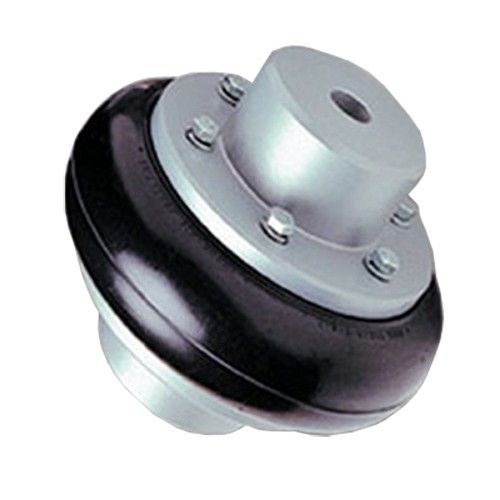
Recent Advancements in Rubber Coupling Technology
In recent years, rubber coupling technology has seen several advancements aimed at improving performance, durability, and overall efficiency:
- Enhanced Rubber Compounds: Development of advanced rubber compounds with improved resistance to wear, heat, chemicals, and environmental conditions.
- Advanced Manufacturing Techniques: Utilization of innovative manufacturing processes like injection molding and vulcanization to create couplings with consistent quality and higher precision.
- Improved Design: Integration of advanced design techniques and computer simulations to optimize the shape and characteristics of rubber elements, resulting in enhanced flexibility and damping properties.
- Customization: Increasing focus on offering customizable rubber couplings to meet specific application requirements and environmental conditions.
- Smart Couplings: Incorporation of sensors and monitoring systems into rubber couplings, allowing real-time tracking of coupling performance and condition.
These advancements have led to rubber couplings that offer better torque transmission, improved vibration isolation, longer service life, and reduced maintenance needs.
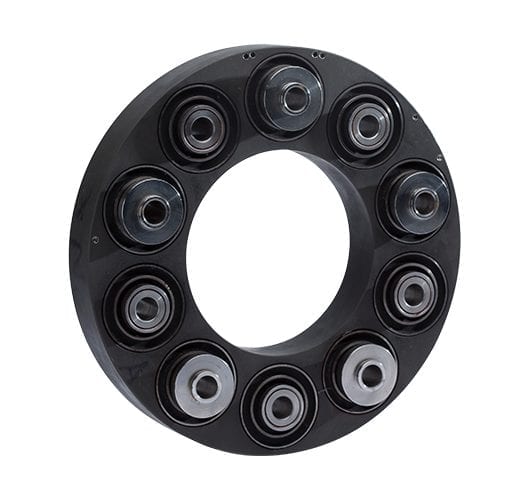
Signs of Wear or Deterioration in Rubber Couplings
Rubber couplings can show signs of wear and deterioration over time due to factors like torque, temperature, and environmental conditions. To identify potential issues, watch out for the following signs:
- Visible Cracks or Damage: Inspect the rubber element for visible cracks, tears, or physical damage. Such issues can weaken the coupling’s torque transmission and vibration damping capabilities.
- Reduced Flexibility: Stiff or less flexible rubber indicates material degradation, which can impact the coupling’s ability to accommodate misalignment and absorb vibrations.
- Increased Vibrations: Excessive machinery vibrations may suggest worn-out rubber couplings. Deterioration of the rubber diminishes its vibration dampening properties.
- Unusual Noises: Any unusual sounds like squeaking or knocking might point to improper rubber coupling function and the need for inspection.
- Altered Performance: Decline in machinery performance, such as reduced torque transmission or higher energy consumption, can indicate coupling wear.
Regular inspections, visual checks, vibration analysis, and performance monitoring can help detect wear and deterioration early. This enables timely replacement and avoids operational problems.
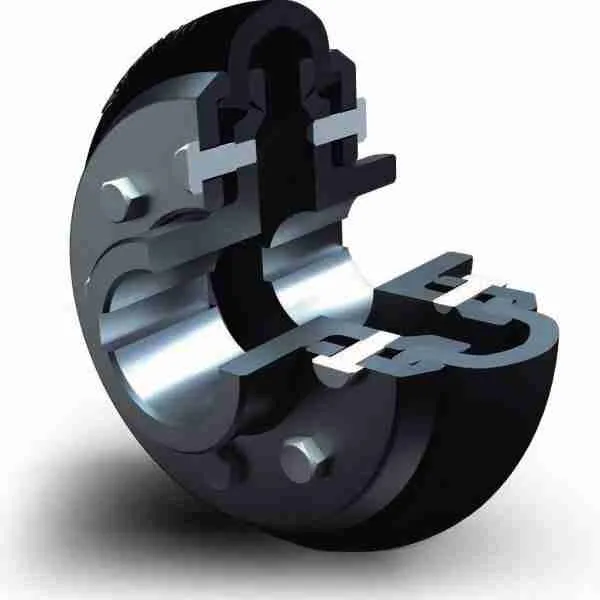
Factors to Consider When Selecting a Rubber Coupling
Choosing the right rubber coupling for a specific application involves considering various factors:
1. Torque Requirements: Evaluate the torque that needs to be transmitted between the input and output shafts. Select a coupling with a rubber element that can handle the required torque without exceeding its limits.
2. Misalignment Compensation: Determine the degree of misalignment (angular, axial, and radial) present in the system. Choose a rubber coupling with appropriate flexibility to accommodate the expected misalignment while maintaining efficient torque transmission.
3. Vibration Damping: Assess the level of vibrations and shocks in the application. Opt for a rubber coupling with effective vibration-damping properties to protect the machinery and enhance its reliability.
4. Service Environment: Consider the operating conditions, including temperature, humidity, exposure to chemicals, and potential contaminants. Select a rubber material that can withstand the environment without deteriorating.
5. Shaft Sizes: Ensure that the coupling’s bore sizes match the shaft diameters of the connected equipment. Proper shaft fitment is crucial for efficient torque transmission.
6. Maintenance Requirements: Evaluate the maintenance practices of the system. Some rubber couplings may require periodic inspection and replacement due to wear over time.
7. Cost and Budget: Factor in the budget constraints while choosing a suitable rubber coupling. Balancing performance and cost is essential for an optimal solution.
8. Application Type: Different industries and applications have unique requirements. Choose a coupling type (spider, jaw, tire, etc.) based on the specific needs of the application.
By carefully considering these factors, you can select a rubber coupling that provides efficient torque transmission, vibration isolation, and durability in your mechanical system.


editor by CX 2023-08-16
China Best Sales Air Compressor Engine Coupling Rubber Drive Coupling
Product Description
Customized Rubber Products & Parts Manufacturer
Product Description
Description of goods
| Product Name |
Rubber Coupling |
|
Material |
CR+Aluminum |
| Process |
Vucanization |
|
Hardness |
53-57 Shore A |
|
Color |
Black |
| Size |
customized |
| Shape |
round. According to customer’s drawing or samples |
| Usage |
Industrial,Vehicle,Electronic,Air-condition |
| Features |
weather and water resistant, oil-resistant, dust resistant. |
|
Certificate |
ISO 9001,ISO14001,TS16949, ROHS,REACH SGS |
|
Lead Time |
15 work days after we receive your deposit |
| Payment Term | T/T ,L/C |
| Loading Port | HangZhou Port or as customer’s requirement |
Shipment
1. Express(fast,samples are suggested)
2. By air,(fatest,high expense)
3. By sea(large order,longer time,cheapest).
4. The standard shipping is 10-22 working days. The expedited shipping is 3-5 working days,.
5. All international orders may be subject to their custom fees or duty tax which we do not pay.
6. All buyers must pay for their own customs fees or brokerage fees or duty tax.
These fees vary due to price of item and government rate. Please contact your government website or shipping company to calculate fees.
Our Services
1.We will reply your enquiry in 24 hours,any time you can contact us.
2.OEM, buyer design, buyer label service is available.
3.We can provide free sample for your testing.
4.We have the certification of ISO 9001
5.Special discount and protection of sales area provided to our distributor.
6.Timely delivery
7.packing can make client brand.
8.Good after-sale service
Company Information
HangZhousun Rubber & Plastic Technology Co.,Ltd is 1 of the earliest professional manufacturer of rubber & plastic products factories. Our company specializes in producing and developing kinds of rubber and plastic products more than 10 years.
FAQ
Q: Are you trading company or manufacturer ?
A: We are factory.
Q: How long is your delivery time?
A: Generally 3-7 days for standard sealing products; and 15-20 days for big order and custom non-standard products.
Q: Do you provide free samples?
A: Yes, we offer free sample while customer need pay for the freight charge.
Q: Which Payment way is workable?
A: Irrevocable L/C, Cash, PayPal, Credit card and T/T money transfers.
B: 30% T/T deposit in advance, 70% balance before shipment after presentation of ready cargo.
C: L/C ( Irrevocable LC at sight: Order amount over USD10,000)
Q: What is your standard packing?
A: All the goods will be packed by carton box and loaded with pallets. Special packing method can be accepted when needed.
Q: How to select the raw compound for my application?
A: With years of experience working with a variety of material, we can help select the material that will best suit your needs while keeping material costs in mind.
Q: Do you use any international standards for the rubber products?
A: Yes, we mainly use ASTM D2000 standard to define the quality of the rubber materials, tolerances as per ISO3302, ISO2768, etc.
Q: Can you supply different color materials?
A: Yes, we can produce custom CZPT and silicone rubber products in different colors, the color code will be required in case of an order.
Q: What materials are available to produce from your side?
A: NBR, EPDM, SILICONE, VITON(FKM), NEOPRENE(CR), NR, IIR, SBR, ACM, AEM, Fluorosilicone(FVMQ), FFKM, Liquid Silicone, Sponge, etc.
Echo Kuang
Website:HangZhousun
Add:Xinzhuang Industrial Park,Xihu (West Lake) Dis.g Town,Xihu (West Lake) Dis. District,HangZhou,China
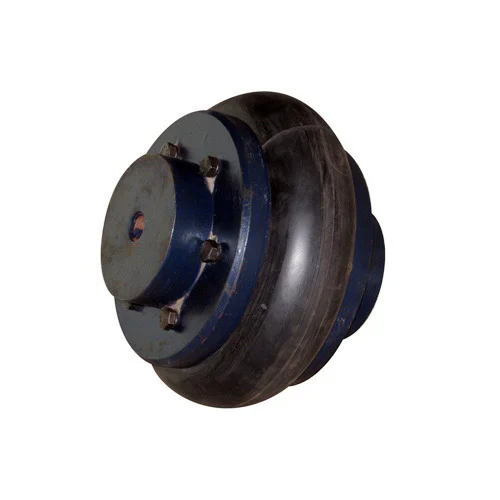
Maintaining and Preserving Rubber Coupling Performance
To ensure the longevity and optimal performance of rubber couplings, the following best practices should be observed:
- Regular Inspections: Perform visual inspections for signs of wear, cracks, or damage.
- Lubrication: Apply appropriate lubricants to minimize friction and extend rubber life.
- Alignment: Maintain proper alignment between connected shafts to prevent undue stress on the coupling.
- Temperature Control: Monitor operating temperatures to prevent overheating that can accelerate rubber degradation.
- Load Monitoring: Avoid overloading the coupling beyond its rated capacity.
- Vibration Analysis: Monitor vibration levels and address excessive vibrations promptly.
- Regular Maintenance: Follow manufacturer’s recommendations for maintenance schedules.
- Replacement: Replace worn or damaged rubber elements as needed.
By adhering to these practices, the performance and service life of rubber couplings can be effectively preserved.
Comparison of Rubber Couplings with Other Flexible Coupling Types
Rubber couplings, elastomeric couplings, and disc couplings are all flexible coupling options used in various mechanical systems. Here’s a comparison of rubber couplings with these alternatives:
Rubber Couplings:
- Transmit torque while damping vibrations through the flexibility of rubber elements.
- Provide good misalignment compensation and shock absorption.
- Relatively simple construction and cost-effective.
- Effective in reducing noise and vibration in applications.
- Suitable for moderate to high torque applications with moderate misalignment.
Elastomeric Couplings:
- Similar to rubber couplings, utilize elastomeric materials for flexibility and vibration damping.
- Offer higher torque capacity and stiffness compared to rubber couplings.
- Provide better misalignment compensation and torsional stiffness.
- Wider range of sizes and configurations for various applications.
- Commonly used in pumps, compressors, and other machinery.
Disc Couplings:
- Use a series of metal discs to transmit torque and accommodate misalignment.
- Offer high torsional stiffness and accuracy in torque transmission.
- Can handle higher speeds and torque compared to rubber or elastomeric couplings.
- Require precision in manufacturing and installation.
- Used in applications requiring high precision and minimal backlash.
When choosing between these flexible coupling types, considerations such as torque requirements, misalignment compensation, torsional stiffness, and application-specific needs play a significant role in making the appropriate selection. Each type has its advantages and limitations, making it important to assess the specific requirements of the machinery system.
Challenges of Misaligned Rubber Couplings and Their Resolution
Misaligned rubber couplings can lead to several challenges that impact the performance and reliability of machinery. These challenges include:
1. Reduced Efficiency: Misalignment can result in increased friction, causing energy loss and reduced efficiency in power transmission.
2. Increased Wear: Misaligned rubber couplings can cause uneven wear on the coupling’s rubber element and other connected components, leading to premature failure.
3. Vibrations and Noise: Misalignment can cause vibrations and noise, which not only affect the machinery’s operation but also contribute to discomfort for operators.
4. Overloading: Misalignment can lead to uneven loading on the coupling and connected components, potentially causing overloading and damage.
5. Premature Failure: Continuous operation with misaligned couplings can accelerate wear and fatigue, leading to premature failure of the coupling and other components.
To resolve these challenges, proper alignment practices are crucial:
1. Regular Maintenance: Perform routine inspections to identify misalignment and other issues early, allowing for timely adjustments.
2. Precise Installation: Ensure accurate alignment during the installation process to prevent initial misalignment.
3. Laser Alignment: Use laser alignment tools for accurate and reliable alignment between shafts.
4. Corrective Measures: If misalignment is detected, take corrective actions promptly to restore proper alignment.
5. Balancing Loads: Distribute loads evenly across the coupling and connected components to prevent overloading.
By addressing misalignment challenges proactively and adopting appropriate maintenance practices, the longevity and performance of rubber couplings can be significantly improved, minimizing downtime and maintenance costs in industrial applications.
editor by CX 2023-08-16
China factory Stainless Steel Ss201 Double-Section Pipe Repair Coupling with CZPT Rubber Sealing Sleeve
Product Description
Stainless Steel Ss201 Double-Section Pipe Repair Coupling with CZPT Rubber Sealing Sleeve
Material:
| Name | Double-Section Pipe Repair Coupling |
| Shell, Bridge Plate, Bolts and Gear -Ring | Stainless steel 201/304/316 |
| EPDM/NBR Rubber Sealing Sleeve | Temperature:(-20ºC~+140ºC) |
| Medium | Available for various kinds of Water, drainage,air,solid and chemicals |
Product Features:
Double-Section Pipe Repair Coupling is manily used on the connection of new pipelines and also for the repairing of pipe leaks. Repairing the pin holds and breaks caused by aging or rusting. It has advantages of working under pressure and no need of changing pipes,Safe,convenient ,effciency and easy to work with. Performs well in mal-condition.
Applied Pipeline:
Crude Oil Pipeline,Gas/Natural,Gas/Fuel Pipeline,Supply/Drainage Water Pipeline,Aviation/Automotive Special Pipeline,Lubricating Oil Pipeline,Mud Slag Pipeline,Suction Pipeline,Flushing Power Pipeline,Cable Protection Pipeline, Sea/Fresh Water Pipeline,Turbine Pipeline,Air Conditioning Pipeline,Fire Line,Ventiation Pipeline,Compressed Air Pipeline and etc…
——RELATED PRODUCTS——
ZheJiang CZPT COMMERCIAL CO.,LTD (hereinafter referred to as the “DEKO group”), the company is located in China’s “Land of Casting” -ZheJiang province, we are engaged in the wholesale, retail, research and development and sales of products for the integration of import and export company and we assembled fist-class factories in domestic, using the most advanced production facilities and technology to provide the best quality for our customers, DEKO group‘s products has been covered in the municipal engineering projects, drainage system, constructions, fire control system and urban public facilities related products, such as Cast Pipe,Pipe Fitting,Valve, Manhole cover, Hardware products, Aluminum die casting, Aluminium profile, Public Illumination,Urban Furnishing,Flange and Pipe Repair Clamps etc., CZPT group has been undertaking some domestic and foreign projects every year round and has always been praised by our customers. At present our products have been exported to Europe, South America,Africa, Asia, Middle East and Southeast Asia etc.
DEKO group adhering to the”first-class brand,first-class service”purpose, to keep improving product quality as the basis and advancing with the times, providing high quality, high standard products to our customers, CZPT group will develop into a”first-class products,first-class quality,first-class service”global company in future.
Q. Do you accept OEM service?
A: Yes, we do.
Q. Can I get free samples?
A: Yes, And you only need to bear the delivery costs, if the samples are not too big.
Q.What information should I let you know if I want to get a quotation?
A: Size, design standard, material, package, Quantities, etc…
Q.How can you assure your quality?
A:We have equipped the modern quality control system as well as our quality engineer always check step by step from mold ,production before shipment.
Suitability of Rubber Couplings for High-Speed Rotation and Varying Loads
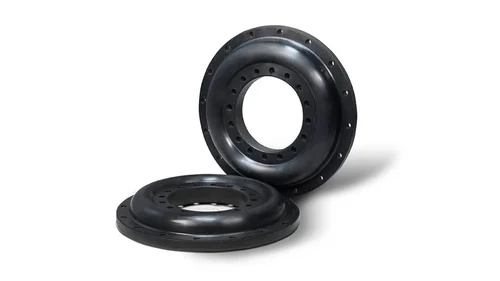
Rubber couplings are generally well-suited for applications involving high-speed rotation and varying loads, thanks to their unique properties and design features.
High-Speed Rotation: Rubber couplings can effectively handle high-speed rotation due to their inherent flexibility and damping characteristics. The elastomeric material used in rubber couplings helps absorb and dissipate vibrations that can occur at high speeds, contributing to smoother operation and reduced wear on connected machinery components.
Varying Loads: Rubber couplings are capable of accommodating varying loads due to their ability to deform under stress. The flexibility of rubber allows it to absorb shocks and impacts caused by changes in load, preventing damage to connected equipment. This feature is particularly beneficial in applications where sudden changes in load can occur, such as in industrial machinery.
However, it’s important to consider the specific requirements of the application. While rubber couplings provide excellent vibration isolation and misalignment compensation, they may not offer the same level of torsional rigidity as some other coupling types. In cases where precise torque transmission is crucial, and minimal torsional deflection is required, other coupling options might be more suitable.
Overall, rubber couplings can provide reliable performance in applications involving high-speed rotation and varying loads, especially when the benefits of vibration damping and misalignment compensation are essential.
Handling Torque and Vibration Suppression in Rubber Couplings
Rubber couplings are designed to effectively handle both high levels of torque transmission and vibration suppression. The flexibility and damping properties of rubber make it well-suited for these purposes:
- Torque Transmission: Rubber couplings can transmit torque between shafts while accommodating angular misalignment. The rubber element flexes and deforms as torque is applied, allowing the coupling to transmit power even in misaligned conditions.
- Vibration Suppression: Rubber’s inherent damping characteristics help absorb and dissipate vibrations and shocks generated during the operation of machinery. This feature reduces the transfer of vibrations to connected components, minimizing wear and enhancing overall system performance.
Engineers select the appropriate rubber material and coupling design to ensure that the coupling can effectively handle the required torque levels and provide the desired vibration suppression. Rubber couplings find applications in various industries where torque transmission and vibration damping are critical for smooth and reliable machinery operation.
Transmitting Torque and Damping Vibrations with a Rubber Coupling
A rubber coupling utilizes its flexible rubber element to achieve both torque transmission and vibration damping:
1. Torque Transmission: The rubber element connects two hubs, which are attached to the input and output shafts. As the input shaft rotates, it causes the rubber element to deform due to the applied torque. This deformation creates a shearing action within the rubber material, transmitting torque from the input to the output shaft.
2. Vibration Damping: The flexible rubber element of the coupling acts as a vibration isolator. When the coupling experiences external vibrations or shocks, the rubber absorbs the energy and dampens the vibrations before they reach the output shaft. The rubber’s elasticity and damping properties help mitigate vibrations and reduce the impact on the connected machinery, enhancing overall system performance and longevity.
This combination of torque transmission and vibration damping makes rubber couplings suitable for applications where misalignment compensation, shock absorption, and dampening of vibrations are essential, such as in pumps, compressors, HVAC systems, and various industrial machinery.
editor by CX 2023-08-15
China supplier OEM Natural Rubber and CZPT Rubber Parts and Couplings
Product Description
OEM Natural Rubber and CZPT Rubber Parts and Couplings
Certification:
Why Choose us?
1)Industry leader:
Our Factory has been specilized in Pipeline Products since 2004.With decades of development, we possesses 20 engineers, 200 experienced workers and 25 professional sales team and has supplied pipeline products, solution and services to over 30 countries.Quality is strictly Controlled and gauranteed.
2)Large Productivity
Our Factory’ productivity is large and stock for some of the pipe fittings is also available. so the mass production lead time is short.
3)VIP Service
Professional Technical engineers and sales teams gaurantee the quality and service.
4)OEM is also available
FAQ:
Q1:What certificate do you have?
A: We have ISO 9001, CE certificate.
Q2. Can I get free samples?
A: Yes, The free samples can be offered for free.
Q3. Can I have my own Logo on the product?
A: Yes, Simple logo design is available based on not small order quantity.
Q4: Can I have my own customized product?
A: Yes, your customized requirements for color, size, mark, etc.
Q5: Can you produce the products according to my own drawing?
A: Yes, we can produce the products according to your drawing.
Q6: How long is your delivery time?
A: Generally it is about 30-45days depends on the order quantity.
Q7:What’s your product range?
A:Forged Steel Flanges,Forged Pipe Fitting,Butt welding Pipe Fitting,ISO2531 EN545 EN598 Ductile iron Pipe Fitting, Pipe Clamps,Ductile Iron Groove Pipe Fitting,OEM Parts,Valves
Contact us
HangZhou CZPT Industrial Co., Ltd.
Minimizing Resonance and Improving Machinery Performance with Rubber Couplings
A rubber coupling can play a significant role in minimizing resonance and enhancing the overall performance of machinery by effectively damping vibrations and reducing the risk of resonance-related issues. Resonance is a phenomenon where a mechanical system’s natural frequency matches the frequency of external vibrations, leading to amplified oscillations and potential damage.
The following ways illustrate how rubber couplings contribute to minimizing resonance and improving machinery performance:
- Vibration Damping: Rubber couplings utilize the inherent damping properties of elastomers to absorb and dissipate vibrations generated during operation. These vibrations can include those caused by unbalanced loads, eccentricities, or other disturbances. By damping these vibrations, rubber couplings prevent them from building up and causing resonance.
- Vibration Isolation: Rubber couplings act as isolators by decoupling the connected components from each other. This isolation prevents vibrations from being transmitted directly from one component to another, thereby reducing the potential for resonance to occur.
- Misalignment Compensation: Rubber couplings can accommodate misalignments between shafts, which often contribute to excessive vibrations. By allowing a certain degree of misalignment, the coupling prevents additional forces that could trigger resonance.
- Reduced Stiffness: The flexibility of the elastomer elements in rubber couplings can reduce the overall stiffness of the system. A lower stiffness helps avoid the amplification of resonance by allowing some deformation of the coupling under varying loads and conditions.
- Dynamic Absorption: Rubber couplings are effective at absorbing dynamic loads, including sudden shocks or impacts. These dynamic events can excite resonance, and the coupling’s ability to absorb and disperse such forces helps prevent resonance-related issues.
By effectively dampening vibrations, isolating components, and accommodating misalignments, rubber couplings can help minimize the risk of resonance-related problems. Engineers and designers must carefully select the appropriate rubber coupling type, elastomer material, and design to match the specific machinery and operating conditions, thereby ensuring improved machinery performance and longevity.
Signs of Wear or Deterioration in Rubber Couplings
Rubber couplings can show signs of wear and deterioration over time due to factors like torque, temperature, and environmental conditions. To identify potential issues, watch out for the following signs:
- Visible Cracks or Damage: Inspect the rubber element for visible cracks, tears, or physical damage. Such issues can weaken the coupling’s torque transmission and vibration damping capabilities.
- Reduced Flexibility: Stiff or less flexible rubber indicates material degradation, which can impact the coupling’s ability to accommodate misalignment and absorb vibrations.
- Increased Vibrations: Excessive machinery vibrations may suggest worn-out rubber couplings. Deterioration of the rubber diminishes its vibration dampening properties.
- Unusual Noises: Any unusual sounds like squeaking or knocking might point to improper rubber coupling function and the need for inspection.
- Altered Performance: Decline in machinery performance, such as reduced torque transmission or higher energy consumption, can indicate coupling wear.
Regular inspections, visual checks, vibration analysis, and performance monitoring can help detect wear and deterioration early. This enables timely replacement and avoids operational problems.
Challenges of Misaligned Rubber Couplings and Their Resolution
Misaligned rubber couplings can lead to several challenges that impact the performance and reliability of machinery. These challenges include:
1. Reduced Efficiency: Misalignment can result in increased friction, causing energy loss and reduced efficiency in power transmission.
2. Increased Wear: Misaligned rubber couplings can cause uneven wear on the coupling’s rubber element and other connected components, leading to premature failure.
3. Vibrations and Noise: Misalignment can cause vibrations and noise, which not only affect the machinery’s operation but also contribute to discomfort for operators.
4. Overloading: Misalignment can lead to uneven loading on the coupling and connected components, potentially causing overloading and damage.
5. Premature Failure: Continuous operation with misaligned couplings can accelerate wear and fatigue, leading to premature failure of the coupling and other components.
To resolve these challenges, proper alignment practices are crucial:
1. Regular Maintenance: Perform routine inspections to identify misalignment and other issues early, allowing for timely adjustments.
2. Precise Installation: Ensure accurate alignment during the installation process to prevent initial misalignment.
3. Laser Alignment: Use laser alignment tools for accurate and reliable alignment between shafts.
4. Corrective Measures: If misalignment is detected, take corrective actions promptly to restore proper alignment.
5. Balancing Loads: Distribute loads evenly across the coupling and connected components to prevent overloading.
By addressing misalignment challenges proactively and adopting appropriate maintenance practices, the longevity and performance of rubber couplings can be significantly improved, minimizing downtime and maintenance costs in industrial applications.
editor by CX 2023-08-15
China Custom Ductile Iron Grooved Flexible Fire Fitting Pipe Coupling with Bolt and Rubber
Product Description
Product Name: Ductile Iron Grooved Flexible Fire Fitting pipe Coupling With Bolt And Rubber
| Key:grooved pipe fitting,steel pipe connector,hardware,elbow,steel pipe coupling |
| Material:ductile iron/stainless steel/forged steel |
| Surface Treatment:Spray or dip paint and other corrosion resistant treatment |
| Packaging:Plastic bags for internal use and wooden cases for external use |
| Shipping:FedEx,EMS,DHL,AIR or Sea |
| Payment:T/T,L/C,Money gram,Western union |
| Application:Fire, water, mines, ships, Marine engineering and other pipeline systems |
|
Detailed Photos
Our Advantages
1. Rich manufacturing experience.
2. Design ability.
We have excellent design and development staff.
3. Perfect equipment.
All kinds of production equipment more than 80 sets, professional inspection, testing equipment more than 50 sets.
4. Strict quality control.
Product manufacturing quality in accordance with ISO90001 quality management system requirements.
5. Serve customers attentively.
(1) 24-hour specially-assigned personnel to solve problems for you.
(2) High production efficiency and punctual delivery.
(3) Perfect after-sales service.
Company Profile
HangZhou Tontr Pipeline System Co., Ltd. is located in the beautiful coastal city of HangZhou. It is a professional national-level high-tech industry engaged in the design, development, manufacture and sales of high-pressure pipeline systems.
The company has passed international management system certifications. Product design and development, production process, and quality control are strictly implemented in accordance with the ISO9001 quality management system requirements; product performance meets the requirements of FM, UL, GB5135.11, GB/T8259 and other domestic and foreign standards.
The main products for long-distance liquid supply system.The main function is to transport liquids such as high-pressure emulsion and high-pressure spray to the partial opening of the working face at a high pressure, to provide power for the hydraulic support of the working face, the self-movement of the loader and the tail of the belt conveyor, etc. Provide high pressure water.
The company has solved the connection and installation of pipeline systems for many large state-owned enterprises, and has won wide acclaim from customers.
Pursuing product quality and serving customers with heart is our company’s philosophy.Hope we can cooperate with all customers who have needs for a long time.
FAQ
Q1: Are you a manufacturer?
A. Yes, we are A manufacturer, and our products have been certified by ISO and other international management systems.
Q2: What’s your delivery time?
B. Depending on the order quantity and your location, it will take about 15-30 days.
Q3: What are your payment terms?
C. We accept 30% T/T in advance and 70% during shipment or at L/C sight.
Q4: Do you provide samples?
D: If you need some samples for testing, we can make them according to your requirements. Samples will be prepared and sent by express within a week, usually arriving within 4-7 days. You need to pay for the sample and shipping fee.
Q5: Can you design and manufacture specifically for customers?
E: Of course. Our design and development personnel can design and produce products according to your needs.
Q6:Could we pay a visit to your factory?
Yes,you are always welcome to our factory.
Packing&Shipping
Certifications
Impact of Elastomer Element Design on Rubber Coupling Performance
The design of the elastomer elements in a rubber coupling plays a critical role in determining its overall performance and capabilities. The elastomer elements are the heart of the coupling, responsible for transmitting torque, absorbing vibrations, and accommodating misalignments. The following aspects of elastomer element design significantly impact the coupling’s performance:
- Elastomer Material: The choice of elastomer material influences the coupling’s flexibility, damping characteristics, and resistance to wear. Different elastomers offer varying levels of resilience, chemical resistance, and temperature tolerance. Common elastomers used include natural rubber, synthetic rubber compounds, and polyurethane.
- Elastomer Hardness (Durometer): The durometer hardness of the elastomer affects its flexibility and ability to absorb vibrations. Softer elastomers have higher damping capabilities but may offer less torsional stiffness. Harder elastomers provide better torque transmission but may have reduced vibration isolation.
- Elastomer Shape and Geometry: The shape and geometry of the elastomer elements influence their flexibility and deformation characteristics. Different designs, such as cylindrical, star-shaped, or spider-shaped elements, affect the coupling’s ability to accommodate misalignments and transmit torque smoothly.
- Elastomer Bonding: The way the elastomer is bonded to the coupling’s hubs or inserts impacts the coupling’s overall durability and reliability. Proper bonding ensures that the elastomer effectively transfers torque and maintains its properties over time.
- Elastomer Properties Over Temperature: Elastomers can exhibit changes in performance with temperature fluctuations. Understanding how the chosen elastomer material behaves at different temperatures is essential for applications with varying operating conditions.
The design of the elastomer elements is a delicate balance between providing flexibility for vibration isolation and misalignment compensation while ensuring adequate torque transmission and overall coupling stiffness. Engineers must carefully select elastomer materials and design features based on the specific requirements of the application to achieve optimal coupling performance.
Comparison of Rubber Couplings with Other Flexible Coupling Types
Rubber couplings, elastomeric couplings, and disc couplings are all flexible coupling options used in various mechanical systems. Here’s a comparison of rubber couplings with these alternatives:
Rubber Couplings:
- Transmit torque while damping vibrations through the flexibility of rubber elements.
- Provide good misalignment compensation and shock absorption.
- Relatively simple construction and cost-effective.
- Effective in reducing noise and vibration in applications.
- Suitable for moderate to high torque applications with moderate misalignment.
Elastomeric Couplings:
- Similar to rubber couplings, utilize elastomeric materials for flexibility and vibration damping.
- Offer higher torque capacity and stiffness compared to rubber couplings.
- Provide better misalignment compensation and torsional stiffness.
- Wider range of sizes and configurations for various applications.
- Commonly used in pumps, compressors, and other machinery.
Disc Couplings:
- Use a series of metal discs to transmit torque and accommodate misalignment.
- Offer high torsional stiffness and accuracy in torque transmission.
- Can handle higher speeds and torque compared to rubber or elastomeric couplings.
- Require precision in manufacturing and installation.
- Used in applications requiring high precision and minimal backlash.
When choosing between these flexible coupling types, considerations such as torque requirements, misalignment compensation, torsional stiffness, and application-specific needs play a significant role in making the appropriate selection. Each type has its advantages and limitations, making it important to assess the specific requirements of the machinery system.
Factors to Consider When Selecting a Rubber Coupling
Choosing the right rubber coupling for a specific application involves considering various factors:
1. Torque Requirements: Evaluate the torque that needs to be transmitted between the input and output shafts. Select a coupling with a rubber element that can handle the required torque without exceeding its limits.
2. Misalignment Compensation: Determine the degree of misalignment (angular, axial, and radial) present in the system. Choose a rubber coupling with appropriate flexibility to accommodate the expected misalignment while maintaining efficient torque transmission.
3. Vibration Damping: Assess the level of vibrations and shocks in the application. Opt for a rubber coupling with effective vibration-damping properties to protect the machinery and enhance its reliability.
4. Service Environment: Consider the operating conditions, including temperature, humidity, exposure to chemicals, and potential contaminants. Select a rubber material that can withstand the environment without deteriorating.
5. Shaft Sizes: Ensure that the coupling’s bore sizes match the shaft diameters of the connected equipment. Proper shaft fitment is crucial for efficient torque transmission.
6. Maintenance Requirements: Evaluate the maintenance practices of the system. Some rubber couplings may require periodic inspection and replacement due to wear over time.
7. Cost and Budget: Factor in the budget constraints while choosing a suitable rubber coupling. Balancing performance and cost is essential for an optimal solution.
8. Application Type: Different industries and applications have unique requirements. Choose a coupling type (spider, jaw, tire, etc.) based on the specific needs of the application.
By carefully considering these factors, you can select a rubber coupling that provides efficient torque transmission, vibration isolation, and durability in your mechanical system.
editor by CX 2023-08-14
China best OEM Natural Rubber and CZPT Rubber Parts and Couplings
Product Description
OEM Natural Rubber and CZPT Rubber Parts and Couplings
Certification:
Why Choose us?
1)Industry leader:
Our Factory has been specilized in Pipeline Products since 2004.With decades of development, we possesses 20 engineers, 200 experienced workers and 25 professional sales team and has supplied pipeline products, solution and services to over 30 countries.Quality is strictly Controlled and gauranteed.
2)Large Productivity
Our Factory’ productivity is large and stock for some of the pipe fittings is also available. so the mass production lead time is short.
3)VIP Service
Professional Technical engineers and sales teams gaurantee the quality and service.
4)OEM is also available
FAQ:
Q1:What certificate do you have?
A: We have ISO 9001, CE certificate.
Q2. Can I get free samples?
A: Yes, The free samples can be offered for free.
Q3. Can I have my own Logo on the product?
A: Yes, Simple logo design is available based on not small order quantity.
Q4: Can I have my own customized product?
A: Yes, your customized requirements for color, size, mark, etc.
Q5: Can you produce the products according to my own drawing?
A: Yes, we can produce the products according to your drawing.
Q6: How long is your delivery time?
A: Generally it is about 30-45days depends on the order quantity.
Q7:What’s your product range?
A:Forged Steel Flanges,Forged Pipe Fitting,Butt welding Pipe Fitting,ISO2531 EN545 EN598 Ductile iron Pipe Fitting, Pipe Clamps,Ductile Iron Groove Pipe Fitting,OEM Parts,Valves
Contact us
HangZhou CZPT Industrial Co., Ltd.
Impact of Elastomer Element Design on Rubber Coupling Performance
The design of the elastomer elements in a rubber coupling plays a critical role in determining its overall performance and capabilities. The elastomer elements are the heart of the coupling, responsible for transmitting torque, absorbing vibrations, and accommodating misalignments. The following aspects of elastomer element design significantly impact the coupling’s performance:
- Elastomer Material: The choice of elastomer material influences the coupling’s flexibility, damping characteristics, and resistance to wear. Different elastomers offer varying levels of resilience, chemical resistance, and temperature tolerance. Common elastomers used include natural rubber, synthetic rubber compounds, and polyurethane.
- Elastomer Hardness (Durometer): The durometer hardness of the elastomer affects its flexibility and ability to absorb vibrations. Softer elastomers have higher damping capabilities but may offer less torsional stiffness. Harder elastomers provide better torque transmission but may have reduced vibration isolation.
- Elastomer Shape and Geometry: The shape and geometry of the elastomer elements influence their flexibility and deformation characteristics. Different designs, such as cylindrical, star-shaped, or spider-shaped elements, affect the coupling’s ability to accommodate misalignments and transmit torque smoothly.
- Elastomer Bonding: The way the elastomer is bonded to the coupling’s hubs or inserts impacts the coupling’s overall durability and reliability. Proper bonding ensures that the elastomer effectively transfers torque and maintains its properties over time.
- Elastomer Properties Over Temperature: Elastomers can exhibit changes in performance with temperature fluctuations. Understanding how the chosen elastomer material behaves at different temperatures is essential for applications with varying operating conditions.
The design of the elastomer elements is a delicate balance between providing flexibility for vibration isolation and misalignment compensation while ensuring adequate torque transmission and overall coupling stiffness. Engineers must carefully select elastomer materials and design features based on the specific requirements of the application to achieve optimal coupling performance.
Signs of Wear or Deterioration in Rubber Couplings
Rubber couplings can show signs of wear and deterioration over time due to factors like torque, temperature, and environmental conditions. To identify potential issues, watch out for the following signs:
- Visible Cracks or Damage: Inspect the rubber element for visible cracks, tears, or physical damage. Such issues can weaken the coupling’s torque transmission and vibration damping capabilities.
- Reduced Flexibility: Stiff or less flexible rubber indicates material degradation, which can impact the coupling’s ability to accommodate misalignment and absorb vibrations.
- Increased Vibrations: Excessive machinery vibrations may suggest worn-out rubber couplings. Deterioration of the rubber diminishes its vibration dampening properties.
- Unusual Noises: Any unusual sounds like squeaking or knocking might point to improper rubber coupling function and the need for inspection.
- Altered Performance: Decline in machinery performance, such as reduced torque transmission or higher energy consumption, can indicate coupling wear.
Regular inspections, visual checks, vibration analysis, and performance monitoring can help detect wear and deterioration early. This enables timely replacement and avoids operational problems.
Utilization of Rubber Couplings in Mechanical Systems
A rubber coupling is a type of flexible coupling that utilizes rubber elements to connect two shafts while allowing a certain degree of misalignment and vibration damping. It is commonly used in mechanical systems to transmit torque, accommodate misalignment, and reduce shock and vibration. Here’s how rubber couplings are utilized:
- Torque Transmission: Rubber couplings transmit torque from one shaft to another, enabling the transfer of power between components while allowing for slight angular, parallel, and axial misalignments.
- Misalignment Compensation: These couplings can accommodate both angular and axial misalignments, which can occur due to manufacturing tolerances, thermal expansion, or other factors. The flexibility of the rubber element helps prevent excessive loads on connected equipment.
- Vibration Damping: The elastic properties of rubber help dampen vibrations and shocks generated during the operation of rotating machinery. This prevents the transmission of harmful vibrations to other parts of the system and reduces wear and fatigue.
- Noise Reduction: Rubber couplings help reduce noise by absorbing vibrations and minimizing the transmission of sound waves through the system.
- Equipment Protection: By absorbing shocks and vibrations, rubber couplings protect sensitive equipment and components from damage, thereby extending their lifespan.
- Simple Installation: Rubber couplings are relatively easy to install and require minimal maintenance, making them a convenient choice for various applications.
- Wide Range of Applications: Rubber couplings find applications in various industries, including automotive, industrial machinery, pumps, compressors, and more.
In summary, rubber couplings are utilized in mechanical systems to transmit torque, accommodate misalignment, reduce vibration and shock, protect equipment, and enhance the overall performance and reliability of rotating machinery.
editor by CX 2023-08-14
China OEM CZPT Cast Iron HRC Coupling (B/F/H) with Rubber for Oil Pump and Transmission Parts
Product Description
Product Description
We are the leading top Chinese coupling manufacturer, and are specializing in various high quality HRC coupling.
KASIN HRC Shaft Couplings
1. Material:the hub of the Couplings is Cast Iron,the Elastomer is Rubbe
2. OEM and ODM are available
3. High efficient in transmission
4. Finishing:The surface treatment is normally Phosphated and painting
5. High quality with competitive price
6. Different models suitable for your different demands
7. Stock for different bore size on both sides available.
8. Application in wide range of environment.
9. Quick and easy mounting and disassembly.
10. Resistant to oil and electrical insulation.
11. Identical clockwise and anticlockwise rotational characteristics.
12. Small dimension, low weight, high transmitted torque.
13. It has good performance on compensating the misalignment.
14.Feature of couplings:free of maintenance,simple structure and easy to install.
15.Application:Mainly used in the mining, metallurgical, cement, chemicals, construction, building materials, electric power, telecommunications, textiles, and transportation departments.
Techncial Date
Related Products
Roller Chain Coupling FCL Coupling Curved Jaw Coupling
Manufacturing
Applications:
NM couplings are offered in the industry’s largest variety of stock bore/keyway combinations. These couplings require no lubrication and provide highly reliable service for light, medium, and heavy duty electrical motor and internal combustion power transmission applications. Applications include power transmission to industrial equipment such as pumps, gear boxes, compressors, blowers, mixers, and conveyors.
About Us
Kasin group was established in 1989, and its first product is casting carrier trolley for power & free conveyor system. In 1995, CZPT purchased HangZhou Guoping Forging Factory (LYGP), a marketer of forging bolts & nuts to power & free line market in china. With this acquisition, CZPT positioned itself as 1 of major parts suppliers of monorail and power & free conveyor system in china.
In 2/8822 0571 -57152031 Fax: 86~/8822 0571 -57152030
Http://kasinchain
Durometer Hardness in Rubber Coupling Materials
Durometer hardness is a measure of the material’s resistance to indentation or penetration by a specified indenter. In rubber couplings, durometer hardness is a critical characteristic that influences their performance. It is typically measured using a durometer instrument.
The durometer hardness scale commonly used for rubber materials is the Shore durometer scale, indicated by a letter followed by a numerical value (e.g., Shore A, Shore D). Lower durometer values indicate softer and more flexible rubber, while higher values indicate harder and less flexible rubber.
In relation to rubber couplings:
- Higher Durometer (Harder Rubber): Couplings made from harder rubber materials have better torque transmission capabilities and higher load-bearing capacity. However, they may offer less vibration isolation and misalignment compensation.
- Lower Durometer (Softer Rubber): Couplings made from softer rubber materials provide greater flexibility, vibration damping, and misalignment compensation. They are suitable for applications where vibration reduction is crucial.
The choice of durometer hardness depends on the specific requirements of the application, including torque levels, vibration, misalignment, and desired performance characteristics.
Common Rubber Materials Used in Manufacturing Rubber Couplings
Various rubber materials are used in the manufacturing of rubber couplings, each chosen based on its specific properties and the intended application:
- Neoprene: Known for its oil and chemical resistance, neoprene rubber is used in couplings that require durability and resistance to harsh environments.
- Nitrile: Nitrile rubber offers excellent oil and fuel resistance, making it suitable for applications in machinery that involve contact with lubricants.
- Natural Rubber: Natural rubber provides good elasticity and flexibility, making it suitable for couplings requiring high levels of shock and vibration absorption.
- EPDM: Ethylene Propylene Diene Monomer (EPDM) rubber offers good resistance to weather, ozone, and aging, making it suitable for outdoor or high-temperature applications.
- Polyurethane: Polyurethane rubber offers high abrasion resistance and can handle higher load capacities, making it suitable for heavy-duty applications.
The choice of rubber material depends on factors such as the operating environment, chemical exposure, temperature range, flexibility requirements, and load conditions. Engineers select the appropriate rubber material to ensure the coupling’s performance and longevity in specific applications.
Factors to Consider When Selecting a Rubber Coupling
Choosing the right rubber coupling for a specific application involves considering various factors:
1. Torque Requirements: Evaluate the torque that needs to be transmitted between the input and output shafts. Select a coupling with a rubber element that can handle the required torque without exceeding its limits.
2. Misalignment Compensation: Determine the degree of misalignment (angular, axial, and radial) present in the system. Choose a rubber coupling with appropriate flexibility to accommodate the expected misalignment while maintaining efficient torque transmission.
3. Vibration Damping: Assess the level of vibrations and shocks in the application. Opt for a rubber coupling with effective vibration-damping properties to protect the machinery and enhance its reliability.
4. Service Environment: Consider the operating conditions, including temperature, humidity, exposure to chemicals, and potential contaminants. Select a rubber material that can withstand the environment without deteriorating.
5. Shaft Sizes: Ensure that the coupling’s bore sizes match the shaft diameters of the connected equipment. Proper shaft fitment is crucial for efficient torque transmission.
6. Maintenance Requirements: Evaluate the maintenance practices of the system. Some rubber couplings may require periodic inspection and replacement due to wear over time.
7. Cost and Budget: Factor in the budget constraints while choosing a suitable rubber coupling. Balancing performance and cost is essential for an optimal solution.
8. Application Type: Different industries and applications have unique requirements. Choose a coupling type (spider, jaw, tire, etc.) based on the specific needs of the application.
By carefully considering these factors, you can select a rubber coupling that provides efficient torque transmission, vibration isolation, and durability in your mechanical system.
editor by CX 2023-08-11
China manufacturer OEM Natural Rubber and CZPT Rubber Parts and Couplings
Product Description
OEM Natural Rubber and CZPT Rubber Parts and Couplings
Certification:
Why Choose us?
1)Industry leader:
Our Factory has been specilized in Pipeline Products since 2004.With decades of development, we possesses 20 engineers, 200 experienced workers and 25 professional sales team and has supplied pipeline products, solution and services to over 30 countries.Quality is strictly Controlled and gauranteed.
2)Large Productivity
Our Factory’ productivity is large and stock for some of the pipe fittings is also available. so the mass production lead time is short.
3)VIP Service
Professional Technical engineers and sales teams gaurantee the quality and service.
4)OEM is also available
FAQ:
Q1:What certificate do you have?
A: We have ISO 9001, CE certificate.
Q2. Can I get free samples?
A: Yes, The free samples can be offered for free.
Q3. Can I have my own Logo on the product?
A: Yes, Simple logo design is available based on not small order quantity.
Q4: Can I have my own customized product?
A: Yes, your customized requirements for color, size, mark, etc.
Q5: Can you produce the products according to my own drawing?
A: Yes, we can produce the products according to your drawing.
Q6: How long is your delivery time?
A: Generally it is about 30-45days depends on the order quantity.
Q7:What’s your product range?
A:Forged Steel Flanges,Forged Pipe Fitting,Butt welding Pipe Fitting,ISO2531 EN545 EN598 Ductile iron Pipe Fitting, Pipe Clamps,Ductile Iron Groove Pipe Fitting,OEM Parts,Valves
Contact us
HangZhou CZPT Industrial Co., Ltd.
Impact of Elastomer Element Design on Rubber Coupling Performance
The design of the elastomer elements in a rubber coupling plays a critical role in determining its overall performance and capabilities. The elastomer elements are the heart of the coupling, responsible for transmitting torque, absorbing vibrations, and accommodating misalignments. The following aspects of elastomer element design significantly impact the coupling’s performance:
- Elastomer Material: The choice of elastomer material influences the coupling’s flexibility, damping characteristics, and resistance to wear. Different elastomers offer varying levels of resilience, chemical resistance, and temperature tolerance. Common elastomers used include natural rubber, synthetic rubber compounds, and polyurethane.
- Elastomer Hardness (Durometer): The durometer hardness of the elastomer affects its flexibility and ability to absorb vibrations. Softer elastomers have higher damping capabilities but may offer less torsional stiffness. Harder elastomers provide better torque transmission but may have reduced vibration isolation.
- Elastomer Shape and Geometry: The shape and geometry of the elastomer elements influence their flexibility and deformation characteristics. Different designs, such as cylindrical, star-shaped, or spider-shaped elements, affect the coupling’s ability to accommodate misalignments and transmit torque smoothly.
- Elastomer Bonding: The way the elastomer is bonded to the coupling’s hubs or inserts impacts the coupling’s overall durability and reliability. Proper bonding ensures that the elastomer effectively transfers torque and maintains its properties over time.
- Elastomer Properties Over Temperature: Elastomers can exhibit changes in performance with temperature fluctuations. Understanding how the chosen elastomer material behaves at different temperatures is essential for applications with varying operating conditions.
The design of the elastomer elements is a delicate balance between providing flexibility for vibration isolation and misalignment compensation while ensuring adequate torque transmission and overall coupling stiffness. Engineers must carefully select elastomer materials and design features based on the specific requirements of the application to achieve optimal coupling performance.
Handling Torque and Vibration Suppression in Rubber Couplings
Rubber couplings are designed to effectively handle both high levels of torque transmission and vibration suppression. The flexibility and damping properties of rubber make it well-suited for these purposes:
- Torque Transmission: Rubber couplings can transmit torque between shafts while accommodating angular misalignment. The rubber element flexes and deforms as torque is applied, allowing the coupling to transmit power even in misaligned conditions.
- Vibration Suppression: Rubber’s inherent damping characteristics help absorb and dissipate vibrations and shocks generated during the operation of machinery. This feature reduces the transfer of vibrations to connected components, minimizing wear and enhancing overall system performance.
Engineers select the appropriate rubber material and coupling design to ensure that the coupling can effectively handle the required torque levels and provide the desired vibration suppression. Rubber couplings find applications in various industries where torque transmission and vibration damping are critical for smooth and reliable machinery operation.
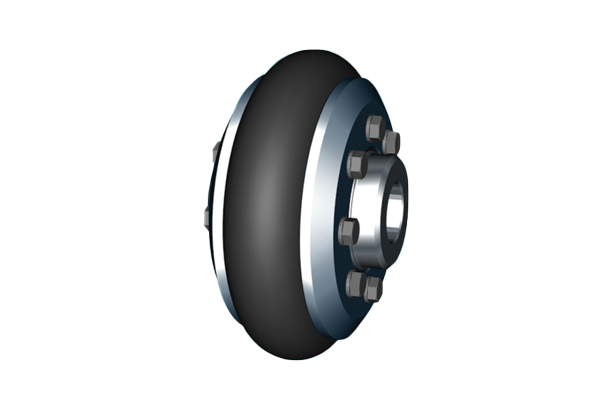
Types of Rubber Couplings Designed for Specific Uses
There are several types of rubber couplings, each designed with specific characteristics to suit various applications:
- Flexible Jaw Couplings: These couplings consist of two hubs connected by a flexible rubber element. They are commonly used in applications where misalignment, vibrations, and shocks need to be dampened, such as in pumps, fans, and compressors.
- Oldham Couplings: Oldham couplings use a rubber disk as the intermediate element between two hubs. They provide compensation for misalignment while maintaining a constant velocity between input and output shafts, often used in printing, packaging, and CNC machinery.
- Tyre Couplings: These couplings have a high degree of torsional flexibility and are suitable for applications with substantial misalignment and shock absorption requirements, like in heavy-duty machinery and construction equipment.
- Pin and Bush Couplings: These couplings use rubber bushes to provide vibration isolation and accommodate misalignment. They are used in various industrial applications, including conveyors, mixers, and crushers.
- Diaphragm Couplings: Diaphragm couplings use a flexible rubber diaphragm to transmit torque and compensate for misalignment. They are commonly found in precision equipment like servo motors and robotics.
Each type of rubber coupling is designed to address specific needs in different applications. The choice of coupling depends on factors such as the degree of misalignment, torque requirements, shock absorption, and the level of precision needed.
editor by CX 2023-08-11
China Best Sales Nm148 Elastic / Flexible Pump Motor Shaft Torsional Rubber HRC Coupling
Product Description
Product Description
Product Parameters
| product | Nm148 Elastic / flexible Pump Motor Shaft Torsional Rubber HRC Star Spider Plum Jaw Coupling |
| material | stainless steel , iron , aluminum ,bronze ,carbon steel ,brass etc . |
| size | ISO standard ,customer requirements |
| BORE | Finished bore, Pilot Bore, Special request |
| surface treatment | Carburizing and Quenching,Tempering ,Tooth suface high quenching Hardening,Tempering |
| Processing Method | Molding, Shaving, Hobbing, Drilling, Tapping, Reaming, Manual Chamfering, Grinding etc |
| Heat Treatment | Quenching & Tempering, Carburizing & Quenching, High-frequency Hardening, Carbonitriding…… |
| Package | Wooden Case/Container and pallet, or made-to-order |
| Certificate | ISO9001 ,SGS |
| Machining Process | Gear Hobbing, Gear Milling, Gear Shaping, Gear Broaching, Gear Shaving, Gear Grinding and Gear Lapping |
| Applications | Toy, Automotive, instrument, electrical equipment, household appliances, furniture, mechanical equipment,daily living equipment, electronic sports equipment, , sanitation machinery, market/ hotel equipment supplies, etc. |
| Testing Equipment | Rockwell hardness tester 500RA, Double mesh instrument HD-200B & 3102,Gear measurement center instrument CNC3906T and other High precision detection equipments |
workshop & equipment
Production process
Certifications
Our Advantages
1 . Prioritized Quality
2 .Integrity-based Management
3 .Service Orientation
4 .150+ advanced equipment
5 .10000+ square meter factory area
6 .200+ outstanding employees
7 .90% employees have more than 10 year- working experience in our factory
8 .36 technical staff
9 .certificate ISO 9001 , SGS
10 . Customization support
11 .Excellent after-sales service
shipping
sample orders delivery time:
10-15 working days as usual
15-20 working days in busy season
large order leading time :
20-30 working days as usual
30-40 working days in busy season
FAQ
1. why should you buy products from us not from other suppliers?
We are a 32 year-experience manufacturer on making the gear, specializing in manufacturing varieties of gears, such as helical gear ,bevel gear ,spur gear and grinding gear, gear shaft, timing pulley, rack, , timing pulley and other transmission parts . There are 150+ advanced equipment ,200+ excellent employees ,and 36 technical staff . what’s more ,we have got ISO9001 and SGS certificate .
2 .Do you accept small order?
If your order bearings are our standard size, we accept even 1pcs.
3 .How long is the delivery?
A: Small orders usually takes 10-15 working days,big order usually 20-35 days, depending on orders quantity and whether are standard size.
Signs of Wear or Deterioration in Rubber Couplings
Rubber couplings can show signs of wear and deterioration over time due to factors like torque, temperature, and environmental conditions. To identify potential issues, watch out for the following signs:
- Visible Cracks or Damage: Inspect the rubber element for visible cracks, tears, or physical damage. Such issues can weaken the coupling’s torque transmission and vibration damping capabilities.
- Reduced Flexibility: Stiff or less flexible rubber indicates material degradation, which can impact the coupling’s ability to accommodate misalignment and absorb vibrations.
- Increased Vibrations: Excessive machinery vibrations may suggest worn-out rubber couplings. Deterioration of the rubber diminishes its vibration dampening properties.
- Unusual Noises: Any unusual sounds like squeaking or knocking might point to improper rubber coupling function and the need for inspection.
- Altered Performance: Decline in machinery performance, such as reduced torque transmission or higher energy consumption, can indicate coupling wear.
Regular inspections, visual checks, vibration analysis, and performance monitoring can help detect wear and deterioration early. This enables timely replacement and avoids operational problems.
editor by CX 2023-08-09
China supplier OEM Natural Rubber and CZPT Rubber Parts and Couplings
Product Description
OEM Natural Rubber and CZPT Rubber Parts and Couplings
Certification:
Why Choose us?
1)Industry leader:
Our Factory has been specilized in Pipeline Products since 2004.With decades of development, we possesses 20 engineers, 200 experienced workers and 25 professional sales team and has supplied pipeline products, solution and services to over 30 countries.Quality is strictly Controlled and gauranteed.
2)Large Productivity
Our Factory’ productivity is large and stock for some of the pipe fittings is also available. so the mass production lead time is short.
3)VIP Service
Professional Technical engineers and sales teams gaurantee the quality and service.
4)OEM is also available
FAQ:
Q1:What certificate do you have?
A: We have ISO 9001, CE certificate.
Q2. Can I get free samples?
A: Yes, The free samples can be offered for free.
Q3. Can I have my own Logo on the product?
A: Yes, Simple logo design is available based on not small order quantity.
Q4: Can I have my own customized product?
A: Yes, your customized requirements for color, size, mark, etc.
Q5: Can you produce the products according to my own drawing?
A: Yes, we can produce the products according to your drawing.
Q6: How long is your delivery time?
A: Generally it is about 30-45days depends on the order quantity.
Q7:What’s your product range?
A:Forged Steel Flanges,Forged Pipe Fitting,Butt welding Pipe Fitting,ISO2531 EN545 EN598 Ductile iron Pipe Fitting, Pipe Clamps,Ductile Iron Groove Pipe Fitting,OEM Parts,Valves
Contact us
HangZhou CZPT Industrial Co., Ltd.
Minimizing Resonance and Improving Machinery Performance with Rubber Couplings
A rubber coupling can play a significant role in minimizing resonance and enhancing the overall performance of machinery by effectively damping vibrations and reducing the risk of resonance-related issues. Resonance is a phenomenon where a mechanical system’s natural frequency matches the frequency of external vibrations, leading to amplified oscillations and potential damage.
The following ways illustrate how rubber couplings contribute to minimizing resonance and improving machinery performance:
- Vibration Damping: Rubber couplings utilize the inherent damping properties of elastomers to absorb and dissipate vibrations generated during operation. These vibrations can include those caused by unbalanced loads, eccentricities, or other disturbances. By damping these vibrations, rubber couplings prevent them from building up and causing resonance.
- Vibration Isolation: Rubber couplings act as isolators by decoupling the connected components from each other. This isolation prevents vibrations from being transmitted directly from one component to another, thereby reducing the potential for resonance to occur.
- Misalignment Compensation: Rubber couplings can accommodate misalignments between shafts, which often contribute to excessive vibrations. By allowing a certain degree of misalignment, the coupling prevents additional forces that could trigger resonance.
- Reduced Stiffness: The flexibility of the elastomer elements in rubber couplings can reduce the overall stiffness of the system. A lower stiffness helps avoid the amplification of resonance by allowing some deformation of the coupling under varying loads and conditions.
- Dynamic Absorption: Rubber couplings are effective at absorbing dynamic loads, including sudden shocks or impacts. These dynamic events can excite resonance, and the coupling’s ability to absorb and disperse such forces helps prevent resonance-related issues.
By effectively dampening vibrations, isolating components, and accommodating misalignments, rubber couplings can help minimize the risk of resonance-related problems. Engineers and designers must carefully select the appropriate rubber coupling type, elastomer material, and design to match the specific machinery and operating conditions, thereby ensuring improved machinery performance and longevity.
editor by CX 2023-08-09